Seasonal Campaign Strategy: A Data–Driven Planning Guide
Posted on
Marketing
Posted at

A seasonal campaign strategy involves proactively aligning messaging, offers, and channels with predictable consumer behavior and key calendar moments to maximize relevance and sales.
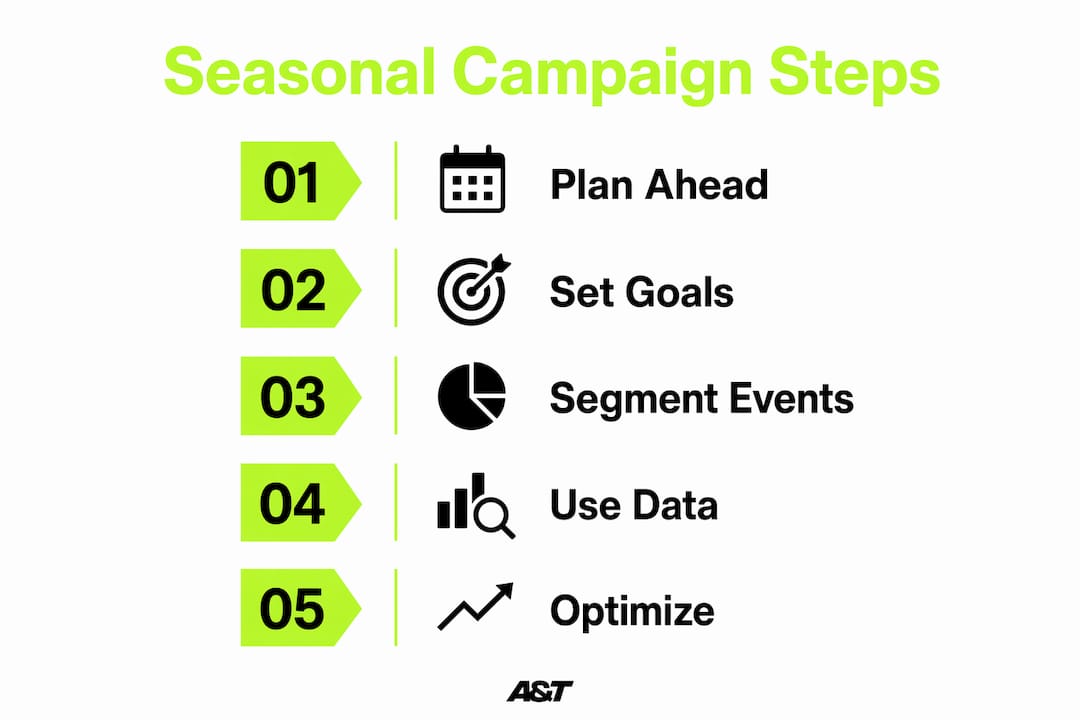
Effective planning requires categorizing events into tiers, setting measurable goals, and using data-driven insights to determine optimal timing and resource allocation.
A seasonal campaign strategy is the proactive coordination of messaging, offers, and channels aligned with predictable consumer behavior and key calendar moments to drive relevance and sales. Unlike a one-off promotion, it functions as a structured roadmap that connects your brand to the moments when customers are most ready to buy. Platforms like Mailchimp and AdRoll have built entire planning frameworks around this principle because the timing advantage is real. When you align your paid ads, email sequences, and landing pages with genuine customer intent windows, you stop interrupting people and start meeting them where they already are.
What is seasonal campaign strategy and how does it work?
A seasonal campaign strategy is defined as a deliberate plan to align marketing efforts with predictable customer behavior and key seasonal moments. The strategy is the roadmap. The individual campaigns are the execution vehicles. Confusing the two is one of the most common planning errors we see.
The foundation of any solid strategy is tiered event categorization. Events fall into three tiers:
Tier 1 (Core holidays): Black Friday, Christmas, Valentine's Day, Back to School. These demand the most budget and the longest lead time.
Tier 2 (Industry-specific events): Tax season for financial services, summer travel windows for hospitality, product launch cycles for tech brands.
Tier 3 (Micro-holidays): National Coffee Day, World Mental Health Day, or niche awareness months. Lower budget, high relevance for specific audiences.
This classification matters because it forces you to allocate resources deliberately instead of reacting to every calendar date that trends on social media.
Event tier | Examples | Typical lead time |
|---|---|---|
Tier 1 core holidays | Black Friday, Christmas, Valentine's Day | 3 to 6 months |
Tier 2 industry events | Tax season, summer travel, product launches | 6 to 10 weeks |
Tier 3 micro-holidays | National Coffee Day, awareness months | 2 to 4 weeks |

Goal setting is the next structural layer. Every seasonal campaign needs a measurable objective tied to a specific outcome: revenue per campaign, cost per lead, email open rate, or return on ad spend. Vague goals like "increase brand awareness" produce vague results. Competitive intelligence rounds out the structure. Knowing when your competitors launch, what offers they lead with, and which channels they prioritize gives you the data to differentiate rather than duplicate.
Pro Tip: Build a shared seasonal calendar at the start of each year that maps Tier 1, 2, and 3 events alongside your historical performance data. This single document becomes your team's planning anchor and prevents last-minute scrambles.
Seasonal marketing tactics that actually move the needle
The most effective seasonal tactics combine urgency, personalization, and participation to convert browsers into buyers during compressed time windows. Here is how the best campaigns execute this in practice.
Themed landing pages. A dedicated page for a specific seasonal event outperforms a generic homepage redirect every time. It signals relevance to the visitor and improves Quality Score in Google Ads campaigns.
Countdown timers. Displaying a live countdown to offer expiration creates genuine urgency. This tactic works in email subject lines, on landing pages, and inside paid ad creative.
Exclusive seasonal discounts and gift collections. Curated product bundles tied to a specific moment (a "Holiday Gift Guide" or a "Summer Starter Pack") reduce decision fatigue and increase average order value.
Gamification mechanics. Spin-to-win wheels and digital scratch cards increase time on site and email capture rates. These tools shift the campaign from a passive offer to an active experience.
User-generated content and social proof. Featuring real customer photos, reviews, or testimonials during a seasonal push builds trust quickly. Shoppers making fast decisions during limited windows rely heavily on peer validation.
Segmentation and early access offers. Sending a "VIP early access" email to your most engaged subscribers 48 hours before a public launch drives higher conversion rates and rewards loyalty simultaneously.
The shift from purely transactional seasonal campaigns to participation-based approaches is one of the most significant changes in modern seasonal marketing. When a customer spins a wheel to reveal their discount, they are invested in the outcome. That investment translates to better lead capture, higher product discovery rates, and stronger brand recall after the campaign ends.
Personalizing your ad creative at the campaign level is equally important. A personalized ad campaign that references the specific seasonal moment in its headline and visual outperforms a generic evergreen ad running during the same period. The message match between ad and landing page is what closes the gap between click and conversion.
Pro Tip: Pair your gamification mechanic with an email capture gate. A visitor who spins to win and enters their email to claim the prize is now a qualified lead, not just a session in your analytics.
How to plan seasonal campaigns using data, not just dates
Smart seasonal planningis driven by customer search trends, sales history, competitor activity, and external market factors rather than fixed calendar dates. The calendar tells you when a holiday falls. Data tells you when your specific customers start buying.
Here is what a data-driven planning process examines:
Search volume trends. Google Trends and Google Search Console reveal when demand for your category starts rising. For many retailers, Christmas search intent peaks in early November, not December.
Historical sales data. Your own transaction records show which products sell in which weeks and at what margin. This is your most reliable signal.
Browsing versus buying behavior. High traffic with low conversion in early October often signals research mode. High conversion with lower traffic in late October signals purchase mode. Plan your budget shift accordingly.
Geographic variation. A back-to-school campaign in the southern United States peaks weeks earlier than in the northeast. Ignoring regional timing wastes ad spend.
Competitive intelligence. Track when competitors launch promotions, what discount depths they offer, and which channels they activate. Tools like SEMrush and SpyFu surface this data at scale.
External factors. Weather patterns, economic sentiment, and supply chain conditions all shift consumer readiness. A cold snap in September accelerates outerwear demand. An inflation spike compresses discretionary spending.
Channel-specific lead times are a planning detail most teams underestimate. SEO content needs 6 to 12 months to rank for competitive seasonal keywords. Email campaigns require 6 to 8 weeks for list segmentation, copy development, and testing. Paid social can launch in 2 to 4 weeks. Understanding these timelines prevents the scenario where your SEO content goes live the week of the event and generates zero organic traffic.
Channel | Required lead time | Primary planning task |
|---|---|---|
SEO content | 6 to 12 months | Keyword research, content creation, link building |
Email marketing | 6 to 8 weeks | Segmentation, copy, A/B testing |
Paid social (Meta) | 2 to 4 weeks | Creative development, audience setup |
Google Ads | 2 to 3 weeks | Campaign structure, bid strategy, landing pages |
Early planningof 3 to 6 months ahead for major events is the single most consistent differentiator between brands that win seasonal periods and those that scramble through them. Starting late means compressed creative timelines, higher ad auction costs as competitors flood the market, and no time to test messaging before the peak window opens.
Common misconceptions about seasonal marketing strategy
Seasonal marketing is not limited to public holidays. This is the most persistent misconception in the category. Brands that restrict their seasonal calendar to Christmas, Black Friday, and Valentine's Day are leaving significant revenue on the table. A B2B software company's "season" might be Q4 budget cycles. A fitness brand's peak moment might be the two weeks after New Year's resolutions form. The definition of a season is any period when your specific customer's readiness to buy is measurably higher than baseline.
A second misconception is that seasonal campaigns are inherently sales-only events. The most durable seasonal campaigns build brand equity alongside revenue. A campaign that invites customers to share their holiday traditions, vote on a product name, or participate in a charitable initiative creates emotional association that outlasts the discount window.
"Treating seasons as fluid micro-markets based on real-time data yields superior results compared to relying on static calendar planning." Reyo.ai Seasonal Campaign Planning Guide
The third misconception is that more micro-holidays equal more opportunity. Activating every Tier 3 event on the calendar dilutes your brand voice and exhausts your creative team. The brands with the strongest seasonal presence pick their moments deliberately and execute them with full commitment rather than spreading thin across 40 calendar dates.
Recurring, data-informed campaign cycles produce compounding returns year over year. Each campaign generates performance data that informs the next iteration. Open rates, conversion rates, and revenue per send from last year's Black Friday campaign are your most reliable inputs for this year's planning. One-off campaigns generate one-off results.
Pro Tip: After every major seasonal campaign, run a 48-hour post-mortem. Document what worked, what underperformed, and what you would change. Store this in a shared campaign archive that your team references every planning cycle.
Key takeaways
A seasonal campaign strategy succeeds when it combines tiered event planning, data-driven timing, and participation-based tactics executed well ahead of the peak window.
Point | Details |
|---|---|
Tiered event classification | Categorize events into Tier 1, 2, and 3 to allocate budget and lead time deliberately. |
Data over calendar dates | Use search trends, sales history, and competitor timing to find your real customer buying window. |
Channel lead times matter | SEO needs 6 to 12 months; paid social needs 2 to 4 weeks. Plan each channel on its own timeline. |
Participation beats promotion | Interactive tactics like gamification and UGC drive lead capture and brand recall beyond the sale. |
Recurring cycles compound | Treat each campaign as a data source for the next one to improve results year over year. |
Why most seasonal campaigns underperform (and what Iʼd do differently)
After years of building and analyzing paid ad campaigns across retail, health and wellness, and entertainment, I have watched the same pattern repeat: brands invest heavily in creative assets and almost nothing in timing intelligence. The campaign looks great. It launches on the wrong week.
The teams that consistently win seasonal periods treat their campaign calendar like a living document, not a fixed schedule. They monitor Google Trends weekly in the 8 weeks before a major event. They watch competitor ad libraries on Meta for early signals of campaign launches. They adjust budget pacing in real time based on conversion rate signals rather than waiting for the campaign to end before drawing conclusions.
I would also push back on the instinct to chase every micro-holiday. I have seen brands activate National Donut Day, World Emoji Day, and International Cat Day in the same month. None of those campaigns generated meaningful revenue. What they did generate was creative fatigue and a diluted brand voice. Pick the moments that genuinely connect to your product and your customer. Execute those with full commitment. The restraint is the strategy.
The other shift I consistently recommend is building anticipation before the campaign launches. A "coming soon" email to your list 10 days before a major seasonal push, a teaser post on social media, a countdown on your homepage. These pre-campaign touchpoints warm your audience and improve open rates and click-through rates when the main campaign drops. The brands that skip this step are always surprised when their launch-day email underperforms.
— Ann
How A&T agency can power your seasonal campaigns
Seasonal campaigns produce the best returns when paid media is planned, launched, and optimized by a team that understands both the data and the creative side of performance marketing. At A&T Digital, we build multi-channel ad systems that align Google Ads and Meta campaigns with your specific seasonal windows, not just the generic holiday calendar. We analyze your historical performance data, map your customer buying behavior, and build campaign structures that capture demand at the right moment. Our clients get measurable results: higher return on ad spend, lower cost per acquisition, and campaigns that improve with every cycle. If you want seasonal campaigns that convert, not just campaigns that launch, we should talk.
FAQ
What is a seasonal campaign strategy in simple terms?
A seasonal campaign strategy is a planned approach to aligning your marketing messages, offers, and ad spend with specific times of the year when your customers are most likely to buy. It covers everything from timing and channel selection to creative development and budget allocation.
How far in advance should you plan a seasonal campaign?
Major seasonal events require 3 to 6 months of lead time for creative development, budget planning, and SEO content. Paid social campaigns can be built in 2 to 4 weeks, but waiting that long for a Tier 1 event like Black Friday will cost you in higher auction prices and rushed creative.
What are the most effective seasonal marketing tactics?
The most effective tactics combine urgency drivers like countdown timers, personalized landing pages, gamification mechanics such as spin-to-win tools, and user-generated content. Participation-based campaigns consistently outperform pure discount-driven promotions in both conversion rate and brand recall.
Is seasonal marketing only relevant for retail businesses?
No. Seasonal marketing applies to any business with identifiable peaks in customer demand, including B2B software companies during Q4 budget cycles, fitness brands in January, and financial services firms during tax season. The key is identifying when your specific customer's readiness to act is measurably higher than normal.
How do you measure the success of a seasonal campaign?
Track return on ad spend, cost per acquisition, email open and click-through rates, and revenue generated during the campaign window. Compare these metrics against the same period in the prior year and against your non-seasonal baseline to isolate the campaign's actual contribution.