SMB Lookalike Audience Benefits That Cut CPA Fast
Posted on
Marketing
Posted at

Lookalike audiences let SMBs reach new prospects who behave like their best existing buyers, consistently delivering higher conversion rates and lower cost per acquisition than broad interest targeting. The core advantage is precision at scale: you hand the platform a seed of real customer data, and its machine learning finds millions of similar users you'd never have identified manually.
Primary benefits at a glance:
Better targeting: reach people who already match your buyer profile
Lower CPA: purchase-based seeds can drive 30–50% lower CPA versus interest-based audiences
Cost-efficiency: every dollar works harder because the audience is pre-qualified
Scalability: expand from 1% to 3% to 5% tiers as results confirm signal strength
One-line test plan you can run today:
Build a seed from your purchasers or top email subscribers
Launch a 1% lookalike on Meta with a fixed daily budget
After 7 days, run a parallel 3% ad set with equal budget and compare CPA
Key Takeaways
Lookalike audiences deliver their strongest results when seed quality is high, percentage tiers are tested in parallel, and creative is treated as the primary optimization variable, not the audience itself.
Point | Details |
|---|---|
Start with your best seed | Use purchasers or high-LTV customers; 1,000–5,000 high-quality users produces the most reliable lookalike signal. |
Test 1% vs. 3% in parallel | Run both tiers with equal budgets for 7 days; compare CPA before deciding which to scale. |
Fix creative before the audience | A CTR below 0.5% or high bounce rate signals a creative or offer problem, not an audience problem. |
Use CAPI to protect signal | iOS tracking loss degrades seed quality; Conversions API is required for accurate lookalike construction on Meta. |
A&T Digital manages the full cycle | From source audit and seed construction to creative testing and gradual budget scaling across Meta and Google. |
Table of Contents
What a lookalike audience actually is, and why SMBs should care
Core SMB lookalike audience benefits, with real examples
How Meta, Google, TikTok, and LinkedIn build lookalikes for SMBs
SMB best practices: seed selection, sizing, testing, and exclusions
When lookalikes are not the right choice for SMBs
How to measure lookalike success and when to scale
How A&T Digital applies lookalike audiences for SMB clients
What SMBs consistently get wrong about lookalike audiences
A&T Digital runs your lookalike campaigns from seed to scale
Sources
What a lookalike audience actually is, and why SMBs should care
A lookalike audience is an algorithmically built audience created from a seed of your first-party signals: purchases, high-intent events, email subscribers, or customer lists. The platform's machine learning analyzes the demographics, interests, and behaviors of that seed, then finds new users who share the same patterns.
For SMBs, this matters because interest-based targeting requires you to guess which interests correlate with buying intent. Lookalikes remove that guesswork. The platform has already observed what your actual buyers look like and builds the audience from that evidence.
The practical difference: Interest targeting says "find people who like fitness." A lookalike says "find people who look like the 400 customers who already bought from me." One is a hypothesis. The other is a data-driven profile.
Minimum data thresholds to know:
Meta recommends at least 100 seed users, but 1,000–5,000 high-quality users is the sweet spot for reliable results
If you have fewer than 500 purchasers, use high-intent events (add-to-cart, initiated checkout) to supplement
Google's Similar Segments require sufficient conversion history in your account before they activate
LinkedIn's Matched Audiences work best with lists of at least 300 matched members
SMBs with thin purchase data aren't locked out. You build toward the ideal seed while running intent-event-based lookalikes in the meantime.
Core SMB lookalike audience benefits, with real examples
Expanded reach to qualified prospects
Manual audience research takes hours and still produces guesses. Lookalikes automate that process using your actual customer data, reaching users across Meta's network of over 3 billion monthly active users or Google's Display and Search inventory. For an SMB spending $1,500 a month on ads, that reach without a lookalike layer would require constant manual audience refreshes.
Higher conversion rates and lower CPA
This is the headline benefit. Purchase-based seeds commonly outperform other seed types, and 1–3% lookalikes tend to deliver the best combination of efficiency and volume for most SMB campaigns. According to platform benchmarks, lookalikes can materially reduce CPA compared with interest-based targeting when seed quality is high.
📊 Stat callout: ConversionStudio's aggregated benchmarks show purchase-based lookalike seeds delivering 30–50% lower CPA versus interest-based targeting for e-commerce brands.
Better use of limited ad spend
When your monthly budget is $2,000, wasted impressions hurt. Lookalikes concentrate spend on users the algorithm has already flagged as likely buyers.

Scalability through percentage tiers
Percentage tiers from 1% to 10%let you dial between precision and reach.
Faster campaign learning
Lookalikes give Meta's and Google's algorithms a head start. Instead of spending the first week of a campaign in broad exploration, the platform begins delivery with a pre-filtered pool. That compresses the learning phase, which matters when you're running 7-day tests on a tight budget.
Improved creative relevance
When your audience is tightly defined by real buyer behavior, your creative can speak directly to that profile. Tighter audiences reward tighter creative.
How Meta, Google, TikTok, and LinkedIn build lookalikes for SMBs
Each platform's mechanics differ in ways that affect which one you should prioritize first.
Platform | What it improves | CPA impact | Audience size vs. precision | Source-data requirements | Best SMB use-case |
|---|---|---|---|---|---|
Meta | Reach, engagement, conversion | Highest CPA reduction with strong seeds | 1% = tightest; 3–5% = volume | Customer list, pixel events, CAPI | Direct-response offers, e-commerce, lead gen |
Reach, search intent alignment | Moderate; depends on conversion history | Broader by default; no % tiers | Conversion history, Customer Match list | Brand awareness + search retargeting | |
TikTok | Reach, engagement | Emerging; works well for younger demos | Percentage tiers similar to Meta | Customer file, pixel events | Brand awareness, product discovery |
Engagement, B2B conversion | Lower volume; higher CPM | Smaller pools; tight professional match | Matched Audiences (email, company list) | B2B lead gen, professional services |
Key platform notes for SMBs:
Meta remains the strongest platform for SMB lookalike campaigns. Meta's help center confirms lookalikes are designed to reach new people who share characteristics with your existing customers. Conversions API (CAPI) setup is now critical to compensate for iOS signal loss.
Google deprecated its Similar Audiences feature in 2023 and replaced it with Optimized Targeting and audience suggestions within Performance Max and standard campaigns. The underlying logic is similar but less transparent.
TikTok offers lookalike audiences through its Ads Manager with value-based options for accounts with sufficient pixel data. Best for SMBs targeting consumers under 35.
LinkedIn lookalikes work from Matched Audiences and are most cost-effective for B2B SMBs targeting by job title or company size, despite higher CPMs.
For most U.S. SMBs starting out, Meta is the right first platform. Google becomes relevant once you have conversion history. LinkedIn makes sense when your buyer is a professional, not a consumer.
SMB best practices: seed selection, sizing, testing, and exclusions
Getting the setup right matters more than the budget size. Follow this sequence.
Audit your source data first. Count your purchasers, high-intent event completions, and email subscribers. Rank them by quality: purchasers at the top, then add-to-cart or initiated-checkout events, then engaged subscribers.
Build the seed from your highest-quality signal. Purchaser and value-based seeds outperform generic website visitors. If you have fewer than 500 purchasers, combine them with high-intent events to reach a workable seed size.
Start at 1%. Launch your first lookalike at 1% similarity. This is the tightest match and typically the lowest CPA. Enterprise Nation's SMB guidance confirms small-budget tests should start here before expanding.
Run parallel ad sets for 1% and 3%. After your 1% ad set has run for 7 days with enough spend to generate data, launch a 3% ad set with equal budget. Keep them in separate ad sets so the algorithm doesn't cannibalize one with the other.
Apply exclusions. Exclude recent purchasers (180 days is a solid default) from your lookalike campaigns. Also exclude your 1% audience from your 3% ad set to prevent overlap and inflated CPMs.
Refresh seeds every 30–60 days. Static seeds go stale. A customer list from 18 months ago may no longer reflect your current buyer profile.
Use value-based lookalikes when possible. If your CRM tracks revenue per customer, upload a value-weighted list. Meta and TikTok both support this, and value-based seeds focusing on high-LTV customers can reduce CPA meaningfully compared with flat customer lists.
It shrinks the audience and restricts the algorithm's ability to find the best users within that already-tight pool. Let the lookalike work on its own.*
When lookalikes are not the right choice for SMBs
Lookalikes are not a universal fix. Knowing their limits saves you from misdiagnosing a bad campaign.
Thin seed data produces unreliable results. A seed of fewer than 100–200 users gives the algorithm too little signal. The resulting audience may not reflect your actual buyers at all. Build toward 500+ before expecting consistent performance.
iOS privacy changes reduced pixel signal. After Apple's App Tracking Transparency rollout, Meta's pixel lost visibility into a significant portion of iOS conversions. Without CAPI, your seed events may be undercounted, which degrades lookalike quality. Setting up Conversions API is now a prerequisite, not an option.
A bad offer or weak creative will underperform regardless of audience quality. If your 1% lookalike has a CTR below 0.5% and a high bounce rate, the audience probably isn't the problem. Test the creative and the landing page before blaming the targeting.
Small geographic markets limit audience size. A 1% lookalike in a mid-size U.S. city may produce an audience too small for efficient delivery. In those cases, widen to 3–5% or expand the geographic radius.
Lookalikes need time. A 3-day test with $50 total spend will not produce statistically meaningful data. Budget for at least 7 days and enough spend to generate 50+ conversion events before drawing conclusions.
Mitigation steps:
Use intent events (add-to-cart, initiated checkout) when purchaser counts are low
Implement CAPI to restore tracking signal lost to iOS
Aggregate value-based seeds from your CRM to improve quality even with smaller lists
Widen percentage tiers in smaller markets to maintain delivery volume
How to measure lookalike success and when to scale
Measurement without a plan leads to premature decisions. Track these KPIs from day one.
Primary KPIs to watch:
CPA/CAC: your north star. Compare 1% vs. 3% ad sets directly.
ROAS: for e-commerce SMBs, this tells you whether the audience quality translates to revenue.
Conversion rate: a high CTR with low conversion rate points to a landing page problem, not an audience problem.
CTR: below 0.5% on a 1% lookalike is a creative signal, not an audience signal.
Frequency: above 3 in a 7-day window means the audience is too small or the campaign has run too long without creative refresh.
Red flags that require action:
CPA rising more than 20% week-over-week on a scaling campaign
Frequency above 3 with no creative rotation
Delivery stalling below 80% of budget (audience too small or exclusions too aggressive)
The optimization loop:
Test creatives first. Run 3–4 ad variations against your 1% lookalike before changing the audience.
Once a creative winner is clear, test the seed. Swap purchasers for a value-based list and compare CPA.
Scale budgets gradually: increase 20–30% every 2–3 days rather than doubling overnight.
Prefer horizontal expansion (duplicate winning ad sets into new campaigns or regions) over large single-ad-set budget jumps. This preserves CPA more reliably.
Review performance weekly. Make decisions after at least 50 conversion events per ad set, not after 2 days and 8 clicks.
For a broader view of ad ROI tactics that pair with lookalike campaigns, including bidding strategies and conversion tracking, that resource covers the full picture.
How A&T agency applies lookalike audiences for SMB clients
The process we follow at A&T Digital is deliberate and repeatable. It works for SMBs across verticals because it starts with data quality, not platform features.
Source audit. Before touching Ads Manager, we review the client's pixel history, CRM data, and customer list quality. We count purchasers, segment by LTV where possible, and identify which intent events are firing reliably.
Seed construction. We build value-based seeds from high-LTV purchasers when the data supports it. For newer accounts, we combine purchasers with add-to-cart and initiated-checkout events to reach a workable seed size.
CAPI verification. We confirm Conversions API is active and deduplicating correctly with the pixel. A lookalike built on incomplete event data is a lookalike built on a flawed map.
Parallel 1%/3% launch. We run both tiers simultaneously from day one, with equal budgets and identical creatives, in separate ad sets with exclusions applied.
Creative testing within the winning tier. Once one tier shows a CPA advantage, we run 3–4 creative variations against it. Creative is almost always the faster lever than audience adjustments.
Scale decision. We scale budgets 20–30% every few days, watching CPA drift. If CPA holds, we expand horizontally into new regions or duplicate into a fresh campaign.
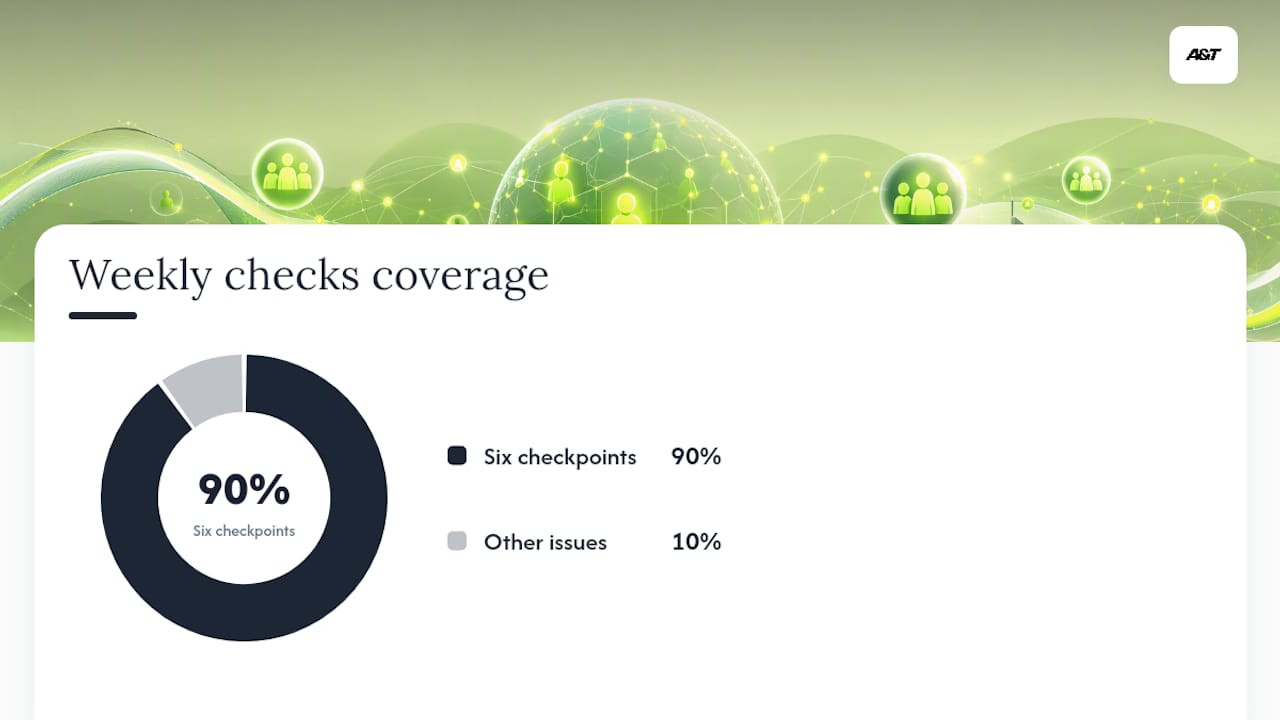
What we inspect every week: seed freshness, exclusion integrity, CAPI event match quality, creative frequency, and CPA trend by tier. These six checkpoints catch 90% of the issues that cause SMB lookalike campaigns to underperform.
For SMBs with limited audience targeting experience, this structured approach compresses the learning curve significantly. You don't need six months of trial and error to find a working configuration.
What SMBs consistently get wrong about lookalike audiences
Most SMB marketers understand the concept of lookalikes. Fewer understand where the real leverage is.
The common assumption is that the platform does the heavy lifting once you upload a list. That's partially true. But the platform can only be as good as the signal you give it. A seed of 2,000 unverified email subscribers who never purchased will produce a lookalike that looks nothing like your buyers. The algorithm is powerful, but it's modeling the wrong people.
The second mistake is treating audience selection as the primary optimization lever. In most underperforming lookalike campaigns, the creative is the actual problem. Flip the diagnostic order: test creative first, then refine the seed.
The third mistake is scaling too fast. Doubling a budget overnight disrupts Meta's delivery algorithm and almost always spikes CPA.
For SMBs building their creative ad strategy alongside lookalike testing, the two disciplines compound each other. Better creative improves lookalike performance. Better lookalike data informs what creative angles resonate.
A&T agency runs your lookalike campaigns from seed to scale
If you're ready to move beyond interest targeting but don't want to spend three months figuring out seed construction, CAPI setup, and parallel testing on your own, that's exactly where A&T Digital comes in.
We manage Meta Ads campaigns and Google Ads end-to-end: source audit, seed construction, creative development, CAPI verification, and the full 1%/3% testing cycle. No long onboarding. No unnecessary meetings. You get a campaign that's built correctly from the start and optimized weekly against real CPA data.
Reach out to A&T Digital for a paid media audit and a 7-day starter test plan tailored to your account.
Sources
These are the primary platform docs and well-regarded resources used as the research basis for this article. Consult platform help centers for current UI steps, as features and minimum requirements update frequently.
What Is a Lookalike (LAL) Audience? A Complete Guide | Salesforce
What Is a Lookalike Audience? Definition + How It Works | Marketful
Lookalike Audiences Facebook Ads: Seed Strategy & Scaling Guide | Adligator
About Lookalike Audiences | Meta Business Help Center - Facebook