Mastering Performance Marketing Workflow for High ROI
Posted on
Marketing
Posted at

Setting high-impact goals and pinpointing your audience define the trajectory of any successful campaign. For business leaders focused on profitable returns, every marketing decision flows from these early steps. By prioritizing clear, measurable objectives and deep audience insights, you set the stage for paid strategies that move the needle on Google Ads and Meta investments.
Table of Contents
Quick Summary
Key Insight | Explanation |
Define Clear Campaign Goals | Establish measurable objectives aligned with business outcomes for effectiveness. |
Create Detailed Audience Personas | Utilize data to build specific personas that reflect your target customers’ characteristics. |
Develop Strategic Ad Creatives | Craft compelling visual narratives that resonate with identified customer needs and preferences. |
Set Up Robust Analytics Systems | Implement systems to track key metrics, enabling data-driven decisions for optimization. |
Continuously Monitor and Optimize | Regularly review performance data to make informed adjustments, maintaining campaign agility. |
Define Campaign Goals and Target Audiences
Defining precise campaign goals and understanding your target audience are foundational steps in creating a high-performance marketing strategy. These initial actions determine how effectively your paid advertising will convert and generate return on investment.
Begin by establishing clear, measurable objectives that align with your business outcomes. Are you seeking to increase website traffic, generate qualified leads, boost sales conversions, or expand brand awareness? Identifying specific target audience characteristics helps you craft personalized marketing messages that resonate deeply with potential customers. This means examining demographic details like age, gender, income level, professional background, and geographic location.
To pinpoint your ideal audience, leverage data from previous customer interactions, website analytics, and market research. Analyze purchase histories, engagement patterns, and consumer motivations to build comprehensive audience personas. Break down these profiles into primary and secondary segments, understanding their pain points, preferences, and online behaviors. This granular approach allows you to design targeted campaigns that speak directly to each group’s unique needs and interests.
Pro tip: Create a detailed audience matrix with at least three distinct customer personas to maximize campaign precision and effectiveness.
Here is a comparison of common campaign goals and their primary performance metrics:
Campaign Goal | Key Metric | Typical Platform |
Brand Awareness | Impressions | Meta, Google Display |
Website Traffic | Click-through Rate (CTR) | Google Search, Meta |
Lead Generation | Cost per Lead (CPL) | Google, LinkedIn Ads |
Sales Conversions | Conversion Rate | Google Search, Meta |
Customer Retention | Customer Lifetime Value | Email, Meta Retargeting |
Develop Strategic Ad Plans and Creatives
Developing strategic ad plans and creatives is crucial for transforming your marketing goals into compelling visual narratives that capture audience attention and drive conversions. This step bridges the gap between your campaign objectives and actual audience engagement.
Start by creating a comprehensive creative brief that defines campaign objectives with precision. Your brief should outline key messaging, visual direction, target audience insights, and specific desired outcomes. Consider the emotional and rational triggers that will resonate with your identified customer personas. Craft ad creatives that speak directly to their needs, challenges, and aspirations while maintaining a consistent brand voice across different advertising platforms.

When developing ad content, focus on creating variations that can be A/B tested across different channels. Design multiple visual concepts, headline approaches, and call-to-action statements that align with your performance marketing strategy. Ensure your creatives are platform-specific, tailored for Google Ads, Meta Ads, and other relevant digital advertising spaces. Incorporate strong visual hierarchy, clear value propositions, and compelling imagery that immediately captures the viewer’s attention within the first few seconds.
Pro tip: Develop at least three distinct creative variations for each campaign to enable robust performance testing and optimization.
Set Up Tracking and Analytics Systems
Setting up robust tracking and analytics systems is the critical backbone of performance marketing, enabling you to transform raw data into actionable insights that drive strategic decision-making and campaign optimization.
Begin by implementing comprehensive performance measurement systems that align directly with your specific campaign objectives. Configure Google Analytics, Meta Pixel, and platform-specific tracking tools to capture granular data points, including click-through rates, conversion events, audience engagement metrics, and revenue attribution. Ensure you establish custom conversion tracking for each unique campaign goal, whether that involves lead generation, product sales, or brand awareness metrics.
Develop a structured dashboard that aggregates key performance indicators from multiple sources, allowing you to quickly visualize campaign performance and identify optimization opportunities. Connect your tracking systems to create a unified view of customer interactions across different marketing channels. Pay special attention to metrics like cost per acquisition, return on ad spend, conversion rates, and customer lifetime value. These indicators will provide a comprehensive understanding of your marketing performance and guide future strategic adjustments.
Pro tip: Schedule weekly analytics review sessions to maintain real-time insights and rapidly iterate on campaign performance.
The table below summarizes essential analytics tools and their core functions for campaign tracking:
Tool Name | Main Function | Business Benefit |
Google Analytics | Tracks website user behavior | Reveals high-performing channels |
Meta Pixel | Tracks Meta ad conversions | Measures ROI from social campaigns |
Google Tag Manager | Manages tracking scripts | Streamlines analytics deployments |
Platform Dashboards | Monitors campaign KPIs | Allows real-time optimization |
Launch Paid Campaigns and Manage Bidding
Launching paid campaigns and implementing strategic bidding approaches are critical for maximizing your marketing performance and generating substantial return on investment. This stage transforms your carefully developed strategy into active digital advertising execution.
Start by configuring smart bidding strategies that leverage machine learning to optimize your ad spend across Google Ads and Meta platforms. Select bidding approaches that align with your specific campaign objectives, whether you are targeting conversions, click-through rates, or brand awareness. Configure automated bidding systems that can dynamically adjust bid amounts in real time based on performance signals, ensuring you maintain efficient budget allocation while maximizing potential returns.
Establish granular campaign structures with tightly themed ad groups that allow for precise targeting and performance tracking. Implement conversion tracking across all platforms to measure actual business outcomes rather than just surface-level metrics. Continuously monitor campaign performance metrics such as cost per click, conversion rates, and return on ad spend. Be prepared to make rapid adjustments to your bidding strategy based on emerging data insights, keeping your campaigns agile and responsive to market dynamics.
Pro tip: Create separate bidding strategies for different audience segments to enable more nuanced and targeted campaign optimization.
Monitor Results and Optimize Performance
Monitoring campaign results and continuously optimizing performance are critical processes that transform raw data into strategic marketing insights, enabling precise adjustments that maximize your return on investment.
Key performance indicators alignmentprovides the foundation for effective marketing performance evaluation. Create comprehensive dashboards that track critical metrics across all advertising platforms, including Google Ads and Meta. Focus on measuring conversion rates, customer acquisition costs, click-through rates, and revenue generated from each campaign. Implement a systematic review process where you analyze performance data weekly or biweekly to identify trends, underperforming segments, and opportunities for strategic refinement.
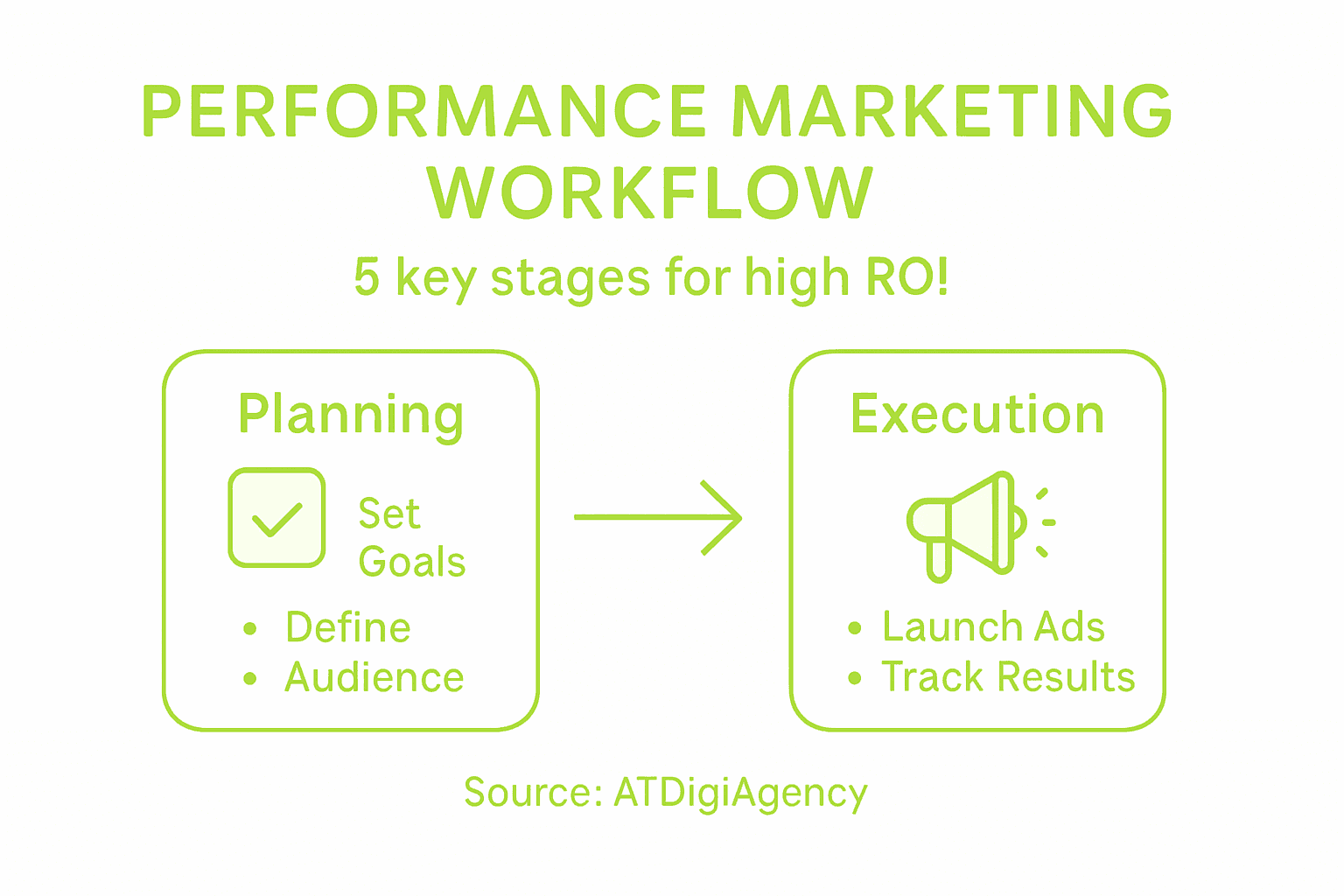
Utilize advanced analytics tools to conduct granular performance assessments. Compare different audience segments, ad creatives, and targeting approaches to understand which combinations deliver the most efficient results. Be prepared to make data-driven decisions such as reallocating budget from low-performing campaigns, adjusting bid strategies, or refining audience targeting. Develop a continuous improvement mindset where each performance review becomes an opportunity to incrementally enhance your marketing effectiveness.
Pro tip: Establish automated reporting systems that provide real-time performance snapshots to enable faster strategic iterations.
Unlock High ROI with Expert Performance Marketing Support
Mastering the workflow for performance marketing means tackling complex challenges like precise audience targeting, strategic bidding, and continuous data-driven optimization. You want clear campaign goals, creative testing, and accurate tracking systems all working together to generate real results. The struggle of turning scattered data into actionable insights while managing efficient ad spend can feel overwhelming without specialized guidance.
At ATDigitalAgency, we understand these pain points. Our boutique team specializes in building and scaling paid advertising campaigns on Google Ads and Meta platforms that deliver measurable growth in leads, conversions, and revenue across competitive industries. We handle every step from strategy and creative development to launch and performance analysis, so your marketing dollars are always working smarter for you. Experience personalized service without unnecessary meetings and benefit from tested, purposeful ad management tailored to your business goals.
Ready to elevate your campaigns with proven expertise.
Discover how ATDigitalAgency’s performance marketing solutions can help you achieve high ROI by turning your strategic plans into actionable results. Learn about our campaign strategy and planning process designed to maximize efficiency. Take control of your digital advertising today by partnering with specialists focused on delivering success without complexity. Visit ATDigitalAgency and start scaling your growth with confidence.
Frequently Asked Questions
What are the key steps in mastering the performance marketing workflow for high ROI?
To master performance marketing workflow, start by defining campaign goals and understanding your target audience. Then, develop ad plans and creatives, set up tracking systems, launch campaigns with strategic bidding, and continuously monitor results for optimization.
How can I effectively define my campaign goals?
Clearly define your campaign goals by determining whether you want to increase website traffic, generate leads, boost sales, or raise brand awareness. Align these goals with your overall business outcomes to ensure they guide your campaign strategy.
What metrics should I focus on for measuring performance marketing success?
Focus on key metrics such as conversion rates, customer acquisition costs, click-through rates, and return on ad spend. Regularly review these indicators to gain insights and adjust your campaigns based on performance trends.
How can I create effective target audience personas?
To create effective target audience personas, analyze data from past customer interactions, purchase histories, and engagement patterns. Break down characteristics like demographics, pain points, and online behaviors to develop at least three distinct personas.
What is the importance of setting up tracking systems in performance marketing?
Setting up tracking systems is crucial as they provide data to analyze campaign effectiveness and optimize performance. Implement comprehensive tracking to measure key metrics and gain actionable insights from your marketing efforts.
How often should I review performance metrics for my campaigns?
Review your performance metrics weekly or biweekly to identify trends and make necessary adjustments. This regular analysis allows you to quickly adapt to underperforming segments and improve your campaign outcomes.


