7 Types of Performance Marketing for Higher ROI Success
Posted on
Marketing
Posted at
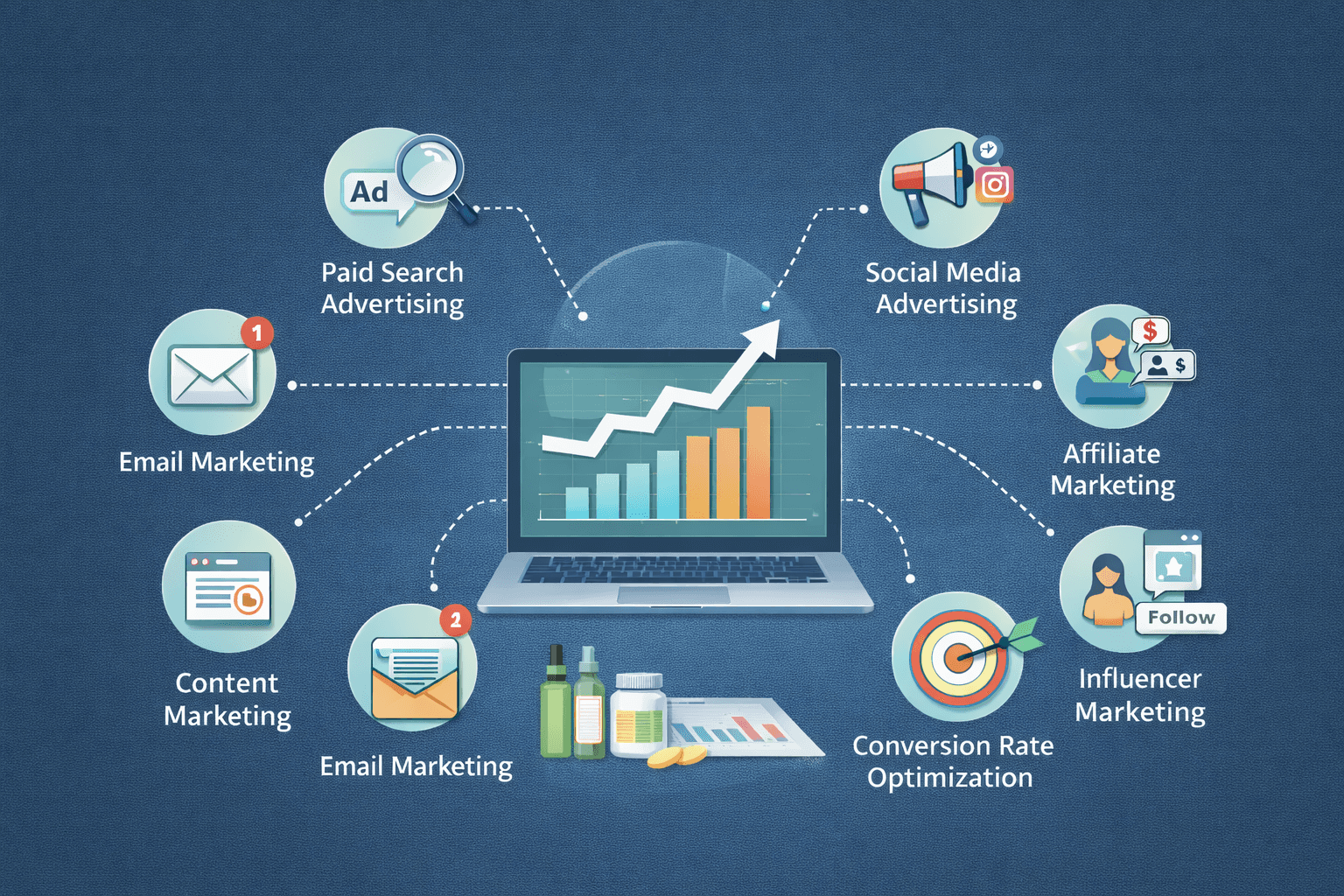
Building a reliable performance marketing strategy for your e-commerce business can feel overwhelming with so many rapid changes in technology, platforms, and consumer habits. It is easy to get lost in buzzwords and risk wasting your marketing budget if you do not focus on proven approaches tailored for real results. The good news is you can use performance-driven tactics that directly impact sales and improve your campaign efficiency.
This list breaks down practical strategies you can apply right away to reach new customers, measure your results, and steadily grow your brand. From affiliate marketing partnerships to advanced paid campaigns on Google and Meta, you will discover focused actions that help you target, engage, and convert your ideal audience. Each insight is designed to take the guesswork out of performance marketing and show you what actually works in the current e-commerce environment.
Table of Contents
Quick Summary
Takeaway | Explanation |
Establish affiliate partnerships strategically | Partner with content creators who align with your brand to effectively promote products and drive sales. |
Prioritize ongoing optimization in Google Ads | Regularly analyze performance metrics and adjust strategies to enhance campaign effectiveness and improve ROI. |
Leverage precise targeting on Meta platforms | Use advanced demographic and behavioral targeting to ensure your ads reach the most relevant audiences efficiently. |
Focus on authenticity in influencer marketing | Select influencers whose values resonate with your brand to foster trust and enhance engagement with potential customers. |
Implement clear tracking mechanisms | Develop robust analytics to monitor performance and make informed adjustments that lead to ongoing marketing success. |
Understanding Affiliate Marketing for Electronic Commerce Growth
Affiliate marketing represents a powerful performance marketing strategy for e-commerce businesses seeking exponential growth with minimal upfront investment. This revenue-sharing model enables online stores to leverage third-party publishers who actively promote products and earn commissions based on successful sales or traffic generated.
At its core, affiliate marketing works by creating strategic partnerships where content creators, bloggers, influencers, and digital publishers promote merchant products through unique tracking links. When a customer makes a purchase using the affiliate’s specialized link, the publisher earns a predetermined percentage of the sale price.
The beauty of this approach lies in its performance-based structure. Unlike traditional advertising, where businesses pay upfront without guaranteed results, affiliate marketing ensures merchants only pay when actual sales occur. This model dramatically reduces financial risk while expanding market reach through diverse marketing channels, including SEO, social media, email campaigns, and content marketing.
Successful e-commerce brands typically structure their affiliate programs with competitive commission rates between 5% to 30%, depending on product margins and industry standards. Top performers design transparent tracking systems, provide marketing materials, and cultivate strong relationships with high-performing affiliates who understand their brand and target audience.
Key Strategies for Affiliate Marketing Success:
Select affiliates aligned with your brand values
Provide comprehensive product information and marketing assets
Implement robust tracking and reporting mechanisms
Offer competitive and attractive commission structures
Regularly communicate and support your affiliate network
Pro tip: Develop a comprehensive onboarding process for new affiliates that includes clear guidelines, performance expectations, and supportive resources to accelerate their success and commitment to your brand.
Maximizing ROI with Google Search and Display Ads
Google Search and Display Ads represent foundational performance marketing strategies that enable businesses to strategically reach potential customers across multiple digital platforms. By leveraging advanced keyword targeting techniques, advertisers can connect with audiences precisely when they demonstrate purchase intent or relevant interests.
Pay-per-click advertising allows marketers to control spending while gaining exceptional targeting capabilities. Search ads appear directly in Google search results when users enter specific keywords, providing immediate visibility for businesses. Display ads expand this reach by showcasing visual advertisements across websites, apps, and platforms within Google’s extensive network.
Successful Google Ads campaigns require strategic planning and continuous optimization. Marketers must develop comprehensive keyword strategies, craft compelling ad copy, design engaging visual creatives, and implement sophisticated audience targeting. Advanced techniques like machine learning bidding and multi-touch attribution help maximize campaign performance and improve overall return on investment.
Key Performance Optimization Strategies:
Conduct thorough keyword research
Create highly specific audience segments
Develop compelling ad copy and visuals
Implement conversion tracking
Regularly analyze and adjust campaign parameters
Test multiple ad variations
Monitor cost per acquisition metrics
Pro tip: Allocate at least 20% of your advertising budget for ongoing testing and optimization to continuously improve campaign performance and reduce wasted ad spend.
Harnessing Paid Social Campaigns on Meta Platforms
Paid social campaigns on Meta platforms represent a powerful performance marketing strategy that enables businesses to reach precisely targeted audiences across Facebook and Instagram. By leveraging advanced audience targeting techniques, marketers can connect with potential customers using sophisticated demographic, behavioral, and interest-based parameters.
Meta advertising platforms offer unparalleled precision in audience segmentation. Businesses can develop custom audiences based on specific characteristics such as age, location, purchasing behaviors, interests, and previous interactions with their brand. This granular targeting allows for highly efficient ad spending by ensuring marketing messages reach the most relevant potential customers.
Successful paid social campaigns require strategic planning and continuous optimization. Marketers must develop compelling visual content, craft engaging ad copy, and implement robust tracking mechanisms. The key is to create ads that seamlessly blend into users' social media experience while delivering a clear and compelling value proposition.
Key Strategies for Meta Platform Success:
Define clear campaign objectives
Develop detailed audience personas
Create visually striking ad creatives
Implement comprehensive conversion tracking
Utilize A/B testing for continuous improvement
Monitor and adjust campaign performance regularly
Align ads with organic content strategy
Pro tip: Allocate at least 15% of your campaign budget for testing different ad variations and audience segments to identify the most effective targeting and messaging strategies.
Leveraging Influencer Marketing for Trust and Reach
Influencer marketing represents a strategic performance marketing approach that transforms brand communication by leveraging trusted voices within specific audience networks. By partnering with authentic content creators who genuinely connect with their followers, businesses can dramatically expand their reach and build consumer trust through strategic brand endorsements.
The power of influencer marketing lies in its ability to humanize brand messaging and create meaningful connections. Unlike traditional advertising, which often feels impersonal, influencer partnerships provide social proof and credibility through recommendations from individuals consumers already know and trust. This approach allows brands to tap into established audience relationships and generate more genuine engagement.
Successful influencer marketing requires careful strategy and alignment. Brands must focus on selecting influencers whose values authentically match their own audience demographics and product positioning. Micro-influencers with smaller but highly engaged audiences often deliver more targeted and cost-effective results compared to celebrity endorsements.
Key Strategies for Influencer Marketing Success:
Identify influencers aligned with brand values
Prioritize authenticity over follower count
Develop clear collaboration guidelines
Create flexible content frameworks
Implement robust performance tracking
Maintain transparent communication
Foster long-term relationship building
Pro tip: Develop comprehensive influencer partnership agreements that outline content expectations, performance metrics, and mutual value propositions to ensure clear alignment and maximize campaign effectiveness.
Native Advertising for Seamless Brand Discovery
Native advertising represents a sophisticated performance marketing strategy that seamlessly integrates brand messaging within the natural content consumption experience. By creating promotional materials that match the look, feel, and tone of the platform where they appear, businesses can deliver strategic brand communication without disrupting user engagement.
Unlike traditional advertising that often feels intrusive, native ads blend organically into the surrounding content environment. This approach allows brands to communicate their value proposition more subtly and effectively by presenting promotional material that looks and feels like editorial or platform-specific content. The key is creating ads that provide genuine value to the audience while maintaining transparency about their promotional nature.
Successful native advertising requires a nuanced understanding of platform-specific content styles, audience expectations, and regulatory guidelines. Marketers must craft content that genuinely interests the target audience while clearly disclosing its sponsored status to maintain trust and comply with advertising regulations.
Key Strategies for Native Advertising Excellence:
Understand platform-specific content styles
Create genuinely valuable, informative content
Ensure clear sponsored content disclosure
Match visual design to platform aesthetics
Focus on audience relevance
Develop compelling storytelling approaches
Maintain high content quality standards
Pro tip: Always include clear and conspicuous sponsorship labeling to build consumer trust and ensure compliance with Federal Trade Commission guidelines for native advertising.
Retargeting and Remarketing for Conversion Uplift
Retargeting and remarketing represent powerful performance marketing strategies designed to re-engage potential customers who have previously demonstrated interest in a product or service. By strategically tracking and targeting users across digital platforms, businesses can dramatically increase conversion potential through personalized and timely advertising approaches.
The fundamental principle behind retargeting involves presenting tailored ads to individuals who have already interacted with a brand's website or digital content. This approach capitalizes on existing user interest by delivering precisely targeted messaging that reminds potential customers of products they previously viewed or considered purchasing. Unlike broad advertising strategies, retargeting focuses on warm leads who are more likely to convert.
Successful retargeting campaigns require sophisticated audience segmentation and strategic ad design. Marketers must create compelling visual and messaging strategies that feel relevant and non-intrusive. The goal is to nudge potential customers toward conversion by providing additional value context or incentives that address potential purchasing hesitations.
Key Strategies for Retargeting Success:
Segment audiences based on specific interaction levels
Create personalized ad content
Implement frequency capping
Design sequential messaging approaches
Use dynamic product recommendations
Develop compelling call-to-action strategies
Monitor and optimize campaign performance
Pro tip: Implement a strategic frequency cap on retargeting ads to prevent audience fatigue and maintain a positive brand perception while maximizing conversion potential.
Tracking and Measuring Results for Ongoing Optimization
Performance marketing success hinges on rigorous measurement and continuous improvement strategies that transform raw data into actionable insights. By systematically tracking performance metrics, businesses can make precise adjustments that incrementally enhance marketing campaign effectiveness and return on investment.
Comprehensive performance tracking involves establishing clear key performance indicators (KPIs) that align with specific business objectives. These metrics might include conversion rates, customer acquisition costs, click-through rates, and revenue generated. Advanced marketers utilize sophisticated analytics platforms to collect granular data that reveals nuanced insights about campaign performance across multiple channels.
The optimization process is cyclical and demands consistent attention. Successful performance marketing teams develop robust reporting frameworks that enable rapid analysis and strategic pivoting. This means regularly reviewing campaign data, identifying trends, understanding audience behavior, and making data-driven decisions that progressively improve marketing outcomes.
Key Tracking and Optimization Strategies:
Define clear, measurable KPIs
Implement comprehensive analytics tracking
Conduct regular performance reviews
Use A/B testing for incremental improvements
Monitor cross-channel performance
Analyze customer journey data
Adjust strategies based on empirical evidence
Pro tip: Establish a consistent monthly performance review process that compares current campaign metrics against historical benchmarks to identify trends and opportunities for strategic optimization.
Below is a comprehensive table summarizing the primary performance marketing strategies discussed throughout the article, emphasizing their implementation and outcomes.
Strategy | Description | Key Outcomes |
Affiliate Marketing | Leveraging third-party publishers to promote products through performance-based commissions. | Minimal financial risk while expanding market reach and boosting sales. |
Google Search and Display Ads | Strategic keyword and visual ad targeting to enhance visibility and engagement. | Increased brand exposure and measurable return on investment. |
Meta Platform Campaigns | Connecting with audiences via precise demographic and interest-based targeting. | Improved audience engagement and efficient ad spending. |
Influencer Marketing | Partnering with trusted content creators to build authenticity and consumer trust. | Expanded audience reach and enhanced brand credibility through social proof. |
Native Advertising | Seamlessly integrating promotional materials into natural content environments. | Elevated brand messaging effectiveness while maintaining user engagement. |
Retargeting and Remarketing | Re-engaging previous site visitors with personalized and timely advertisements. | Higher conversion rates through targeted and relevant ad placements. |
Performance Tracking | Systematic analysis of marketing metrics to refine and enhance campaigns. | Incremental improvement in marketing outcomes and optimized campaign strategies. |
Unlock Higher ROI with Expert Performance Marketing Support
Struggling to transform the powerful strategies from “7 Types of Performance Marketing for Higher ROI Success” into measurable growth? Many businesses face challenges like inefficient ad spend, unclear tracking, and the struggle to optimize across Google Ads, Meta platforms, and affiliate channels. The key is implementing precise targeting, ongoing campaign analysis, and creative execution without wasting resources. At A&T Digital Agency, we specialize in solving these exact pain points to help small and medium-sized businesses thrive in competitive markets.
Our boutique team delivers personalized service, focusing on proven tactics such as strategic planning, campaign launch, and continuous optimization tailored to your unique goals. Whether it is mastering paid social campaigns, leveraging retargeting for conversion uplift, or refining your Google Search and Display Ads, we turn complex performance marketing techniques into results that matter.
Take the guesswork out of your advertising and partner with experts who understand the nuances of each performance channel. Visit https://atdigiagency.com to explore how our campaign strategy and planning can elevate your digital presence. See how we’ve helped clients grow with data-driven execution and optimization for campaigns that deliver.
Ready to start scaling your paid advertising systems with confidence?
Get in touch with A&T Digital Agency today to unlock your highest ROI through targeted, expert performance marketing solutions designed specifically for your business.
Frequently Asked Questions
What is performance marketing?
Performance marketing is a results-driven approach that enables businesses to pay only for measurable results, such as clicks, leads, or sales. To implement this, focus on setting clear performance metrics that align with your business goals, allowing for better budget allocation and higher ROI.
How can I utilize affiliate marketing to boost electronic commerce sales?
Affiliate marketing allows you to partner with content creators to promote your products, paying them commission on successful sales. Start by selecting affiliates that resonate with your brand and providing them with marketing materials, aiming for a commission structure between 5% and 30% of the sale price.
What are effective strategies for maximizing ROI through Google Ads?
To maximize ROI with Google Ads, conduct detailed keyword research and create targeted ad campaigns utilizing compelling visuals and copy. Continuously optimize your campaigns by monitoring performance metrics and adjusting your budget allocation based on which ads deliver the best results within a few weeks.
How can the paid social campaigns enhance audience engagement?
Paid social campaigns on platforms like Facebook and Instagram allow for precise targeting of your ideal audience. To enhance engagement, define clear objectives, craft visually appealing ads, and test multiple ad variations to find what resonates most with your audience.
What steps should I take for successful influencer marketing?
To achieve success with influencer marketing, identify influencers whose values align with your brand and target demographic. Create partnership agreements outlining expectations and performance metrics while fostering long-term relationships to enhance authenticity and trust with their audience.
How can I measure the performance of my marketing campaigns?
Measuring campaign performance involves establishing clear key performance indicators (KPIs) that reflect your objectives, such as conversion rates and customer acquisition costs. Implement robust analytics tracking and conduct monthly performance reviews to make data-driven decisions that can improve outcomes significantly over time.
Recommended
Performance Marketing Agency | Multi-Channel Paid Ads || A&T Agency
Performance Marketing Agency | Multi-Channel Paid Ads || A&T Agency
Performance Marketing Agency | Multi-Channel Paid Ads || A&T Agency
Performance Marketing Agency | Multi-Channel Paid Ads || A&T Agency
7 Common Pitfalls in Digital Marketing and How to Avoid Them


