What Is Ad Frequency? A Guide for Digital Marketers
Posted on
Marketing
Posted at

Ad frequency measures how often a user sees your ad during a campaign and is calculated by dividing impressions by reach. Managing frequency carefully, using distribution data and caps, is essential for maximizing campaign performance without causing fatigue or wasting budget. Overexposure risks increase with multi-device behavior, making precise frequency control crucial for effective advertising.
Ad frequency is defined as the average number of times a unique user sees your ad during a campaign period. This single metric sits at the center of every paid media decision you make, from budget allocation to creative rotation. Get it right, and you build brand recall and drive conversions. Get it wrong, and you burn budget while annoying the very audience you paid to reach. Understanding what is ad frequency, how to calculate it, and how to manage it is the difference between a campaign that scales and one that stalls. The formula is straightforward: Frequency = Impressions ÷ Reach. An Omnicom Media study confirms that effectiveness typically falls within 2–7 exposures, and Google's own guidelines set a recommended starting point of 3 times per week for video campaigns.
What is ad frequency and how is it calculated?
Ad frequency equalstotal impressions divided by total reach. If your campaign delivers 10,000 impressions to 2,000 unique users, your frequency is 5. That number tells you the average user saw your ad five times during the campaign window.

The word "average" is where most marketers stop reading. That is a mistake. Average frequency hides the real story. Two campaigns can share the same average frequency of 5, yet one may have 80% of users seeing the ad just once while 20% see it 20 times. The second group is already fatigued. The first group barely registered the message.
Frequency distribution reportingsolves this problem. Instead of a single average, it shows you how many users saw the ad once, twice, three times, and so on. Most platforms default to showing only the average. You have to request or build the distribution view yourself, but it is worth the effort.
Pro Tip: Pull frequency distribution data weekly on any campaign running longer than two weeks. A rising share of users in the 8+ exposure bucket is an early warning sign of ad fatigue, even when your average frequency looks healthy.
Two additional concepts shape how you interpret frequency data:
Term | Definition | Why it matters |
|---|---|---|
Impressions | Total ad views, including repeat views by the same user | Raw volume metric; does not reflect unique exposure |
Reach | Number of unique users who saw the ad at least once | The denominator in the frequency formula |
Effective frequency | The number of exposures needed to drive a desired action | Sets your frequency target for a given campaign goal |
Frequency capping | A platform setting that limits how many times one user sees an ad | Controls overexposure at the delivery level |
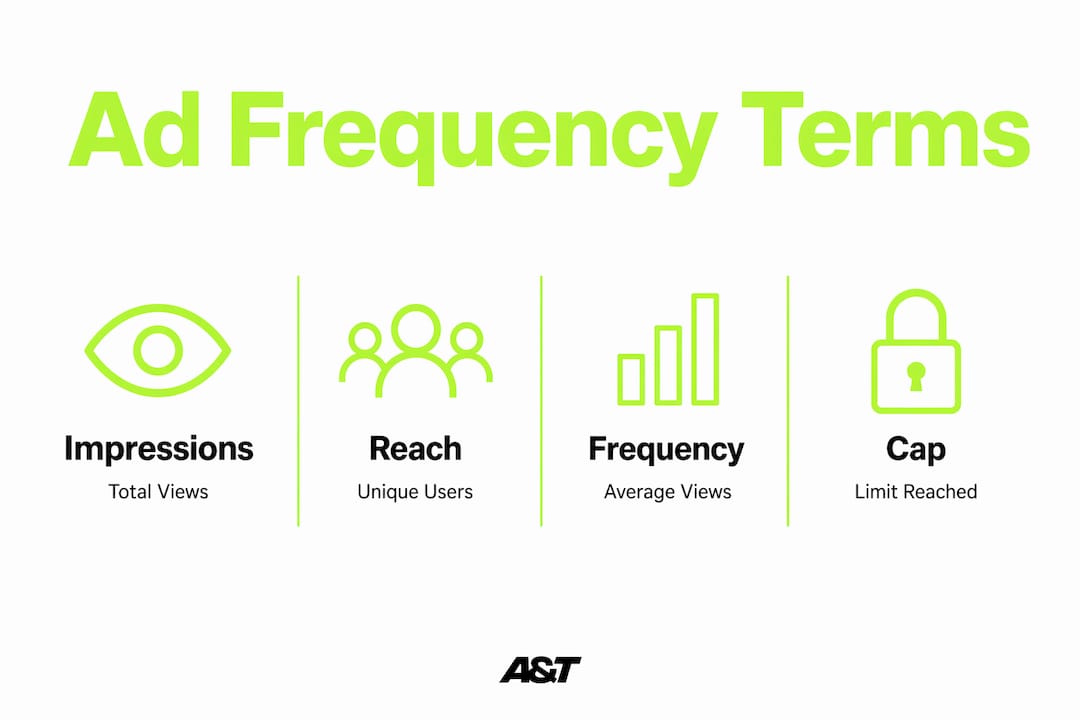
Effective frequency is the target you are aiming for. Frequency capping is the lever you use to stay within that target. Both concepts become more complicated in practice than they appear in theory.
What is the role of ad frequency in campaign performance and ROI?
Frequency drives brand recall, but only up to a point. The first exposure creates awareness. The second and third build recognition. By the fourth or fifth, a user who is in the market starts to consider acting. Past a certain threshold, each additional exposure returns less value and eventually turns negative.
Google's research on video campaignsshows a U.S. brand improved ROI by 19% at a weekly frequency of 2.7 times. That is a specific, measurable result tied to a specific frequency level. It confirms that frequency is not just a delivery metric. It is a performance lever with a real dollar value attached.
The Omnicom Media study introduced the concept of negative reach, which describes what happens when overexposure actively damages brand perception. At that point, you are not just wasting impressions. You are paying to make people dislike your brand. That is the worst possible return on ad spend.
Key performance principles for frequency management:
Frequency in the 2–7 exposure range drives the strongest results for most campaign types, according to Omnicom Media research.
A weekly frequency of 3 is Google's baseline recommendation for awareness video campaigns, with a 2x multiplier for peak seasons.
Reach and frequency trade off against each other. Pushing frequency higher on a fixed budget means fewer unique users see your ad.
Balancing reach and frequency is the core planning decision in any paid media campaign.
Higher frequency without broader reach produces diminishing returns faster than most marketers expect.
The practical takeaway is simple. Frequency is a balancing act, not a number to maximize. More exposures cost more money, and past the effective frequency threshold, that money produces no incremental return.
What are the risks and challenges of managing ad frequency effectively?
Overexposure is the most obvious risk, but it is not the only one. The deeper challenge is that the frequency number your platform reports may not reflect reality. Frequency capping set at 3 impressions per user does not guarantee 3 true exposures. A user who browses on a phone, a laptop, and a tablet may appear as three separate users to your ad platform. That means your cap of 3 could result in 9 actual exposures to the same person.
This is the identity fragmentation problem. Cookieless environments and multi-device behavior have made it worse. Without a reliable identity graph connecting a user's devices and sessions, your frequency data is an estimate at best.
Common risks to monitor:
Ad fatigue: Users stop engaging or actively avoid the ad after too many exposures. Click-through rates drop and negative sentiment rises.
Wasted budget: Impressions served past the effective frequency threshold cost money without driving conversions.
Brand damage: The Omnicom negative reach finding confirms that overexposure frustrates consumers and harms brand perception.
Inaccurate capping: Identity fragmentation reduces the accuracy of frequency caps across devices and browsers.
Cross-channel double exposure: A user capped at 3 on one platform may see 3 more on another, with no coordination between channels.
Pro Tip: Set frequency caps at the campaign level and the ad set level simultaneously. Campaign-level caps give you a ceiling. Ad set caps give you granular control by audience segment. Using both reduces the risk of a single audience group absorbing a disproportionate share of impressions.
Monitoring frequency distribution weekly catches these problems before they compound. A skewed distribution, where a small percentage of users absorbs a large share of impressions, is the clearest signal that your capping is not working as intended.
How can marketers optimize ad frequency for different campaign goals?
Frequency targets are not universal. The right number depends on your campaign objective, your audience's buying cycle, and the platform you are running on.
Effective frequency varies significantly by campaign type. B2B campaigns targeting high-consideration buyers perform best at 2–4 exposures per user per week. Performance campaigns targeting impulse purchases can sustain 5–10 exposures per week before wear-out. The difference comes down to how long the sales cycle is and how often you refresh your creative.
Here is a practical framework for setting frequency by objective:
Brand awareness campaigns: Target 3 exposures per week per user. Use Google's Video Reach campaigns with built-in frequency controls. Refresh creative every 4–6 weeks to prevent wear-out.
Consideration campaigns: Target 4–5 exposures per week. Rotate at least two creative variants to reduce fatigue while maintaining message consistency.
Direct-response campaigns: Test frequency caps between 5 and 10 per week. Monitor conversion rate by frequency bucket. Cut spend on users past the point where conversion rate drops.
Retargeting campaigns: Keep frequency tight, typically 3–5 per week. Retargeted users already know your brand. Overexposure here produces the fastest fatigue.
Cross-channel campaigns: Set caps on each platform independently, then audit total exposure across channels. Cross-channel frequency is not managed by any single platform automatically.
Platform-specific settings matter. Meta's campaign budget optimization distributes spend across ad sets and can concentrate impressions on a narrow audience if left unchecked. Google's reach-and-frequency buying type on YouTube locks in a planned frequency before the campaign runs, which gives you more predictable delivery. For audience targeting strategies that complement frequency controls, pairing tight audience segmentation with frequency caps produces the most efficient spend.
Creative rotation is the most underused frequency management tool. Showing the same user a different ad creative resets the fatigue clock without reducing exposure count. A user who sees three different ads five times each experiences far less fatigue than one who sees the same ad fifteen times.
For Google video ad best practices, platform-specific frequency guidelines align closely with the 3-per-week baseline Google recommends for awareness campaigns. Applying those guidelines to your video placements gives you a defensible starting point before you have enough campaign data to optimize further.
Key Takeaways
Ad frequency is a performance lever, not just a delivery metric. Managing it with precision, using distribution data and cross-channel caps, separates campaigns that scale from those that stall.
Point | Details |
|---|---|
Core formula | Frequency = Impressions ÷ Reach; a result of 5 means each user saw the ad five times on average. |
Distribution over averages | Frequency distribution reveals skewed exposure that average frequency hides, catching fatigue risks early. |
Effective range | Research from Omnicom Media places peak effectiveness between 2 and 7 exposures per campaign period. |
Identity fragmentation risk | Frequency caps lose accuracy in cookieless, multi-device environments due to fragmented identity data. |
Goal-based targets | B2B consideration campaigns perform best at 2–4 weekly exposures; performance campaigns can sustain 5–10. |
Why frequency data deserves more respect than it gets
Most marketers treat frequency as a guardrail, something to cap and forget. I think that framing costs real money. Frequency is one of the few metrics that tells you not just how many people you reached, but how hard you pushed on each one. That distinction matters enormously when you are managing a fixed budget across multiple channels.
The identity fragmentation problem is the part of this conversation that does not get enough attention. Marketers set a cap of 3, see a frequency of 2.8 in the dashboard, and assume the job is done. But that 2.8 is an average across identifiers, not across people. In a world where a single user has three devices and two browsers, the real number could be double what the platform reports. That gap between reported frequency and actual exposure is where budget gets wasted and audiences get burned.
The other thing I keep coming back to is the relationship between frequency and creative quality. A great ad can sustain higher frequency before fatigue sets in. A mediocre ad hits the wall faster. Marketers who focus only on frequency caps without addressing creative rotation are solving half the problem. The ad optimization checklist approach, where you treat frequency and creative refresh as linked decisions, produces better results than managing either in isolation.
Frequency data, used well, tells you when to push harder and when to pull back. That is a competitive advantage most advertisers leave on the table.
— Ann
How A&T agency helps you get frequency right
A&T Digital's performance marketing team manages paid campaigns across Google Ads and Meta with frequency optimization built into every campaign structure. We set frequency caps at both the campaign and ad set level, monitor distribution data weekly, and rotate creative before fatigue sets in. For clients running cross-channel campaigns, we audit total exposure across platforms to prevent the double-exposure problem that single-platform caps miss. If your campaigns are burning budget on overexposed audiences or your click-through rates are declining without a clear cause, frequency mismanagement is likely the culprit. We fix that with data, not guesswork.
FAQ
What is ad frequency in digital marketing?
Ad frequency is the average number of times a unique user sees your ad during a campaign. It is calculated by dividing total impressions by total reach.
How do I calculate ad frequency?
Divide your total impressions by your total reach. For example, 10,000 impressions divided by 2,000 unique users equals a frequency of 5.
What is the optimal ad frequency for most campaigns?
Research from Omnicom Media places peak effectiveness between 2 and 7 exposures. Google recommends approximately 3 exposures per week for video awareness campaigns.
What happens when ad frequency is too high?
Overexposure causes ad fatigue, drops in click-through rates, and, according to Omnicom Media research, negative reach where consumers develop a negative perception of the brand.
How does frequency capping work across multiple devices?
Frequency caps limit impressions per user identifier, not per actual person. In multi-device environments, a single user may appear as multiple identifiers, reducing the accuracy of the cap and increasing the risk of overexposure.