What Is Predictive Analytics in Ads: 2026 Guide
Posted on
Marketing
Posted at

Predictive analytics forecasts advertising outcomes using historical data and machine learning, enabling proactive decisions.
Most top marketers see a significant conversion lift and shift their operating models from reactive to forward-looking.
Predictive analytics in ads is defined as the use of historical campaign data, machine learning, and statistical models to forecast future advertising outcomes before a single dollar is spent. This is the industry term for what many marketers loosely call "data-driven forecasting," and the distinction matters. 91% of top-performing marketers use predictive strategies, achieving an average conversion lift of 22.66% compared to non-predictive targeting. That gap is not a coincidence. Predictive analytics for advertising shifts the entire operating model from reactive reporting to proactive decision-making, and the marketers who have made that shift are pulling ahead.
What is predictive analytics in ads and how does it work?
Predictive analytics in advertising works by feeding historical campaign data, user behavior signals, and market trends into machine learning models that output probability-weighted forecasts. The models analyze patterns across variables like click-through rates, cost per acquisition (CPA), return on ad spend (ROAS), and audience engagement to estimate what will happen next. Predictive analytics forecasts outcomes like CPA and ROAS before budget is deployed, which is the core difference from traditional analytics.

Traditional analytics tells you what happened last month. Predictive modeling tells you what is likely to happen next month if you take a specific action. That shift changes how you plan, allocate, and execute campaigns entirely.
The main data inputs predictive models rely on include:
Historical campaign performance — click rates, conversion rates, cost data across past campaigns
User behavior signals — browsing patterns, purchase history, engagement depth, device usage
Market and seasonal trends — industry cycles, competitor activity patterns, macro demand shifts
Attribution data — multi-touch conversion paths that show which touchpoints drove results
Pro Tip: Connect your ad platform data to a centralized analytics system before building any predictive model. Fragmented data produces fragmented forecasts.
Understanding how to analyze campaign data is the prerequisite for any predictive system. Without clean historical data, the model has nothing reliable to learn from.
What are the common predictive models used in ad analytics?
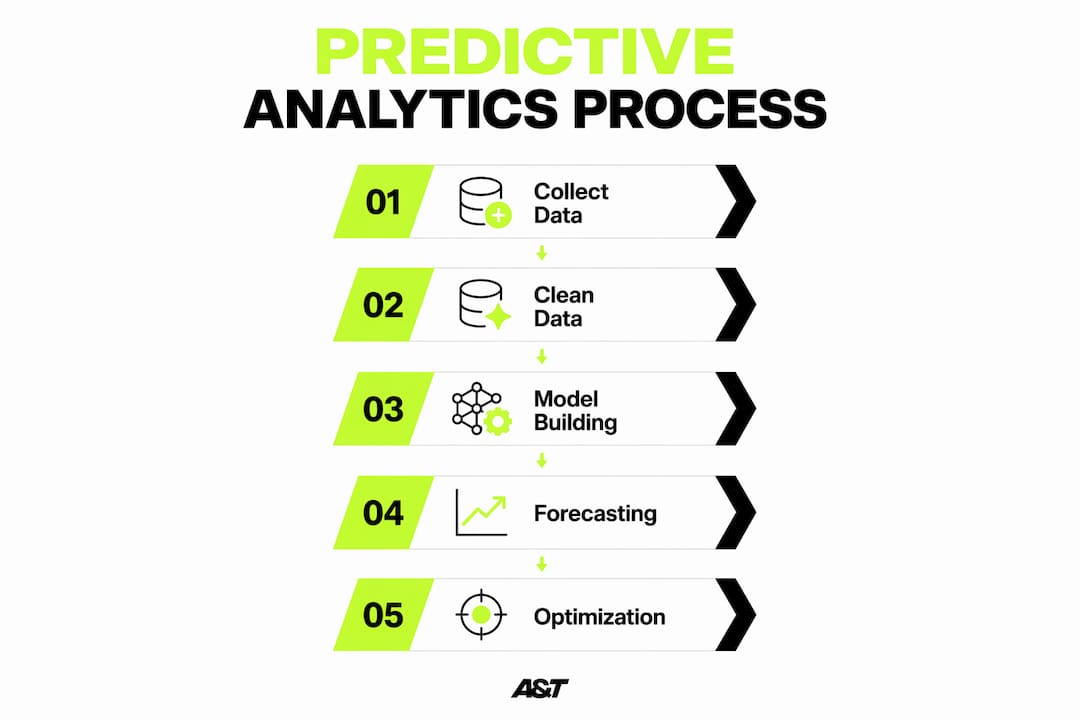
Several modeling techniques power predictive analytics for advertising, and each serves a different forecasting purpose.
Bayesian models update probability estimates as new data arrives. They work well in ad environments where conditions change frequently, because the model recalibrates rather than waiting for a full data cycle to complete.
Classification models sort audiences into groups based on predicted behavior, such as "likely to convert" or "likely to churn." These models feed audience segmentation decisions directly, which is why audience segmentation and predictive analytics are closely linked in performance marketing.
Time series models analyze patterns over time to forecast future values. They are the standard tool for predicting impression volume, search demand, and seasonal conversion rate shifts.
Uplift models measure the incremental effect of showing an ad to a specific person. They answer a question traditional models ignore: would this person have converted anyway, even without seeing the ad?
One critical nuance every marketer needs to understand: predictive models output ranges, such as 15,000 to 22,000 impressions, not single exact numbers. That range reflects genuine statistical uncertainty in ad auctions. It is not a flaw. It is the model being honest about what the data supports.
Pro Tip: Never use a single-point forecast as your plan. Build a best-case and worst-case scenario from the model's range, then set your budget floor at the conservative estimate.
The probabilistic nature of these forecasts is also why predictive analytics is a tool to reduce uncertainty, not eliminate it. Marketers who treat model outputs as guarantees consistently overspend or misallocate budget.
How can predictive analytics improve ad budget planning and creative management?
Budget planning is where predictive modeling in marketing delivers its most direct financial impact. Instead of reviewing last month's spend and adjusting backward, you forecast forward. The process works in four practical steps:
Run a baseline forecast. Feed your historical CPA, ROAS, and volume data into the model to establish expected performance ranges for the next period.
Run "what-if" simulations. Predictive modeling enables what-if simulations to test different budget splits and channel mixes before committing spend. You can model what happens if you shift 20% of your Google Ads budget to Meta, or double spend on a high-performing audience segment.
Identify high-propensity segments. The model surfaces audience groups with the highest predicted conversion probability. You allocate more budget there before the campaign launches, not after it underperforms.
Set reallocation triggers. Define the forecast thresholds that will prompt a budget shift mid-campaign. This makes budget reallocation proactive rather than reactive, with adjustments possible multiple times per week based on updated forecasts.
"In marketing like in chess, those who calculate their moves ahead win. Predictive analytics is how you calculate. You stop reacting to what your ads did and start deciding what they will do."
Creative management is the second major application. Ad fatigue is one of the most consistent budget killers in paid advertising. Audiences stop responding to the same creative after repeated exposure, and most teams only notice when conversion rates have already dropped. Predictive analytics enables proactive creative refresh before engagement and conversion rates decline. The model flags when a creative is approaching fatigue based on frequency, engagement decay, and historical patterns for similar assets. You replace the creative before performance falls, not after.
For marketers running Google Ads and Meta campaigns simultaneously, this matters even more. Creative fatigue compounds across platforms when the same audience sees the same message everywhere. Predictive models that track cross-channel exposure patterns catch this earlier than any manual review process. You can read more about ad budget planning to see how these forecasting principles apply directly to spend decisions.
What are common challenges when implementing predictive analytics in advertising?
Predictive analytics for advertising delivers strong results when implemented correctly. The implementation itself is where most teams struggle.
The most common challenges include:
Data quality gaps. Complete multi-touch attribution and unified data are prerequisites for accurate predictions. Incomplete or siloed data produces forecasts that look confident but are built on a flawed foundation.
System integration friction. Ad platforms, CRMs, and analytics tools often store data in incompatible formats. Connecting them into a single clean data pipeline requires upfront technical work that many teams underestimate.
Ethical and privacy considerations. Data quality and ethical issues are real implementation barriers, particularly as third-party cookie deprecation changes what behavioral data is available.
Over-reliance on model outputs. External factors like seasonality, competitor moves, and technical issues are not fully captured by historical data. Human judgment is necessary to contextualize what the model produces.
The cultural challenge is just as real as the technical one. Shifting from "which ad performed best last month" to "which will perform best next month" represents a genuine mindset change for most marketing teams. Reporting past performance feels safe and concrete. Forecasting future outcomes requires confidence in the model and willingness to act on probabilities.
Pro Tip: Start with one forecasting use case, such as weekly budget reallocation, before building a full predictive system. Small wins build team confidence and surface data gaps early.
The transformative role of predictive analytics in digital marketing is well documented, but the teams that extract the most value are those that pair model outputs with experienced human review. The model handles pattern recognition at scale. The human handles context the model cannot see. That combination is what analytics in advertising looks like when it actually works.
Key Takeaways
Predictive analytics in ads works because it combines historical data, machine learning, and human judgment to forecast outcomes before budget is committed, giving marketers a measurable edge over reactive campaign management.
Point | Details |
|---|---|
Definition and core value | Predictive analytics forecasts CPA, ROAS, and conversion outcomes before spend, replacing reactive reporting. |
Model outputs are ranges | Forecasts produce probability ranges, not exact numbers; plan for best-case and worst-case scenarios. |
Budget planning shifts forward | What-if simulations and proactive reallocation prevent diminishing returns and wasted spend. |
Creative fatigue is preventable | Models flag engagement decay before conversion rates drop, enabling timely creative refreshes. |
Data quality is non-negotiable | Unified, multi-touch attribution data is the foundation; gaps in data produce unreliable forecasts. |
Why predictive analytics changed how I think about ad strategy
The biggest misconception I see is that predictive analytics is a reporting upgrade. It is not. It is a fundamentally different operating model. Most teams I have worked with spend the majority of their time explaining what already happened. Predictive analytics asks you to spend that same time deciding what you want to happen next and building toward it.
The second misconception is that the model does the thinking for you. It does not. I have seen well-built models produce forecasts that were technically accurate but contextually wrong because a competitor launched a major promotion the same week. The model had no way to know that. A human reviewing the forecast did. The combination of model and judgment is what produces consistent results.
The teams that get the most from predictive modeling are not necessarily the ones with the most data. They are the ones who have committed to a forecasting culture. They review model outputs weekly. They act on the signals before performance drops. They treat the forecast as a working document, not a final answer. That discipline, more than any specific tool or technique, is what separates marketers who use data well from those who just collect it.
If you are starting out, the analytics in advertising conversation is worth understanding before you build your first model. The foundational principles of what data to collect and how to interpret it shape everything that follows.
— Ann
How A&T agency builds predictive ad systems for real results
A&T Digital specializes in performance marketing across Google Ads and Meta campaigns, with data-driven budget planning and audience forecasting built into every engagement. We do not run campaigns on instinct. We build forecasting systems that tell you where your budget will perform before you spend it. Our team handles campaign strategy, creative management, and ongoing optimization using the same predictive principles covered in this article. If you want campaigns that move from reactive to proactive, we are the team to call.
FAQ
What is predictive analytics in ads in simple terms?
Predictive analytics in ads uses historical data and machine learning to forecast future campaign outcomes, such as CPA and ROAS, before budget is spent. It replaces reactive reporting with forward-looking decision-making.
How does predictive analytics improve ad performance?
Top-performing marketers using predictive strategies achieve an average conversion lift of 22.66% compared to non-predictive targeting. The improvement comes from better budget allocation, smarter audience targeting, and proactive creative management.
What data do you need for predictive ad modeling?
Accurate predictive models require complete multi-touch attribution data, historical campaign performance metrics, and unified data across all ad platforms. Gaps in attribution data directly reduce forecast reliability.
Can small businesses use predictive analytics for advertising?
Yes. The entry point is clean historical data and a consistent attribution setup, not enterprise-level infrastructure. Starting with a single forecasting use case, such as weekly budget reallocation, is a practical first step.
What is the difference between predictive analytics and traditional ad analytics?
Traditional analytics reports on past performance. Predictive analytics forecasts future outcomes using statistical models and machine learning, enabling marketers to act before results decline rather than after.