Why Optimize Google Ads for Better ROI Results
Posted on
Marketing
Posted at

Balancing tight ad budgets with the challenge of standing out on Google Search can feel like a daily puzzle for any digital marketing manager. Optimizing Google Ads is not just about launching campaigns but about making every dollar work harder through ongoing data-driven adjustments. By focusing on relevant ad targeting and continuous performance refinement, you position your e-commerce brand for stronger returns and a measurable edge over the competition.
Table of Contents
Key Takeaways
Point | Details |
Google Ads Optimization | It aims to maximize ROI by refining ad elements for better targeting and engagement, ensuring efficient ad spend. |
Performance Analysis | Continuous refinement of campaigns based on metrics and audience behaviors enhances ad effectiveness and reduces waste. |
Diverse Optimization Strategies | Different strategies target specific objectives, such as search, display, video, shopping, and app ads, each with unique benefits. |
Avoid Common Mistakes | Successful optimization avoids pitfalls like neglecting user experience and over-focusing on click-through rates, ensuring effective audience reach. |
Defining Google Ads Optimization and Its Purpose
Google Ads optimization is a strategic process designed to improve the performance and efficiency of digital advertising campaigns. At its core, the goal is to maximize return on investment (ROI) by systematically refining ad elements to achieve better targeting, engagement, and conversion rates. Businesses invest in this approach to ensure their advertising dollars are spent intelligently and produce measurable results.
The fundamental purpose of Google Ads optimization extends beyond simply creating advertisements. It involves continuous performance refinement through meticulous analysis of campaign metrics, audience behaviors, and competitive landscapes. Digital marketers aim to reduce wasted ad spend while increasing the precision of audience targeting, which means developing ads that speak directly to potential customers’ needs and interests.
Optimization strategies typically include several key focus areas: keyword selection, ad copy enhancement, landing page improvements, bidding strategy adjustments, and audience targeting refinement. By systematically testing and improving these elements, businesses can significantly increase their ad relevance, improve quality scores, and ultimately drive more meaningful interactions with potential customers. This data-driven approach transforms advertising from a hit-or-miss activity into a calculated, results-oriented marketing strategy.
Pro tip: Start by auditing your current Google Ads campaigns and identifying the lowest-performing keywords, then gradually replace them with more targeted, high-intent search terms to improve overall campaign efficiency.
Main Types of Google Ads Optimizations
Google Ads offers multiple optimization strategies across different campaign types, each designed to target specific marketing objectives and audience segments. Search ad optimizations represent the foundational approach, allowing businesses to display text-based advertisements directly in search results when potential customers seek relevant products or services. These ads can be further refined through techniques like responsive search ads, which automatically test different headline and description combinations to identify the most effective messaging.
Display and video ad optimizations provide additional avenues for reaching potential customers across various digital platforms. Display ads enable visual storytelling through banner advertisements on websites, while video ads leverage platforms like YouTube to create engaging, dynamic content that captures audience attention. Businesses can customize these ad formats by targeting specific demographics, interests, and behavioral patterns, ensuring their visual content reaches the most relevant viewer segments.
Shopping and app advertisement optimizations represent more specialized strategies for specific business goals. Shopping ads allow e-commerce businesses to showcase product images, prices, and merchant information directly in search results, while app advertisements help mobile software developers promote their applications across multiple platforms. These optimization techniques require precise audience targeting, compelling visual design, and continuous performance analysis to maximize return on investment.
Here is a comparison of key Google Ads optimization types and their unique business advantages:
Optimization Type | Target Platform | Main Objective | Unique Benefit |
Search Ads | Google Search | Capture intent-driven traffic | High purchase intent targeting |
Display Ads | Display Network websites | Build brand awareness | Visual reach across websites |
Video Ads | YouTube and video partners | Engage users with multimedia ads | Dynamic storytelling options |
Shopping Ads | Google Shopping/Search | Promote physical products | Product images with prices |
App Ads | App stores and networks | Increase app downloads | Cross-platform user reach |
Pro tip: Implement A/B testing across different ad formats and constantly monitor performance metrics to systematically improve your Google Ads campaign effectiveness and reduce unnecessary spending.
How Optimization Influences Ad Performance
Optimization plays a critical role in transforming digital advertising from a scattershot approach to a precision-driven strategy. Digital marketing performance hinges on the ability to continuously refine and adjust advertising campaigns, ensuring that every marketing dollar is spent with maximum strategic intent. By systematically analyzing performance metrics, businesses can identify which ad elements resonate most with their target audience, allowing for rapid improvements in click-through rates, conversion potential, and overall return on ad spend.

The impact of optimization extends beyond mere numerical improvements. Targeted ad strategies directly influence consumer perception and engagement, creating a nuanced interaction between brand messaging and audience receptivity. Sophisticated optimization techniques enable marketers to balance precise targeting with user experience, avoiding the pitfalls of ad fatigue while maintaining high levels of audience interest. This delicate equilibrium requires ongoing analysis of demographic data, user behavior patterns, and real-time performance indicators.
Technical optimization elements such as keyword refinement, audience segmentation, and creative testing serve as the mechanical backbone of successful ad performance. Businesses can dramatically improve their advertising efficiency by implementing dynamic bidding strategies, developing responsive ad formats, and continuously testing different creative approaches. The goal is not just to reach more people, but to reach the right people with the most compelling and relevant messaging possible.
Pro tip: Develop a consistent optimization schedule where you review ad performance metrics weekly, identifying underperforming elements and implementing strategic adjustments to improve targeting and engagement.
Cost Implications and Managing Wasted Ad Spend
Digital advertising presents a complex financial landscape where inefficiencies can dramatically erode marketing budgets. Ad spend efficiency requires meticulous tracking and strategic management to ensure that every marketing dollar generates meaningful returns. Research indicates that businesses often waste significant portions of their advertising budgets due to poorly targeted campaigns, ineffective audience segmentation, and a lack of comprehensive performance monitoring.
The financial implications of wasted ad spend are substantial. Studies reveal that approximately 64% of digital advertising expenditures fail to reach intended consumers effectively, with intermediary fees, invalid traffic, and non-viewable inventory consuming substantial portions of marketing budgets. Successful advertisers combat these challenges by implementing rigorous optimization strategies that focus on precise audience targeting, transparent platform selection, and continuous performance analysis. This approach transforms advertising from a cost center into a strategic investment with measurable outcomes.
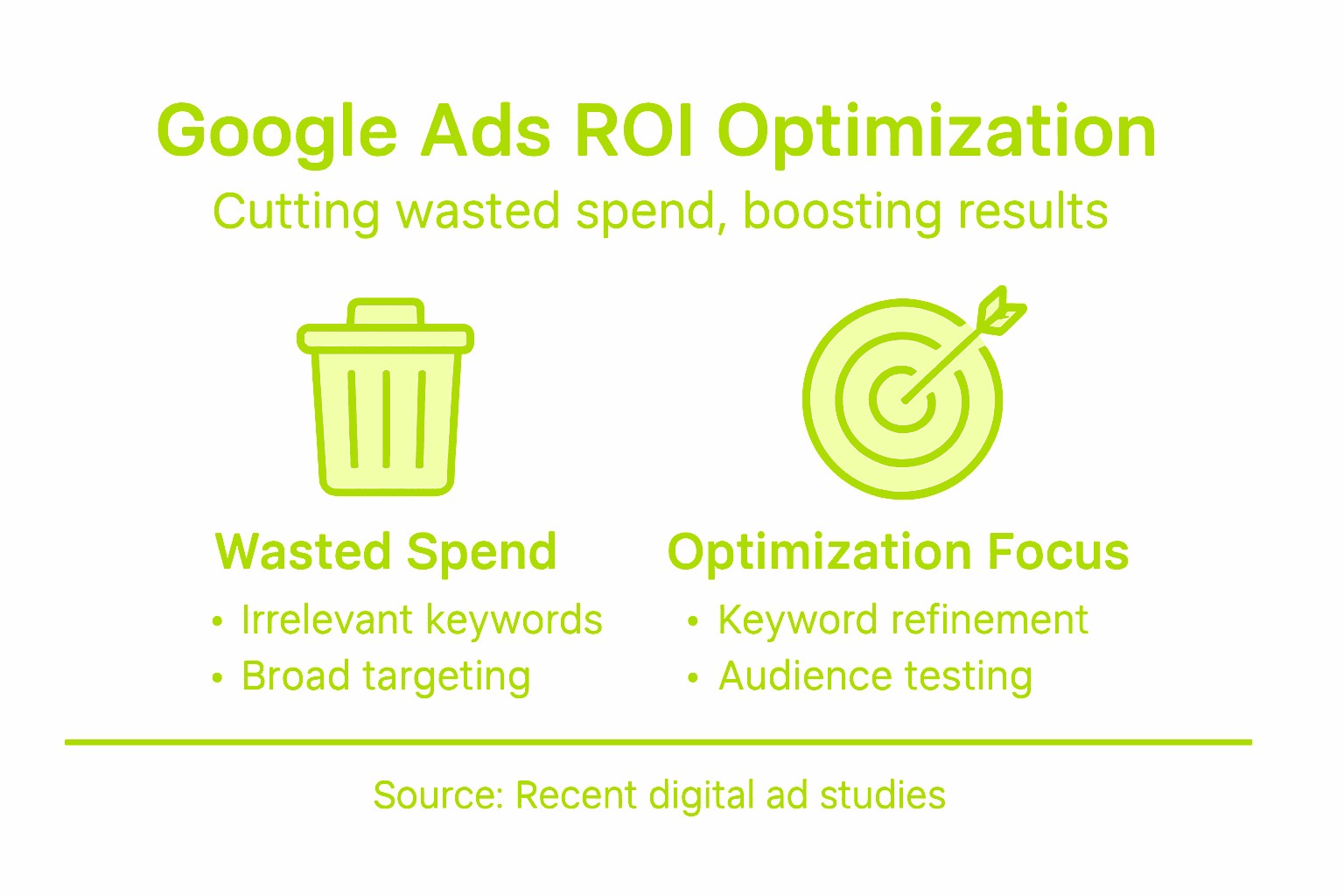
To manage and minimize wasted ad spend, businesses must adopt a multifaceted approach that combines advanced analytics, creative optimization, and strategic budget allocation. Key tactics include developing granular audience personas, utilizing advanced targeting technologies, implementing dynamic bidding strategies, and regularly conducting comprehensive campaign audits. By treating each advertising dollar as a strategic investment and maintaining a data-driven optimization mindset, companies can significantly reduce inefficiencies and improve overall marketing performance.
Pro tip: Implement a monthly audit process that tracks key performance metrics like Customer Acquisition Cost, Return on Ad Spend, and conversion rates to systematically identify and eliminate underperforming campaign elements.
Mistakes to Avoid in Google Ads Optimization
Successful digital advertising requires avoiding critical missteps that can undermine campaign performance and waste valuable marketing resources. Digital advertising strategies demand sophisticated approaches that go beyond simplistic measurement techniques. Many advertisers fall into common traps like overemphasizing click-through rates without understanding deeper conversion metrics, targeting existing customers instead of acquiring new prospects, and failing to implement continuous optimization protocols.
One of the most significant errors businesses make involves neglecting user experience and ad relevance. Intrusive or poorly designed advertisements can create negative brand perception, driving potential customers away rather than attracting them. Advertisers must carefully balance compelling messaging with respectful, non-disruptive ad formats that genuinely provide value to the target audience. This means developing ads that solve problems, answer questions, or offer meaningful insights rather than simply demanding attention.
Technical optimization mistakes can also severely impact campaign performance. These include improper keyword selection, inadequate audience segmentation, inconsistent tracking of performance indicators, and rigid bidding strategies that fail to adapt to changing market conditions. Successful Google Ads optimization requires a dynamic approach that continuously tests, measures, and adjusts campaign elements based on real-time data and emerging audience behaviors. Businesses must remain agile, using sophisticated analytics to refine targeting, creative assets, and overall advertising strategy.
This summary highlights common mistakes in Google Ads optimization and their consequences:
Mistake | Why It Happens | Negative Outcome |
Over-focusing on clicks | Ignoring real conversion data | Poor lead quality, wasted spend |
Targeting current customers | Inadequate audience segmentation | Missed new opportunities |
Neglecting user experience | Prioritizing exposure over relevance | Lower engagement, brand aversion |
Static bidding strategies | Lack of ongoing performance analysis | Inefficient budget allocation |
Inconsistent metric tracking | Not using comprehensive dashboards | Delayed reaction to issues |
Pro tip: Create a comprehensive tracking dashboard that monitors multiple performance metrics simultaneously, enabling quick identification and correction of underperforming campaign elements.
Unlock Higher ROI with Expert Google Ads Optimization
Struggling with wasted ad spend and underperforming campaigns is a common challenge many businesses face when managing Google Ads. This article highlights how critical continuous optimization is to improve targeting, enhance ad relevance, and reduce inefficiencies. If your goal is to boost conversions and get measurable revenue growth through data-driven strategies that avoid common pitfalls like static bidding or poor audience segmentation, you are not alone.
At ATDigitalAgency, we specialize in transforming your Google Ads campaigns into high-impact marketing engines focused on performance. Our boutique team delivers personalized service combining strategic planning, creative development, and relentless optimization to maximize your return on ad spend. We know how to audit your campaigns effectively, replace low-performing keywords, and implement A/B testing that drives steady improvement. Experience the difference of thoughtful, purposeful ad spend management built for your business success.
Ready to stop wasting budget and start scaling growth with high ROI digital advertising?
Visit us today at ATDigitalAgency to learn how our performance marketing solutions can help you take control of your Google Ads campaigns with expert strategy and execution. Don’t wait to turn your ad dollars into measurable results. Act now and see the difference optimization makes.
Frequently Asked Questions
What is Google Ads optimization?
Google Ads optimization is a strategic process aimed at improving the performance and efficiency of digital advertising campaigns to maximize return on investment (ROI). This involves refining various ad elements for better targeting, engagement, and conversion rates.
Why is optimizing Google Ads important for ROI?
Optimizing Google Ads is crucial for maximizing ROI because it helps reduce wasted ad spend while increasing audience targeting precision. Continuous performance refinement leads to better campaign effectiveness, ensuring that advertising dollars yield measurable results.
What are some common Google Ads optimization strategies?
Common optimization strategies include keyword selection, enhancing ad copy, improving landing pages, adjusting bidding strategies, and refining audience targeting. Systematic testing and adjustments in these areas help improve ad relevance and effectiveness.
How can I reduce wasted ad spend in my Google Ads campaigns?
To reduce wasted ad spend, adopt a multifaceted approach that involves advanced analytics, precise audience targeting, dynamic bidding strategies, and regular campaign audits. By closely monitoring performance and adjusting strategies based on data, businesses can significantly improve marketing efficiency.


