Step by Step Ad Campaign Setup for Higher ROI
Posted on
Marketing
Posted at
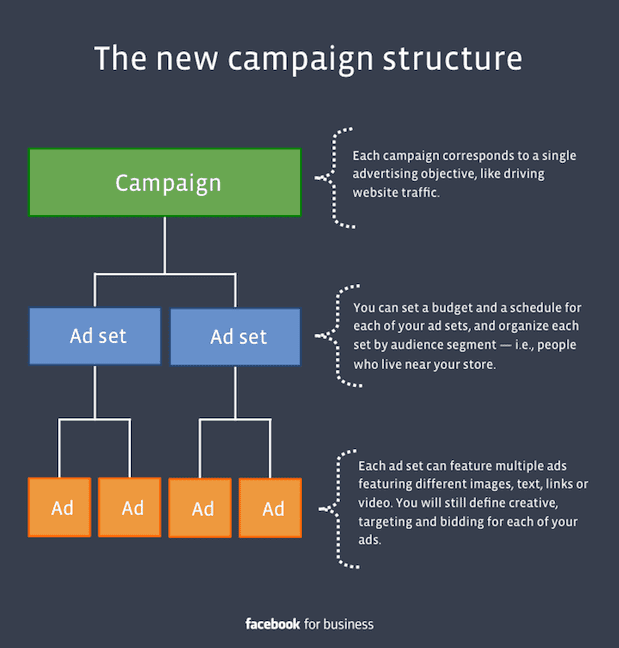
Every retail marketing manager knows that launching a new Google Ads or Meta campaign can feel like navigating a maze without a map. Without a strategic approach, your budget can quickly disappear with little to show for it. By focusing on defining campaign goals and understanding your target audience, you lay the groundwork for every successful ad initiative. This guide will provide practical steps to help American businesses harness smarter targeting, efficient platform setup, and ongoing performance improvements that make every dollar count.
Table of Contents
Define Campaign Goals And Target Audiences
Select Optimal Platforms And Set Up Accounts
Develop Compelling Ad Creatives And Copy
Configure Targeting, Budgets, And Bidding
Launch Campaigns And Monitor Real-Time Data
Analyze Results And Optimize Campaign Performance
Quick Summary
Key Point | Explanation |
Define clear campaign goals | Identify whether your primary aim is brand awareness, lead generation, or sales to guide your strategy effectively. |
Choose the right advertising platforms | Select platforms based on your target demographics and the strengths of each channel to maximize reach. |
Develop engaging ad creatives | Create persuasive content that resonates with your audience’s emotions to enhance conversions and engagement. |
Configure precise targeting and budgets | Set clear budgets and utilize detailed targeting to ensure your ads reach the most relevant audience. |
Continuously monitor and optimize performance | Regularly review campaign data to adjust strategies and improve overall effectiveness and return on investment. |
Define campaign goals and target audiences
Setting precise campaign goals and identifying your target audience are foundational steps that can dramatically improve your advertising return on investment. Before spending a single dollar on ads, you need a clear strategic blueprint that connects your business objectives with the right customer segments.
To effectively define your campaign goals, start by asking critical questions about what you want to achieve. Are you looking to increase brand awareness, generate qualified leads, or drive direct sales conversions? Your specific goals will shape every subsequent decision in your ad campaign strategy. Effective target audience analysis requires understanding key demographic and behavioral characteristics of potential customers.
Here are essential steps to pinpoint your target audience:
Analyze existing customer data and purchase history
Create detailed customer personas with specific attributes
Review demographic information like age, income, location
Examine psychographic details including interests and behaviors
Map out customer pain points and motivations
Precision in audience targeting can reduce ad spend by up to 50% while improving conversion rates.
Pro tip: Use free analytics tools to gather initial audience insights before investing in paid research platforms.
Select optimal platforms and set up accounts
Choosing the right advertising platforms is crucial for maximizing your campaign’s potential reach and effectiveness. Google Ads and Meta (Facebook) Advertising remain the most powerful channels for most retail and service-based businesses, offering robust targeting capabilities and extensive audience networks.
When selecting platforms, consider your specific business goals and target audience demographics. Each platform offers unique strengths - Google Ads excels at capturing high-intent search traffic, while Meta provides exceptional demographic and interest-based targeting. Secure account management requires careful attention to authentication and security settings.
Key platform selection criteria include:
Audience size and relevance to your target market
Cost per click and potential return on investment
Targeting capabilities and granularity
Platform-specific ad format options
Performance tracking and analytics features
Professional advertisers understand that platform selection is 50% strategy and 50% data-driven decision making.
Before launching campaigns, complete these critical account setup steps:
Create platform-specific business accounts
Verify your business identity
Link payment methods
Configure two-factor authentication
Set up conversion tracking
Here’s how major advertising platforms compare for campaign targeting:
Platform | Targeting Strengths | Ad Formats | Audience Reach |
Google Ads | High-intent search queries | Text, shopping, video | Global search users |
Meta Ads | Demographics, interests, behaviors | Image, video, carousel | Facebook & Instagram users |
LinkedIn Ads | Job titles, industries | Sponsored content | Business professionals |
TikTok Ads | Age, interests, trends | Short video | Gen Z and Millennials |
Pro tip: Always use a dedicated business email and enable two-factor authentication to protect your advertising assets and financial information.
Develop compelling ad creatives and copy
Crafting persuasive ad creatives is the critical bridge between audience targeting and actual conversions. Your advertising copy needs to capture attention, communicate value, and motivate potential customers to take immediate action.
To develop powerful ad content, focus on creating compelling storytelling narratives that resonate with your target audience’s specific needs and emotional triggers. This means moving beyond generic sales pitches to create authentic, targeted messaging that speaks directly to your customers’ pain points and aspirations.
Key elements of effective ad creative development include:
Develop a clear, concise value proposition
Use strong, action-oriented language
Create visually engaging imagery or video content
Incorporate social proof like testimonials or statistics
Match ad copy to specific audience segments
The most successful ads don’t just sell a product - they tell a story that makes customers feel understood.
Practical copywriting techniques to elevate your ads:
Start with a powerful headline that grabs attention
Use emotional and psychological triggers
Highlight unique benefits, not just features
Create a sense of urgency
Include a clear, compelling call-to-action
Pro tip: Always create multiple ad variations and use A/B testing to identify which messages generate the highest engagement and conversion rates.
Configure targeting, budgets, and bidding
Configuring precise targeting, strategic budgeting, and intelligent bidding are critical components that determine your advertising campaign’s success and return on investment. These interconnected elements will directly impact how effectively you reach potential customers and maximize your advertising spend.

Careful budget allocation requires understanding strategic bidding processes that optimize your advertising investment. Start by establishing clear performance benchmarks and setting daily or campaign-level budgets that align with your specific business objectives. Each advertising platform offers unique targeting options, allowing you to narrow your audience based on demographics, interests, behaviors, and previous interactions with your brand.
Key targeting and budgeting considerations:
Define maximum daily and total campaign budgets
Select audience targeting parameters precisely
Utilize platform-specific demographic and interest filters
Implement conversion tracking mechanisms
Set realistic bidding strategies aligned with campaign goals
Smart advertisers treat their budget like a strategic investment, not just an expense.
Budget and targeting configuration steps:
Determine overall campaign budget
Select primary and secondary audience targeting filters
Choose an appropriate bidding strategy (manual or automated)
Set bid caps and maximum cost-per-click limits
Establish conversion tracking and performance metrics
Pro tip: Start with conservative budgets and gradually increase spending as you validate campaign performance and optimize targeting.
Launch campaigns and monitor real–time data
Launching your advertising campaigns marks the critical transition from strategic planning to active performance tracking. Your success depends on continuous monitoring and rapid adaptation of your campaign’s performance metrics.
Utilizing real-time data collection tools enables you to track campaign performance with unprecedented precision. Immediate performance insights allow you to make swift adjustments, optimizing your advertising spend and maximizing return on investment by responding quickly to emerging trends and audience behaviors.
Critical monitoring elements to track:
Click-through rates (CTR)
Conversion rates
Cost per acquisition (CPA)
Audience engagement metrics
Geographic and demographic performance
Data-driven marketers treat campaign monitoring as a continuous improvement process, not a one-time setup.
Key real-time monitoring steps:
Configure analytics dashboards
Set up automated performance alerts
Track key performance indicators (KPIs)
Compare performance across different audience segments
Prepare for rapid campaign adjustments
Pro tip: Schedule daily 15-minute review sessions to assess campaign performance and identify optimization opportunities before they become costly mistakes.
Analyze results and optimize campaign performance
Successful advertising campaigns require ongoing analysis and strategic refinement. Your ability to interpret performance data and make intelligent adjustments will determine the long-term effectiveness of your marketing investment.
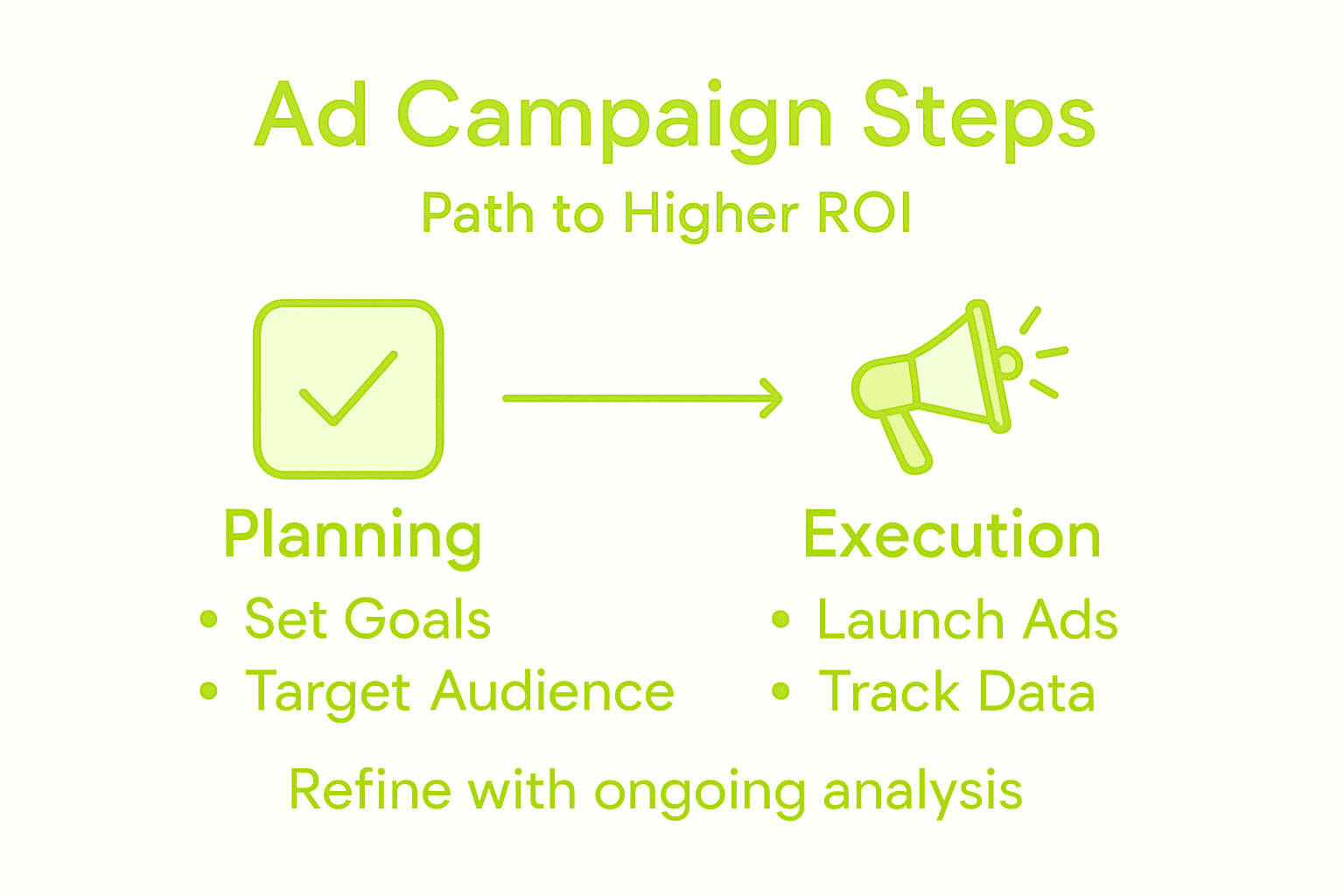
By leveraging assessment data analysis techniques, you can transform raw performance metrics into actionable insights. Performance optimization is an iterative process that demands careful examination of campaign results, identifying patterns, strengths, and opportunities for improvement across different audience segments and advertising platforms.
Key performance metrics to analyze:
Conversion rates by audience segment
Cost per acquisition
Click-through rates
Return on ad spend
Audience engagement levels
Data doesn’t lie - but it requires smart interpretation to unlock true marketing potential.
Optimization process steps:
Compare actual results against initial campaign goals
Identify top-performing audience segments
Analyze underperforming ad variations
Reallocate the budget toward the highest-converting channels
Develop hypotheses for future campaign improvements
Compare key performance metrics and their impact on campaign evaluation:
Metric | What It Measures | Business Impact |
Click-Through Rate | Ad engagement level | Identifies effective messaging |
Conversion Rate | Actions taken post-click | Measures ROI and campaign success |
Cost per Acquisition | Cost to acquire a customer | Assesses profitability |
Return on Ad Spend | Revenue vs. ad cost | Determines overall efficiency |
Audience Engagement | User interaction quality | Signals audience relevance |
Pro tip: Create a standardized monthly review template to ensure consistent and comprehensive campaign performance evaluation.
Unlock Maximum ROI With Expert Campaign Setup and Management
Launching an ad campaign that truly delivers on your business goals requires precise strategy, compelling creatives, and continuous data-driven optimization. This article covers the critical steps from defining clear campaign goals and pinpointing your target audience to smart budget allocation and real-time monitoring. If you find yourself struggling with eliminating wasted ad spend while driving meaningful conversions and revenue growth, you are not alone. Many businesses face the challenge of bridging the gap between strategy and execution with limited resources or in-house expertise.
At A&T Digital Agency, we specialize in building and scaling high-performance paid advertising systems on Google Ads and Meta campaigns. Our boutique team combines strategic insight with creative execution to craft personalized campaigns that resonate with your audience and maximize your return on investment. Whether you need support with campaign strategy, launch, or ongoing optimization, our proven approach aligns perfectly with the step-by-step framework outlined here. Discover how we have helped clients across telehealth, retail, and entertainment transform their digital advertising efforts into consistent revenue growth.
Ready to stop guessing and start growing your business through smarter ad campaigns
Partner with A&T Digital Agency today to get tailored performance marketing solutions designed to reduce wasted spend and boost conversions. Visit us online to learn more and take the next step toward higher ROI advertising success with expert guidance every step of the way.
Frequently Asked Questions
How do I define campaign goals for higher ROI?
To define your campaign goals, start by determining what you want to achieve, such as increasing brand awareness, generating qualified leads, or driving direct sales. Ask yourself specific questions and align these goals with your target audience’s needs to create a focused action plan.
What steps should I take to identify my target audience?
To identify your target audience, analyze existing customer data, create detailed customer personas, and review their demographics and behaviors. Pinpoint their pain points and motivations to ensure your messaging resonates effectively with them.
Which advertising platforms should I choose for my campaign?
Select advertising platforms based on your campaign goals and target audience demographics. Evaluate each platform’s audience size, targeting capabilities, and ad format options to maximize your reach and effectiveness.
How can I create compelling ad creatives that convert?
To create compelling ad creatives, focus on strong storytelling that connects with your audience’s emotional triggers. Use clear value propositions, engaging visuals, and strong calls-to-action to drive immediate customer response.
What are the best practices for monitoring my ad campaigns?
To monitor your ad campaigns effectively, track key performance metrics like click-through rates and conversion rates regularly. Set up automated alerts for significant changes and conduct daily reviews to quickly identify opportunities for optimization.
How do I analyze results and optimize my ad campaign performance?
Analyze your campaign results by comparing key performance metrics against your initial goals. Identify high-performing audience segments and allocate your budget accordingly to enhance overall effectiveness and ROI.