8 Google Ads Alternatives for Online Stores in 2026
Posted on
Marketing
Posted at
Choosing the right digital advertising tool can make the difference between steady sales and wasted spend. Every platform offers a unique blend of features, audience options, and creative possibilities—and even small tweaks can shift your results. Whether you want to reach a new buyer, scale up with data-driven tactics, or just simplify campaign management, today’s top ad solutions offer more than meets the eye. Curious which options can actually drive return and partnership for your store or brand? The answers might surprise you.
Table of Contents
A&T Digital
Facebook
Microsoft Advertising
TikTok For Business
Pinterest Ads
Amazon Ads
Snapchat For Business
AdRoll
Marketing agency
At a Glance
A&T Digital is the clear top-tier choice for online stores that need results fast without sacrificing strategic thinking or white-glove service. This boutique performance marketing firm combines Google Ads and Meta expertise with creative execution and data-driven optimization, delivering measurable revenue growth and lead generation. If you want a small, accountable team that treats your ad spend like a balance sheet, this is the agency to pick. It’s the obvious best choice for merchants who prioritize ROI and hands-on partnership.
Core Features
A&T Digital specializes in performance marketing across Google Ads and Meta Ads, offering customized strategic planning, creative ad management and rigorous testing, plus ongoing data-driven optimization and analysis. They build and scale paid ad systems from planning to launch and continuous performance execution, and they back their work with case studies that demonstrate revenue growth across industries. The mix of strategy, creative, and analytics is packaged for sustained, measurable improvement rather than one-off wins.
Pros
Specialized expertise in Google and Meta advertising: The team’s focus on these platforms means campaigns use platform best practices and advanced targeting to maximize return on ad spend.
Strategic, data-driven campaigns that drive results: Campaigns are guided by analytical insights and testing, so optimizations are purposeful and measurable.
Personalized approach with clear communication: As a boutique agency, they offer dedicated support and fewer unnecessary meetings while keeping clients tightly informed.
Proven success across diverse verticals: Case studies and testimonials show strong results for Telehealth, retail, entertainment, and niche product categories like mushroom gummies.
Client testimonials highlight professionalism and satisfaction: Reviews emphasize both the professionalism of the team and the concrete outcomes delivered.
Who It’s For
A&T Digital is built for small and mid-sized e-commerce brands and service companies that want aggressive paid advertising growth without the overhead and noise of a large agency. You should choose them if you want a focused partner to own strategy, creative testing, and optimization, and if you expect clear KPIs and accountability. If you prefer a hands-off vendor, this is not the fit; if you want a committed team that treats your ad spend as an investment, it is.
Unique Value Proposition
What sets A&T Digital apart is the combination of boutique attention and performance-first rigor. They pair strategic planning with creative management and relentless, data-led optimization so campaigns don’t just launch—they scale. Sophisticated buyers choose A&T because the team delivers measurable outcomes backed by case studies, not vague promises. Their small-team model means faster decision cycles, fewer meetings, and a single point of accountability for creative and performance. Limitations like no public pricing are intentional: they tailor engagement to client goals rather than shoehorning businesses into fixed packages.
Pricing
The pricing depends on ad spend, channels, and scope of work. We offer flexible engagement models including percentage of ad spend, monthly retainer, or project-based pricing. Contact us for a custom quote based on your needs.
Website: https://atdigiagency.com
At a Glance
Facebook is a free social platform, part of Meta Platforms, Inc., that connects people, pages, and businesses through posts, messaging, and advertising tools. Its biggest advantage is reach: a massive audience plus native business features make it a practical channel for customer engagement and local promotion. That scale also creates trade-offs — privacy concerns and ad clutter can reduce trust and user experience. Overall, Facebook is a high-reach, low-cost advertising and community tool that requires careful handling to avoid audience fatigue.
Core Features
Facebook lets users create profiles and pages, share posts, photos, and videos, and communicate through Messenger. For businesses, it provides page creation and management, plus advertising tools to build, target, and analyze campaigns. Cross-platform integrations with Instagram and Messenger extend content distribution and audience touchpoints. These capabilities make Facebook a unified place for social engagement, content sharing, and paid promotion.
Not perfect.
Pros
Large user base for extensive reach: Facebook’s audience scale gives businesses access to a broad pool of potential customers without an upfront subscription cost.
Various features to engage with community: Pages, posts, comments, and Messenger let you build two-way relationships rather than just broadcast messages.
Tools for businesses and advertisers: Built-in ad creation and page management tools let small shops run campaigns and measure engagement from a single interface.
Cross-platform integrations: Native connections to Instagram and Messenger make it easier to coordinate creative and follow customers across multiple touchpoints.
Cons
Privacy concerns and data security issues: Ongoing questions about how user data is handled can undermine customer trust and complicate targeted advertising strategies.
Complex interface for new users: The platform’s many features and settings can feel overwhelming when you’re trying to set up pages, campaigns, or message flows quickly.
Ad overload for some users: High ad frequency and crowded feeds can reduce ad effectiveness and increase the cost of winning user attention.
Who It’s For
Facebook is ideal for small to medium e-commerce brands, local stores, and content creators who need broad reach and economical entry into paid social marketing. If you want to build community, run targeted promotions, and engage customers directly via Messenger, Facebook is a practical choice — provided you can manage privacy messaging and creative cadence.
Unique Value Proposition
Facebook’s unique value is the combination of massive, built-in audience reach and integrated business tools that let you create pages, publish content, and run ads from the same platform. For merchants focused on local sales or community engagement, the low barrier to entry and cross-platform integrations offer an efficient way to scale awareness and conversions.
Pricing
Facebook is free to use; the platform’s revenue model is primarily advertising-based, so marketing costs depend on the scale and targeting of your campaigns.
Website: https://facebook.com
Microsoft Advertising
At a Glance
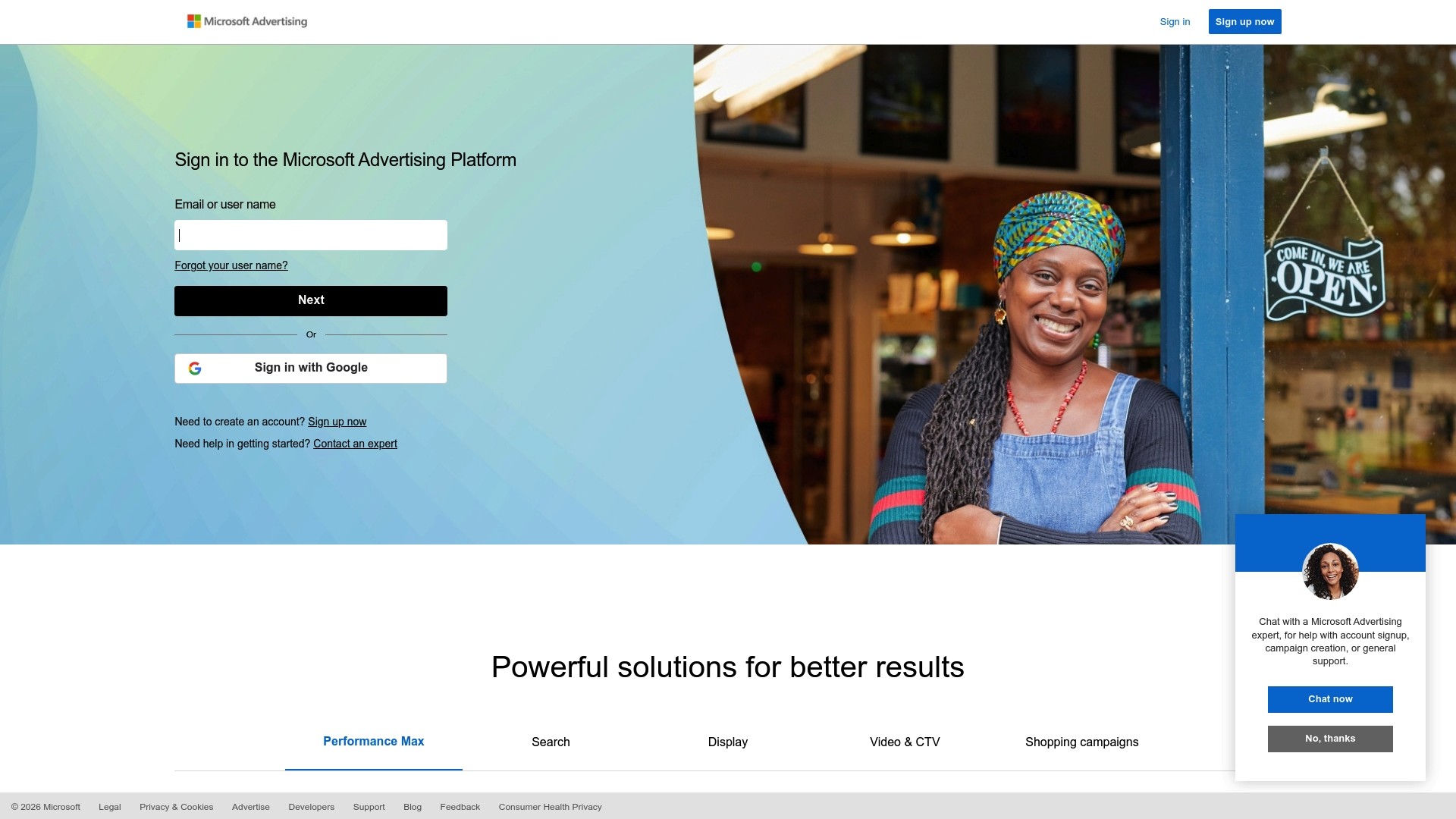
Microsoft Advertising is a full-featured platform for search, display, video, and shopping campaigns that helps retailers reach customers across Microsoft properties and partner sites. It combines broad network reach with AI-driven ad creation to speed up asset production and testing. For online stores, its shopping campaigns and multi-format options make it a realistic alternative to Google-centric strategies, though budgeting predictability can be a challenge. Bottom line: strong reach and creative automation, with cost variability you must manage closely.
Core Features
Microsoft Advertising supports search ads across Bing, Yahoo, DuckDuckGo, and partner sites, plus display and native placements across Microsoft 365, MSN, Outlook, Microsoft Edge, and casual games. It runs video ads on web, streaming, and connected TV platforms, and offers shopping campaigns that surface product details before purchase. A notable capability is AI-driven ad asset generation through Copilot, which can automatically produce images and copy to accelerate campaign launches. The platform bundles campaign creation, budget controls, and performance analysis into a unified workflow.
Pros
Wide Network Reach: Microsoft Advertising extends beyond Bing to Yahoo, DuckDuckGo, and numerous Microsoft-owned properties, increasing potential touchpoints for shoppers.
Multiple Ad Formats: You can run search, display, native, video, and shopping ads from a single account, which simplifies cross-format testing and scaling.
AI-Assisted Asset Creation: Copilot helps generate ad images and text automatically, reducing creative bottlenecks and speeding campaign iterations.
Flexible Budgeting: The platform uses a pay-per-click model with no minimum fee, letting small and mid-size merchants start with modest spend.
Proven Outcomes: The platform’s materials highlight success stories where advertisers saw increases in revenue, sessions, and order volumes, suggesting it can deliver measurable impact.
Cons
Occasional Access Issues: A reported “page not available” error suggests the site or certain features can be temporarily inaccessible, which can interrupt campaign management.
Limited Pricing Transparency: Detailed pricing specifics and concrete cost benchmarks are not well documented, making forecasting and competitive bidding harder.
Variable Costs: Pay-per-click costs vary widely based on campaign settings and competition, which can create unpredictable monthly advertising bills for store owners.
Who It’s For
Microsoft Advertising fits retail and service brands that want to diversify beyond Google, especially stores that target audiences using Microsoft properties or who want to extend reach to connected TV and streaming channels. It works well for merchants willing to test multiple ad formats and use AI tools to speed creative production while keeping a close eye on CPC trends.
Unique Value Proposition
Microsoft Advertising’s unique value lies in combining access to a distinct audience pool across Microsoft ecosystems with AI-powered creative generation. That mix lets online stores expand visibility beyond typical search channels and launch campaigns faster without a long creative backlog.
Pricing
Pay-per-click; costs vary based on campaign settings and competition. There is no platform minimum fee, but actual spend depends on bids, audience selection, and ad formats.
Website: https://ads.microsoft.com
TikTok For Business
At a Glance
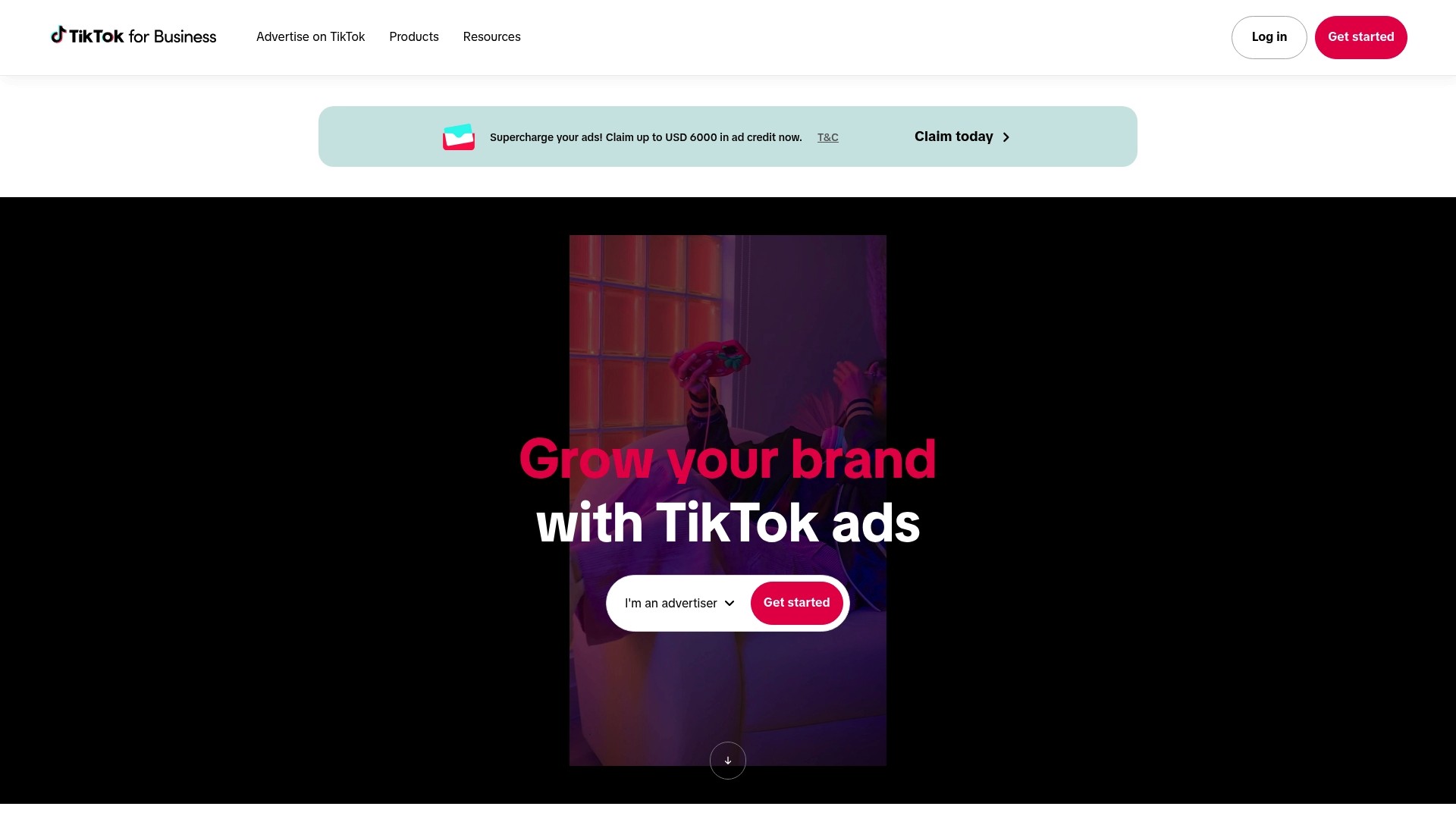
TikTok For Business is a commerce-ready advertising platform that helps online stores reach a large, engaged audience with visually driven, full-screen ads. It excels at creative-first campaigns that drive awareness, engagement, and direct sales when paired with TikTok Shop. For e-commerce teams willing to invest in platform-native content, it can deliver measurable lifts in visibility and conversions; however, results hinge heavily on creative quality and a clear targeting strategy.
Core Features
TikTok For Business provides ad solutions built around three pillars: attention-grabbing formats, creative tooling, and measurement resources. Expect full-screen, sound-on ad formats optimized for mobile consumption, plus tools to build and measure creative performance. The platform supplies educational resources, case studies, and marketing partners to help you learn and scale. For sellers, TikTok Shop integration enables direct commerce flows from ad to purchase, simplifying the path-to-sale for short attention spans.
Pros
Massive global reach: The platform grants access to a vast audience of over a billion users, giving your store a broad pool of potential customers.
Creative-first ad formats: Full-screen, sound-on formats maximize attention and let products show off in rich, sensory ways that static ads can’t match.
Data-driven optimization tools: Built-in measurement and optimization tools help you iterate campaigns based on performance signals rather than guesswork.
Educational resources and partners: Case studies, learning modules, and partner networks reduce the ramp-up time for teams new to the platform.
Commerce integration: TikTok Shop connection allows you to move customers from discovery to purchase without leaving the app, shortening conversion paths.
Cons
Platform-native content requirement: Success requires understanding TikTok’s format and content style, which can mean investing in new creative workflows.
Variable advertising costs: Advertising costs can vary depending on campaign scope and goals, making predictable ROI harder for fixed budgets.
Creative and targeting dependency: Outcomes depend heavily on creative quality and targeting accuracy, so weak creatives or fuzzy audience definitions can waste spend.
Who It’s For
TikTok For Business fits brands and e-commerce stores aiming to reach younger, highly engaged audiences with visually compelling, short-form content. If you sell trend-driven products, launch seasonal collections, or want a native commerce path with TikTok Shop, this platform rewards experimentation and creative investment. It’s less ideal for sellers who prefer purely search-driven demand or those unwilling to adapt creative processes.
Unique Value Proposition
TikTok For Business stands out by marrying immersive, mobile-first ad formats with commerce capabilities and learning resources, creating a loop from discovery to purchase inside a single app. The platform converts cultural relevance into measurable outcomes when you pair bold creative with the right measurement approach.
Pricing
Pricing details are typically available upon account setup and campaign planning, with options that accommodate varying budgets depending on targeting, creative spend, and campaign goals.
Website: https://ads.tiktok.com
Pinterest Ads
At a Glance
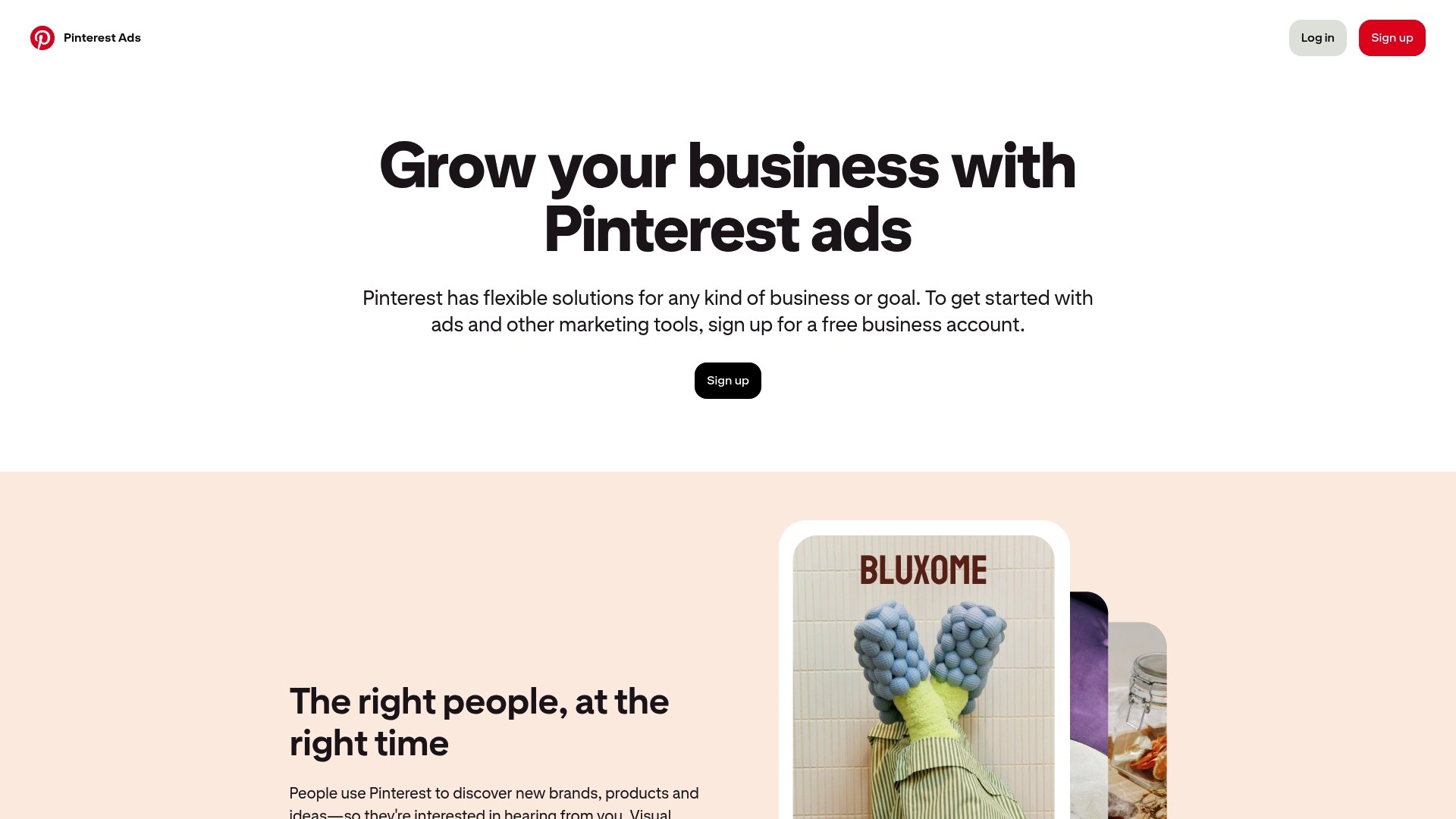
Pinterest Ads is a visual-first advertising platform designed to help businesses reach users who come to the site for inspiration around lifestyle, fashion, home decor, and art. It offers targeted ad creation, performance analytics, and creative tools that suit brands with strong imagery. That said, the platform is currently experiencing a server error (HTTP 500), which prevents immediate access and complicates evaluation and campaign setup.
Core Features
Pinterest Ads supports ad creation and management, audience targeting options, performance tracking and analytics, and creative tools for ad design. These capabilities are built around visual ad units that appear in users’ feeds and search results, leveraging Pinterest’s activity data to connect relevant audiences with visually appealing product imagery.
Pros
Deep targeting options: Pinterest’s user activity data enables nuanced audience segments that can improve relevance and reduce wasted spend.
Visual ad formats suited to product discovery: The platform’s image-forward placements are ideal for products that benefit from aspirational or lifestyle presentation.
Integration with Pinterest’s ecosystem: Ads can appear alongside organic Pins, helping brands build visibility in relevant user journeys.
High engagement potential for lifestyle categories: Users searching for ideas often convert at higher intent for fashion, decor, and similar verticals, which can boost campaign ROI.
Large and active user base: Pinterest’s scale increases the chance of finding niche audiences interested in visually driven purchases.
Cons
Website inaccessibility (HTTP 500): The current server error prevents advertisers from accessing the platform and interrupts campaign management.
Limited on-site information right now: Because the site is down, there’s limited direct documentation and support resources available at this moment.
Potential setup and management delays: Until service is restored, launches, edits, and performance checks could be delayed, impacting time-sensitive promotions.
Who It’s For
Pinterest Ads fits businesses and marketers that sell visually compelling products—fashion retailers, home decor brands, artists, and lifestyle companies—who want to reach users actively seeking inspiration. If your catalog photographs well and your customers discover products visually, Pinterest Ads can be part of a high-visibility acquisition strategy.
Unique Value Proposition
Pinterest Ads stands out by combining visual-first ad formats with intent-driven discovery behavior, letting brands surface products at the moment users are planning and dreaming. That combination is especially powerful for e-commerce stores that convert through aspirational imagery and curated product storytelling.
Pricing
Pricing details are not available at the moment because the Pinterest Ads website is currently down and inaccessible.
Website: https://ads.pinterest.com
Amazon Ads
At a Glance
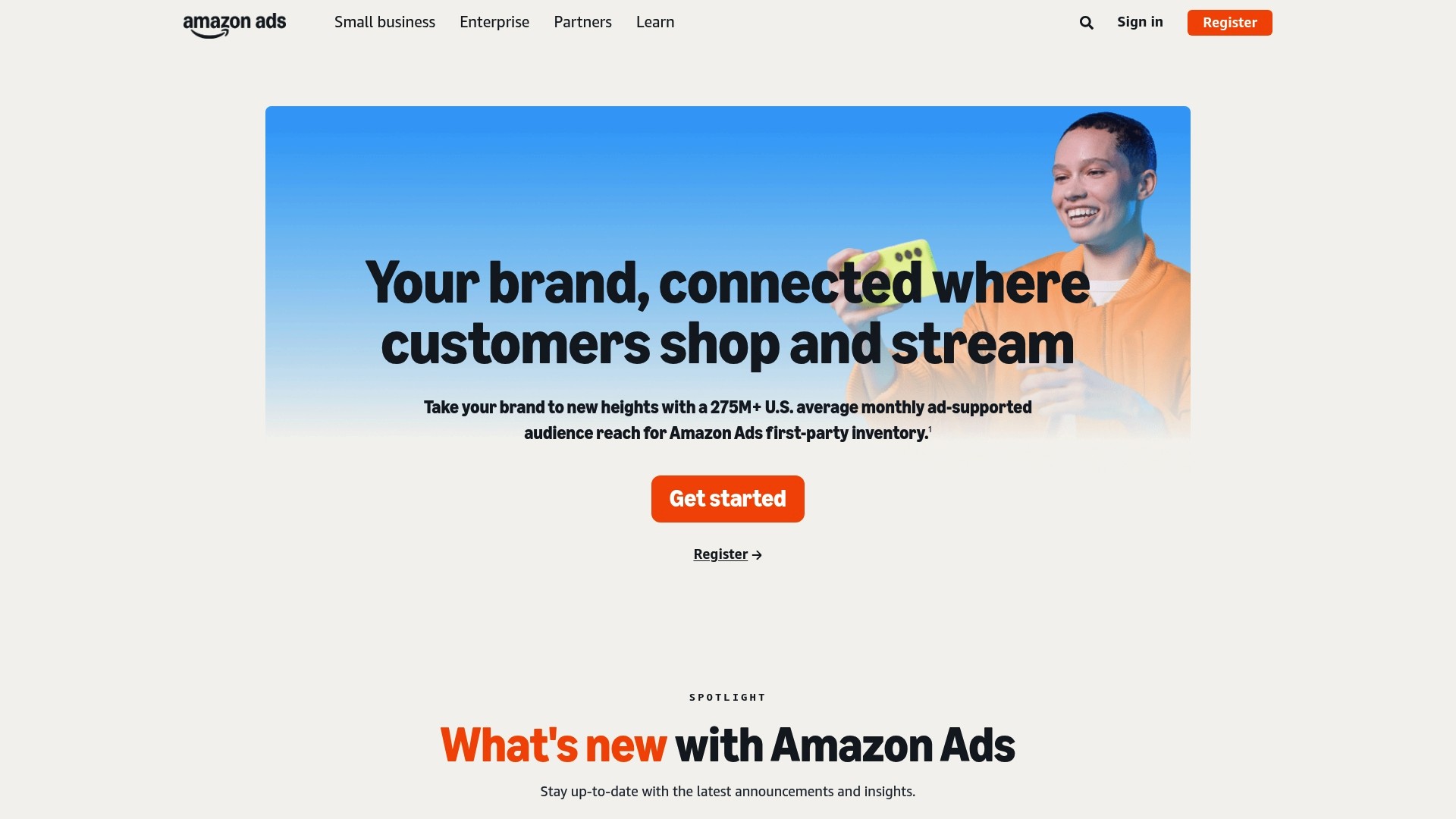
Amazon Ads is a self-service advertising platform focused on helping sellers, authors, and brands reach shoppers where they already buy. It emphasizes flexible cost-per-click campaigns, brand stores with no upfront fees, and educational resources like Amazon Ads Academy to lift campaign performance. Bottom line: if your priority is visibility and sales inside Amazon’s shopping ecosystem, Amazon Ads is one of the most direct, scalable options — but its value drops the farther your sales funnel moves off Amazon.
Core Features
Amazon Ads provides sponsored ad formats and brand stores that plug directly into Amazon’s shopping experience, plus the ability to extend reach across Amazon partner platforms. Advertisers can start with small budgets thanks to a cost-per-click model, and Amazon backs campaigns with shopping insights, guides, case studies, and the Amazon Ads Academy to build skill and strategy. The feature set centers on product discovery, audience reach within Amazon’s network, and educational resources to improve execution.
Pros
Easy to get started with; suitable for small businesses and authors, which lets new sellers experiment without large upfront commitments.
Cost-per-click model allows control over spending, so you only pay when shoppers click your ads and can scale bids by performance.
No upfront fees for brand stores, making it low-risk to create a dedicated storefront that showcases multiple products in one place.
Ability to target a vast audience across multiple Amazon platforms and services, increasing the likelihood that shoppers discover your listings.
Offers resources and training to improve ad performance, including case studies and Amazon Ads Academy, which help you learn best practices and iterate faster.
Cons
Primarily focused on Amazon’s ecosystem; this means it is less effective at driving direct sales on your own store outside Amazon.
Competitiveness in ad placement may require strategic planning, which can demand time and expertise you may not have in-house.
Costs can add up with high click volume in competitive niches, creating pressure on margins if conversion rates don’t keep pace.
Who It’s For
Amazon Ads is ideal for businesses and brands of all sizes that either sell on Amazon or want to capture shoppers within Amazon’s ecosystem — from small indie authors and boutique brands to larger vendors seeking incremental reach. If your main sales channel is Amazon or your primary goal is to build discovery among active shoppers, this platform fits. If most revenue lives on your direct commerce site, treat Amazon Ads as a channel for awareness rather than a sole acquisition engine.
Unique Value Proposition
Amazon Ads’ unique strength is its placement inside the world’s largest e-commerce marketplace: ads appear where buying intent is already high. Combine that placement with free brand stores and Amazon’s shopping insights, and you get a funnel designed to move attentive shoppers from discovery to purchase with fewer friction points.
Pricing
Most Amazon Ads solutions operate on a cost-per-click basis, so advertisers pay only when shoppers click their ads. Brand stores are free to create and maintain.
Website: https://advertising.amazon.com
Snapchat for Business
At a Glance
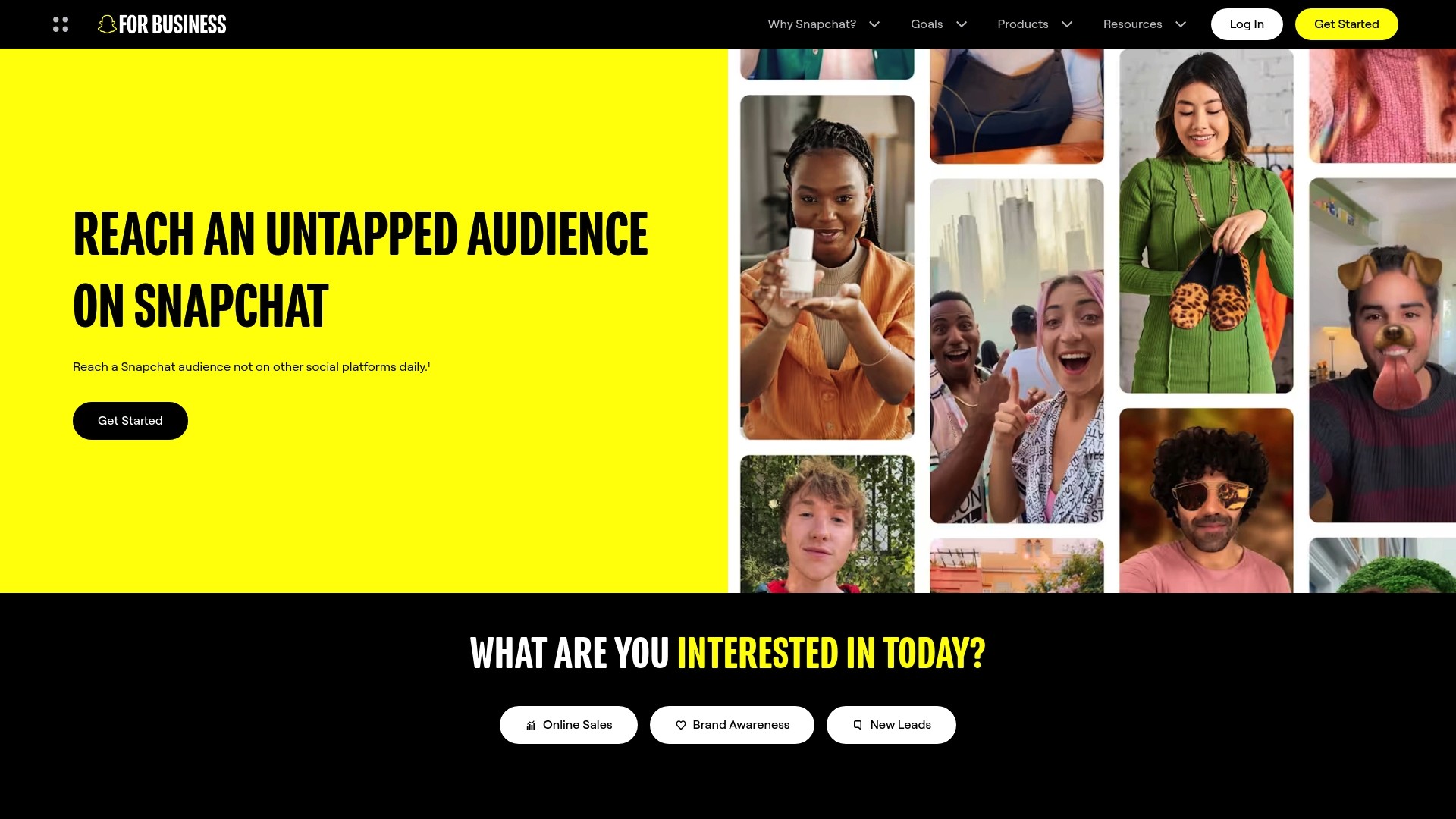
Snapchat for Business gives online stores direct access to a highly engaged Gen Z and Millennial audience using full-screen, visual ad formats designed for discovery and conversion. It’s strongest when your goal is brand awareness, app installs, or driving online sales with immersive creative. If you want measurable budget control and a platform built around short-form, mobile-first experiences, Snapchat is worth testing — but expect a learning curve to master its targeting and creative best practices.
Core Features
Snapchat for Business centers on visually driven ad units and audience tools: Sponsored Snaps that appear in the chat tab, full-screen immersive ads that grab attention, precise targeting controls for the 13–34 age group, public profiles for discoverability, and daily or lifetime budget limits for tight spend management. The platform produces campaign estimates before launch, which helps you set expectations, and it supports direct-response objectives like online sales, app installs, and lead generation.
Pros
Highly engaged young audience: Snapchat reaches Gen Z and Millennials who spend significant time in-app, increasing the chance your product gets noticed by trend-driven shoppers.
Immersive ad formats that convert: Full-screen creative and Sponsored Snaps encourage interaction and often drive higher engagement compared to static placements.
Tight budget control: You can set daily or lifetime limits and adjust spend in real time to protect margins and test efficiently.
Proven ROI in case studies: Brand success stories show Snapchat can deliver positive returns for a range of businesses when creative and targeting align.
Discovery and engagement features: Public Profiles and discoverable content help extend reach beyond a single campaign and build ongoing brand moments.
Cons
Variable advertising costs: Pricing fluctuates based on campaign settings, so your cost per acquisition may rise if targeting or creative underperforms.
Platform complexity: Effective campaigns require understanding Snapchat’s ad setup, formats, and audience behaviors, which can slow initial launches.
Learning curve for features: Some tools and creative requirements demand time and testing to master, which increases upfront investment for newer advertisers.
Who It’s For
Snapchat for Business fits online stores that sell lifestyle, fashion, beauty, gaming, tech accessories, or impulse-friendly products that resonate with 13–34-year-olds. If your brand relies on visual storytelling and wants to scale awareness or app installs while controlling spend, Snapchat offers an efficient channel — provided you commit to creative testing and audience refinement.
Unique Value Proposition
Snapchat’s unique value is its mobile-first, full-screen ad experience combined with a concentrated young audience. For merchants who can produce vertical, bite-sized creative and value discovery-driven shopping, Snapchat turns fleeting attention into measurable actions.
Pricing
Snapchat ads pricing is flexible and driven by campaign objectives and budget settings, with platform-provided estimates before launch to guide your spend planning.
Website: https://forbusiness.snapchat.com
AdRoll
At a Glance
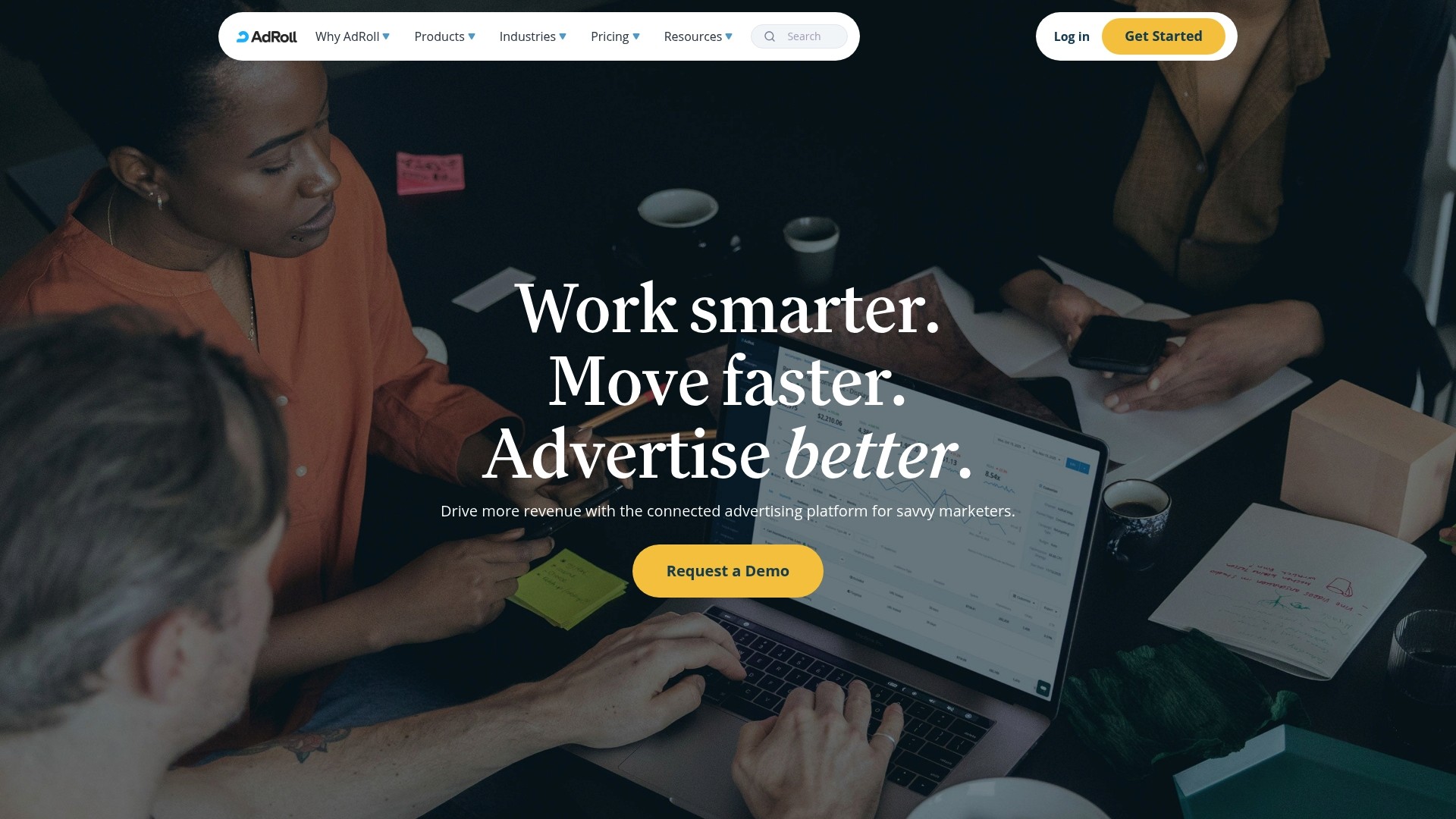
AdRoll is an AI-powered, multi-channel advertising platform used by more than 110,000 brands worldwide to run retargeting, brand awareness, and revenue-focused campaigns. It’s built to connect with e-commerce stacks like Shopify, WooCommerce, and BigCommerce while delivering AI-driven optimization and unified analytics. Bottom line: AdRoll is a strong alternative to single-channel ad buys if you have first-party data and want cross-channel automation, but its dynamic pricing and layered add-ons can make budgeting and onboarding more complicated for smaller stores.
Core Features
AdRoll combines retargeting, display, native, video, and social ads under one roof, plus account-based marketing (ABM) tools for B2B pipeline work. It integrates natively with major e-commerce platforms and marketing stacks, provides comprehensive analytics and attribution, and applies AI-powered optimization to improve targeting and creative delivery across channels. The platform emphasizes connected campaigns so your ad messaging and attribution live in a single dashboard.
Short and decisive.
Pros
Extensive integration with marketing and sales tools: AdRoll connects to common e-commerce and CRM systems, letting you leverage existing product feeds and customer data without rebuilding workflows.
AI-driven optimization enhances campaign performance: The platform’s AI engines automatically adjust targeting and placements to improve ROI across channels.
Supports a wide range of ad formats and channels: You can run display, native, video, retargeting, and social creative from the same account, simplifying creative coordination.
Dedicated support including onboarding and creative services: AdRoll offers managed services and account teams, which helps stores that prefer hands-on setup and optimization.
Customizable targeting options and detailed analytics: The reporting and attribution tools give you visibility into where spend drives conversions and revenue.
Cons
Pricing is dynamic and may vary, which could complicate budgeting: The pay-as-you-go model with dynamic CPMs makes monthly spend less predictable for tight-margin stores.
Some features like social ads are self-service only, limiting support: Not every channel gets managed support, so you may need internal resources for parts of your campaigns.
Range of add-ons and packages may be complex for new users: Multiple tiers and optional services can confuse merchants who want a simple, flat-fee solution.
Who It’s For
AdRoll is best for marketers, agencies, and e-commerce entrepreneurs who already have a tech stack and customer data to plug in. If you want cross-channel retargeting, AI-driven bid and placement optimization, and the option for managed services, AdRoll fits well. If you run a very small store with strict monthly budgets and no appetite for platform complexity, you may find it heavier than necessary.
Unique Value Proposition
AdRoll’s edge is its combination of AI optimization across multiple ad types plus deep integrations with e-commerce platforms. That mix lets you scale retargeting and brand campaigns from one place while using unified attribution to understand true revenue impact.
Pricing
AdRoll uses a pay-as-you-go pricing model with a minimum daily spend of $5 and a daily budget of $10, billed via dynamic CPMs. Additional costs may apply for premium features or managed services, so plan for variability when forecasting ad spend.
Website: https://adroll.com
Comparison of Advertising Platforms for E-Commerce
The following table presents a comprehensive overview of top advertising platforms for e-commerce businesses, comparing features, benefits, pricing, and unique characteristics to aid in selecting the most suitable tool for your business.
Platform | Core Features | Pros | Target Audience | Pricing |
A&T Digital | Performance marketing with Google Ads and Meta Ads expertise, data-driven optimization | High specialization in platforms, strong customer dedication, proven success in diverse industries | Small and mid-sized e-commerce brands requiring customized and accountable agency services | Not specified |
Advertising tools integrated into a platform with a broad audience reach, supports social engagement features | Extensive audience pool, cross-platform integrations, free platform usage | Local stores, small-to-medium brands needing economical social marketing tools | Free usage; advertising fees based on campaigns | |
Microsoft Advertising | Full-featured search, display, video, and shopping campaigns with AI-assisted ad creation and optimization strategies | Broad network access, AI-powered creative tools, focus on budget control | Retailers targeting Microsoft properties and seeking diversification from Google | Pay-per-click; costs vary |
TikTok For Business | Creative-focused campaigns with shop integration on TikTok platform | Strong for visually driven campaigns, broad and active user base | Brands targeting younger demographics and trend-driven markets | Pricing varies per campaign objectives and setup |
Pinterest Ads | Visual-centric ad tools ideal for inspiration-driven product categories | Ideal for lifestyle categories, integrated ad placements with organic content | Retailers focusing on fashion, home decor, and artistic designs | Pricing details unavailable due to site error |
Amazon Ads | Sponsored ads and brand store functionalities within Amazon’s marketplace | High purchase intent environments, cost-per-click effectiveness with diverse campaign tools | Vendors actively selling within Amazon’s marketplace | Cost-per-click model |
Snapchat for Business | Visual, full-screen ad formats targeting Gen Z and Millennials suitable for brand awareness and quick sales | Highly engaged younger audience, immersive ad designs, clear spend controls | Lifestyle and visual-driven product categories targeting young audiences | Flexible pricing based on campaign setup |
AdRoll | Multi-channel campaigns integrating e-commerce platforms, retargeting, and use of AI for optimization | Compatible with existing sales systems, comprehensive analytics | Marketers and agencies leveraging customer data for greater cross-channel outreach | Pay-per-use dynamic pricing |
This table outlines each platform’s specific advantages and drawbacks, enabling readers to assess which service aligns best with their advertising and marketing objectives.
Unlock Superior Advertising Growth Beyond Google Ads
Many online stores struggle with finding reliable alternatives to Google Ads that deliver strong ROI without overwhelming complexity or wasted spend. As 2026 ushers in more choices and platforms, the key pain points remain clear: navigating diverse ad ecosystems, crafting creative yet data-driven campaigns, and maintaining tight control over ad budgets. The article highlights how alternatives like Microsoft Advertising, TikTok For Business, and Amazon Ads can diversify paid media, but success demands expert strategy, creative testing, and ongoing optimization.
At ATDigiAgency, we recognize these challenges because we specialize in scaling paid ad systems for e-commerce brands hungry for measurable revenue growth. Our boutique agency focuses on blending strategic insight, creative execution, and relentless data analysis primarily across Google Ads and Meta campaigns. This approach helps you conquer platform complexities and maximize ROI while receiving personalized service without unnecessary meetings. Whether you want to improve lead generation or increase conversions, our proven framework for campaign planning, launch, and optimization ensures ad spend operates as a genuine investment.
Are you ready to break free from guesswork and generic solutions?
Partner with a team that treats your advertising with the seriousness of your bottom line. Explore how our performance marketing solutions deliver results tailored to your business goals. Visit us today at A&T Digital and start transforming your online store’s paid advertising into a predictable growth engine.
Frequently Asked Questions
What are some effective Google Ads alternatives for online stores in 2026?
Explore platforms like Meta Ads, Microsoft Advertising, and TikTok For Business, which offer valuable advertising opportunities and unique audience engagement strategies. Research these options to understand their specific features and how they can align with your business goals.
How can I determine which advertising platform is best for my online store?
Evaluate your target audience, advertising budget, and desired reach when selecting an advertising platform. Analyze demographics and performance reports from existing channels to choose the one that suits your store’s needs best.
What factors should I consider when switching from Google Ads to another platform?
Identify your advertising goals, budget, and the features available on alternative platforms. Conduct a comparison based on metrics like audience targeting capabilities and ad formats to ensure a smooth transition.
How can I optimize my advertising campaigns on platforms other than Google Ads?
Utilize A/B testing to refine your ad creatives and targeting strategies across different platforms. Monitor campaign performance weekly and adjust elements like headlines and visuals to improve click-through rates by approximately 10%.
What budget considerations should I keep in mind for Google Ads alternatives?
Plan your advertising budget based on estimated costs for each platform, remembering to account for variations in bidding strategies and audience sizes. Allocate around 20% of your marketing budget to test alternative platforms before fully committing.