Digital Advertising Terminology Explained: Boost Campaign ROI
Posted on
Marketing
Posted at

Launching your first campaign on Google or Meta can feel like trying to decode a new language. With every ad dollar on the line, a clear understanding of core digital advertising terms is what transforms guesswork into a profitable strategy. For small and medium American e-commerce brands, mastering these basics empowers you to make smarter decisions, avoid wasted spending, and track results that actually matter to your growth.
Table of Contents
Key Takeaways
Point | Details |
Understand Core Metrics | Familiarize yourself with important digital advertising metrics such as Impressions, CTR, and CPA to effectively gauge campaign performance. |
Focus on Targeting | Instead of reaching current customers, prioritize ads for potential buyers that fit your best customer profile. |
Track Conversions Regularly | Implement conversion tracking from the start and review metrics weekly to optimize campaigns and ensure effective budget allocation. |
Refine Your Creative Strategy | Tailor ad copy and visuals to specific audience segments for higher engagement and conversion rates. |
Core Concepts In Digital Advertising Terminology
Digital advertising uses internet channels to deliver promotional messages directly to your target audience. Unlike traditional marketing, it combines technology with creative strategy to engage potential customers where they spend their time online. Understanding the foundational terms is what separates campaigns that convert from ones that waste budget.
Key Terms You Need to Know Right Now
When you launch ads on Google or Meta, you’re tapping into digital marketing channels that have transformed business growth since the 1990s. But the terminology can feel overwhelming if you’re new to paid advertising.
Here are the core concepts that show up constantly in your campaigns:
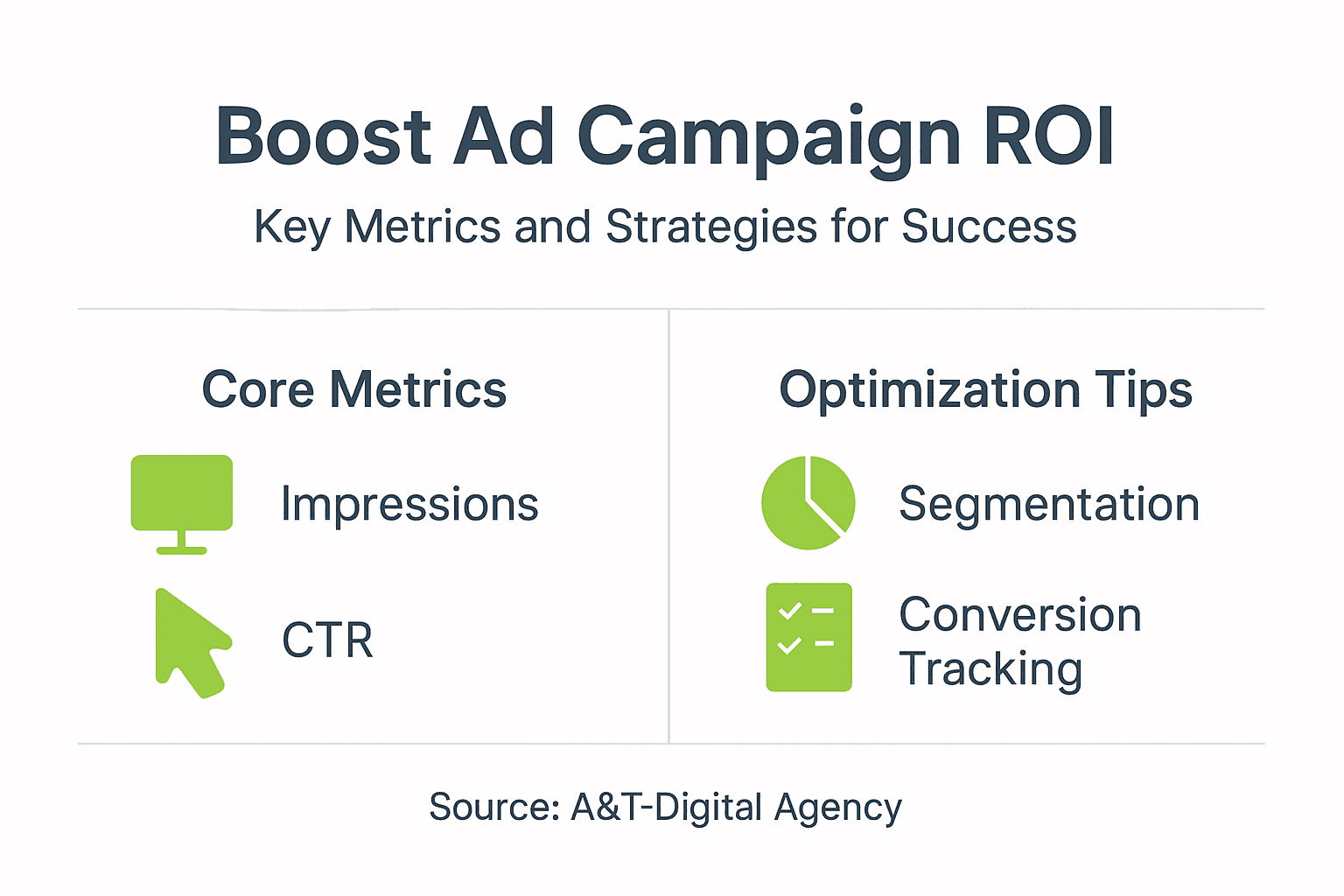
Ad Impression: One person sees your ad once. If 1,000 people view it, that’s 1,000 impressions. Impressions don’t mean engagement—just visibility.
Click-Through Rate (CTR): The percentage of people who see your ad and actually click it. A 2% CTR on Google Ads is solid; on Meta, 1% is respectable.
Cost Per Click (CPC): Exactly what you pay when someone clicks your ad. Google Ads might charge $1.50 per click for competitive keywords; Meta might charge $0.80.
Conversion: The action you actually want—a purchase, form submission, or phone call. This is what ROI depends on.
Cost Per Acquisition (CPA): What each customer costs you after they complete the desired action. If you spend $500 and get 10 customers, your CPA is $50.
Your ROI only matters when you’re tracking conversions, not just clicks or impressions. Without conversion data, you’re flying blind.
Why These Terms Matter for Your Business
As a small to medium-sized e-commerce business, every dollar spent on ads should generate a measurable return. The terminology isn’t academic—it’s how you measure whether your campaigns are actually working.
When you understand digital advertising fundamentals, you can spot inefficiencies quickly. A high CTR with low conversions? Your landing page needs work. High CPA? Your audience targeting is off.
These metrics connect directly to your bottom line. Your Google Ads campaigns succeed or fail based on how well you optimize against these terms.
Pro tip: Start by focusing on only three metrics: impressions, clicks, and conversions. Once you understand how these three interact, the rest of the terminology becomes obvious.
Here is a quick-reference table summarizing core digital advertising metrics and their business significance:
Metric | What It Measures | Why It Matters for Business |
Impressions | Ad visibility | Brand awareness and reach |
Click-Through Rate | User engagement | Gauges ad appeal and targeting |
Cost Per Click | Spend per website visitor | Budget control and cost management |
Conversion Rate | Visitor actions completed | Measures campaign effectiveness |
Cost Per Acquisition | Spend per new customer | Direct profitability indicator |
Types Of Digital Ad Campaigns And Structures
Not all ad campaigns work the same way. Each type has a specific structure designed to achieve different goals. Understanding which campaign type matches your business objective is what separates high-ROI spending from wasted budget.
The Main Campaign Types You’ll Use
When you build campaigns in Google Ads or Meta, you’re choosing from proven structures. These advertising campaigns share unified themes across channels and timeframes to connect with audiences effectively.
Here are the types you’ll encounter most often:
Search Campaigns: Your ads appear when someone searches specific keywords on Google. Perfect for capturing high-intent customers actively looking for your product. You pay per click.
Display Campaigns: Banner ads that follow users across websites they visit. These build brand awareness and retarget people who visited your site. Lower cost per impression, broader reach.
Shopping Campaigns: Product listings appear directly in Google search results. Essential for e-commerce businesses. Shows price, image, and rating instantly.
Social Media Campaigns: Ads on Meta (Facebook/Instagram) targeting users by interests, behaviors, and demographics. Visual-first approach works well for retail and wellness brands.
Video Campaigns: YouTube and in-stream ads that play before or during video content. Great for storytelling and brand building with engaged audiences.
Each campaign type reaches different people at different points in their buying journey. Mixing them strategically multiplies your results.
How Campaign Structure Drives Results
Your targeted promotional campaigns work because structure matters. A campaign contains ad groups, which contain individual ads and keywords or audiences.

This hierarchy matters. One search campaign for “mushroom gummies” might have ad groups for “organic gummies,” “bulk orders,” and “retail locations,” each with tailored ads and landing pages.
Proper structure means your ads reach the right person with the right message. A health-conscious shopper sees different copy than a wholesale buyer, even within the same product campaign.
Structuring for Your E-Commerce Business
For small to medium e-commerce, start with search and social campaigns. Search captures buyers ready to purchase. Social builds awareness and retargeting.
Don’t launch everything at once. Test one campaign type, optimize it for 30 days, then expand.
Compare the main digital ad campaign types by objective and user journey stage:
Campaign Type | Ideal Objective | User Journey Stage |
Search | Capture purchase intent | Ready to buy |
Display | Build brand familiarity | Awareness |
Shopping | Promote specific products | Consideration/Purchase |
Social Media | Grow audience & retarget | Awareness/Engagement |
Video | Storytelling & brand building | Early interest/Awareness |
Pro tip: Structure your first campaign with 3-5 tightly themed ad groups, each targeting a specific customer intent or product category. This focus accelerates learning and improves your quality score faster.
Essential Metrics For Google Ads And Meta
You can’t improve what you don’t measure. The metrics you track determine whether your campaigns succeed or drain a budget. Google Ads and Meta offer different measurement approaches, but both require you to know which numbers actually matter.
The Google Ads Metrics You Must Monitor
Google Ads tracks performance through quantitative measurements that provide insights into user behavior and campaign effectiveness. But not every metric deserves your attention.
Focus on these core Google Ads metrics:
Quality Score: Rates your ad relevance from 1-10. Higher scores lower your cost per click. A score of 7 or above is solid.
Search Impression Share: The percentage of available searches where your ad appeared. If you have a 40% impression share, you’re missing 60% of potential customers.
Return On Ad Spend (ROAS): Revenue generated divided by ad spend. If you spend $100 and earn $400, your ROAS is 4:1. This is your profitability indicator.
Conversion Rate: Percentage of clicks that become customers. Track this by campaign to identify which ones actually convert.
Average Position: Where your ad ranks in search results. Position one gets more clicks, but position three might be more profitable with lower costs.
Meta Metrics That Drive ROI
Meta requires different tracking. Conversion measurement and audience segmentation are essential for optimizing campaign performance on Facebook and Instagram.
Prioritize these Meta metrics:
Conversion Rate: Percentage of people who see your ad and complete the desired action. On Meta, 1-3% conversion rate is typical depending on your audience.
Cost Per Result: What you pay per conversion. This replaces Google’s CPA terminology but measures the same thing.
Relevance Score: Meta’s rating of how well your audience responds. Scores range from 1-10. Higher scores indicate better audience targeting.
Frequency: How many times the same person sees your ad. Frequency above 5 often causes ad fatigue and declining performance.
Stop chasing vanity metrics like impressions or likes. Focus only on metrics connected to revenue: conversions, ROAS, and cost per acquisition.
Choosing Your Key Metrics
You can’t track everything simultaneously. Pick three to four metrics aligned with your business goal. For e-commerce, that’s usually ROAS, conversion rate, and cost per acquisition.
Review these metrics weekly, not daily. Daily fluctuations create noise. Weekly trends reveal true performance.
Pro tip: Set up conversion tracking before launching any campaigns, not after. Retroactive tracking misses data, and incomplete data makes optimization impossible.
Creative And Targeting Terms You Should Know
Your ad’s creative and targeting strategy determine who sees it and whether they act. These two elements work together—great creative falls flat with wrong targeting, and perfect targeting wasted on poor creative burns budget fast.
Creative Terms That Matter
Creative refers to the actual ad content: images, headlines, copy, and videos. Key creative and targeting terms include banner ads, calls to action, and conversion rate optimization strategies that shape how audiences engage with your campaigns.
Here are the creative terms you’ll use constantly:
Call To Action (CTA): The instruction telling viewers what to do next. “Shop Now,” “Learn More,” “Get Quote.” A clear CTA increases conversion rates by 20-30%.
Ad Copy: The written message in your ad. For Google Ads, headlines are limited to 30 characters. Make every word count.
Ad Creative: The complete visual package—headlines, images, description lines. Meta ads with video outperform static images by 80%.
Headline: The first line viewers see. On Google, you get three headline slots. Lead with your strongest benefit.
Landing Page: Where your ad sends people. A mismatch between the ad promise and the landing page kills conversions. Align them perfectly.
Targeting Terms That Drive ROI
Targeting focuses your ad spend on specific customer segments. Targeting strategies, including geo-targeting and behavioral targeting, help serve relevant ads to ideal audiences and improve campaign ROI significantly.
Master these targeting approaches:
Demographic Targeting: Reach people by age, gender, income, education. A jewelry store targets women 35-65. A B2B software company targets managers earning $75k+.
Behavioral Targeting: Reach based on past actions—website visits, purchases, app usage. People who visited your site but didn’t buy? Retarget them.
Geo-Targeting: Serve ads only to specific locations. Show ads for your physical store only within 15 miles. Save budget in unprofitable regions.
Interest Targeting: Reach by hobbies and interests. For wellness products, target fitness enthusiasts and health-conscious users.
Lookalike Audiences: Facebook and Google find new people similar to your best customers. Build these from your email list or past buyers.
Bad targeting wastes 40% of your budget on the wrong audiences. Perfect targeting makes mediocre creative perform better than bad targeting with great creative.
Making Them Work Together
Don’t create a generic ad, then try to target it to everyone. Start with your audience, then create specific messaging for them. A healthcare client targeting telehealth needs different creative than one targeting wellness.
Pro tip: Start with one tight audience segment and create custom messaging for them. Once that combination converts, duplicate it with slight variations for related segments.
Common Misconceptions And Costly Mistakes To Avoid
Most digital advertising failures aren’t from bad strategy. They’re from believing myths that sound logical but destroy ROI in practice. Understanding what doesn’t work saves more money than knowing what does.
The Biggest Misconception: More Reach Equals More Sales
You might think showing your ad to more people guarantees more customers. That’s wrong. Digital advertising effectiveness is often overestimated because many purchases happen independently of the ads themselves.
This means some people would buy anyway, with or without your ads. Spending money to reach them wastes the budget. Your job is to identify who wouldn't buy without your ad, then target them specifically.
A common mistake: bidding aggressively to reach “everyone interested in your category.” That’s like mailing flyers to people already shopping at your store.
Targeting Your Current Customers
Paying to show ads to people already buying from you wastes 30-40% of your budget. They don’t need convincing. They’re already converting.
Instead, target non-customers who match your best customer profile. Find people similar to buyers but who haven’t purchased yet. That’s where ad spend creates real ROI.
Not Tracking Conversions Properly
You can’t optimize what you don’t measure. Many small businesses run ads for months without knowing which campaigns actually drive sales.
Without conversion tracking, you’re guessing. You might kill your best campaign because you didn’t measure it right, or waste money on a failing one, thinking it works.
Using Generic Ad Copy For Everyone
One headline for all audiences doesn’t work. A Gen Z shopper needs different messaging than a 55-year-old manager. Different pain points. Different language.
Test multiple ad variations targeting different audience segments. The ones that convert the highest get more budget.
Setting And Forgetting Campaigns
Launching a campaign and then ignoring it for three months kills performance. Market changes. Audiences shift. Competitors adjust.
Review campaigns weekly. Small optimizations compound into 20-30% ROI improvements over time.
You’re not paying for impressions or clicks. You’re paying for people who wouldn’t buy without your ad. Target them ruthlessly.
The Real Opportunity
Most businesses waste money reaching people already inclined to buy. Your competitors do the same. By targeting non-customers smarter, you steal budget-efficient customers they’re ignoring.
Pro tip: Audit your last 30 days of ad spend and identify which conversions likely would have happened anyway. Reduce spending on those segments and shift the budget to new audience acquisition.
Take Control of Your Digital Advertising Success Today
Understanding complex digital advertising terminology is the first step toward boosting your campaign ROI and avoiding costly mistakes. If you find yourself overwhelmed by terms like Cost Per Acquisition CPA or unsure how to optimize your Search and Social campaigns for real growth, you are not alone. Many small to medium-sized businesses struggle with aligning creative and targeting strategies that actually convert and managing ad spend efficiently to get measurable results.
A&T Digital Agency specializes in transforming these challenges into opportunities by building and scaling performance marketing systems focused on Google Ads and Meta campaigns. With our expert guidance, you will gain clarity on crucial metrics like quality score, conversion tracking, and relevance score while we craft tailored campaigns designed to reach the right audience with the right message.
Stop wasting budget on impressions that do not convert or generic ads that do not speak to your ideal customer. Visit our website to discover how our strategic planning, creative development, and data-driven execution deliver consistent revenue growth and increased conversions. Ready to optimize your ad campaigns for maximum profitability. Start your journey with A&T Digital Agency now and see real results that matter.
Frequently Asked Questions
What is Click–Through Rate in digital advertising?
Click-Through Rate (CTR) is the percentage of people who see your ad and actually click on it. A solid CTR on Google Ads is considered to be around 2%, while 1% is considered respectable on Meta.
How does Cost Per Acquisition impact my ad campaigns?
Cost Per Acquisition (CPA) measures how much you spend on ads for each customer that completes a desired action, such as making a purchase or filling out a form. This metric is crucial for understanding the profitability of your campaigns.
Why is measuring conversion rates essential for digital advertising?
Measuring conversion rates is essential because it indicates how many clicks on your ads lead to a valuable action, such as a sale. This helps determine the effectiveness of your campaigns and whether your ad spend is generating a return.
What are the different types of digital ad campaigns?
The different types of digital ad campaigns include Search Campaigns, Display Campaigns, Shopping Campaigns, Social Media Campaigns, and Video Campaigns. Each type has a specific goal and targets users at different stages of their buying journey.