Paid Advertising Terminology Explained for ROI
Posted on
Marketing
Posted at

What makes one advertising campaign truly drive leads while another falls flat for healthcare businesses across the United States? For marketing directors, grasping core paid advertising terms is the first step toward achieving measurable results. Understanding jargon like Cost Per Click, impressions, and conversion rates empowers teams to invest wisely and align every dollar with their lead generation goals. This resource delivers clear definitions and practical insights so you can confidently steer campaigns and improve performance.
Table of Contents
Key Takeaways
Point | Details |
Understanding Key Metrics | Familiarize yourself with terms like CPC, CPM, and CPA to assess advertising performance and drive data-driven decisions. |
Targeting and Optimization | Utilize demographic and behavioral data for precise targeting to reduce wasted ad spend and enhance conversion rates. |
Performance Tracking is Essential | Implement comprehensive measurement systems to monitor campaign effectiveness and make rapid adjustments for optimal results. |
Continuous Learning and Adaptation | Regularly audit your advertising practices and metrics to identify inefficiencies and improve overall campaign performance. |
Core Paid Advertising Terms Demystified
Paid advertising represents a sophisticated ecosystem of strategic communication where businesses invest financial resources to reach targeted audiences through various digital and traditional channels. Understanding the foundational terminology is crucial for marketing directors seeking to optimize their advertising investments and drive meaningful return on investment (ROI).
The landscape of paid advertising encompasses several critical terms that serve as building blocks for effective campaign management. Key concepts include:
Impressions: The total number of times an advertisement is displayed to potential viewers, regardless of whether they interact with the ad
Click-Through Rate (CTR): The percentage of ad viewers who actually click on the advertisement after seeing it
Cost Per Click (CPC): The amount an advertiser pays each time a user clicks on their digital advertisement
Conversion Rate: The percentage of ad clicks that result in a desired action, such as a purchase or lead generation
Accurate advertising practices require understanding regulatory frameworks. The Federal Trade Commission provides guidance on truthful advertising claims, emphasizing transparency and consumer protection in marketing communications.
Professional marketers recognize that paid advertising is more than just placing messages - it’s about crafting strategic communications that resonate with specific audience segments. Performance metrics like engagement rate, cost per acquisition, and return on ad spend become critical indicators of campaign effectiveness.
Pro tip: Regularly audit your advertising terminology understanding to ensure your team remains aligned on precise definitions and measurement standards.
Types of Paid Advertising and Models
Paid advertising encompasses a diverse range of strategies and platforms designed to help businesses reach their target audiences effectively. Digital advertising models have revolutionized how companies communicate their value proposition across multiple channels, offering unprecedented targeting and measurement capabilities.
The primary types of paid advertising include:
Search Engine Marketing (SEM): Advertisements displayed alongside search results on platforms like Google
Social Media Advertising: Targeted ads on platforms like Facebook, Instagram, LinkedIn, and Twitter
Display Advertising: Visual banner and rich media ads across websites and mobile apps
Video Advertising: Short-form video advertisements on platforms like YouTube and streaming services
Native Advertising: Sponsored content that matches the look and feel of the surrounding editorial content
Professional marketers utilize different payment models to optimize their advertising investments. These models include:
Cost Per Click (CPC): Advertisers pay only when users click on their advertisement
Cost Per Thousand Impressions (CPM): Payment based on every thousand ad views
Cost Per Action (CPA): Payment triggered when a specific user action occurs, like a purchase or sign-up
Understanding the nuanced differences between advertising types and payment models allows marketing directors to craft more strategic, cost-effective campaigns that deliver measurable results. The key is matching the right advertising type with specific business objectives and target audience behaviors.

Here’s a concise comparison of leading paid advertising types and the objectives they best support:
Advertising Type | Best For | Key Strength |
Search Engine Marketing | Intent-driven leads | High relevancy to searchers |
Social Media Advertising | Audience targeting | Advanced demographic controls |
Display Advertising | Brand exposure | Wide network coverage |
Video Advertising | Engagement & storytelling | Strong visual impact |
Native Advertising | Content integration | Seamless user experience |
Pro tip: Always track and compare performance metrics across different advertising models to continuously refine your marketing strategy.
Key Metrics: CPC, CPM, CPA, and More
Understanding the core metrics of paid advertising is crucial for marketing directors seeking to maximize their return on investment. Performance-based advertising metrics provide a comprehensive framework for evaluating the effectiveness and efficiency of digital marketing campaigns.
The primary advertising performance metrics include:
Cost Per Click (CPC): The amount paid for each user click on an advertisement
Ideal for driving direct website traffic
Most effective for search and display advertising
Cost Per Thousand Impressions (CPM): The cost for every thousand ad views
Best for brand awareness campaigns
Useful for measuring broad audience reach
Cost Per Acquisition (CPA): The cost of acquiring a single customer or lead
Most critical for measuring direct marketing performance
Directly ties advertising spend to tangible business outcomes
Marketing professionals calculate these metrics to understand the financial efficiency of their advertising strategies. Each metric provides unique insights:
CPC reveals how much you’re paying for potential customer engagement
CPM demonstrates the cost of building brand visibility
CPA shows the true investment required to generate a new customer
Professional marketers use these metrics to continuously refine their advertising approach, ensuring that every dollar spent contributes meaningfully to business growth. By tracking and analyzing these performance indicators, companies can make data-driven decisions that optimize their marketing investments.
Pro tip: Develop a comprehensive dashboard that tracks multiple metrics simultaneously to gain a holistic view of your advertising performance.
Common Pitfalls and Misunderstood Terms
Navigation through the complex world of paid advertising requires a keen understanding of potential risks and commonly misinterpreted concepts. Click fraud represents a significant challenge that can dramatically impact advertising budgets and campaign performance, making awareness critical for marketing professionals.
Common pitfalls in paid advertising include:
Budget Drainage: Unmonitored campaigns can quickly consume resources without delivering meaningful results
Misaligned Targeting: Incorrectly configured audience parameters lead to inefficient ad spending
Vanity Metrics: Focusing on impressions or clicks without considering actual conversion rates
Inconsistent Tracking: Failing to implement proper conversion tracking mechanisms
Marketing directors often misunderstand several key advertising terms:
Impression vs. Engagement: Not all views translate to meaningful audience interaction
Conversion Rate: This metric goes beyond simple click-throughs
Quality Score: A complex evaluation of ad relevance and performance
Attribution: Understanding which touchpoints truly drive customer acquisition
Professional marketers must develop a sophisticated approach to interpreting advertising data. This means looking beyond surface-level metrics and understanding the nuanced relationship between spending, audience targeting, and actual business outcomes. Continuous learning and adaptation are essential in navigating the dynamic landscape of digital advertising.
This table highlights common paid advertising pitfalls and tips for avoiding them:
Pitfall | Impact | Avoidance Strategy |
Budget Drainage | Wasted funds | Set clear daily limits |
Misaligned Targeting | Low ROI | Refine audience profiles |
Vanity Metrics Focus | Misleading results | Prioritize conversions |
Inconsistent Tracking | Data gaps | Integrate analytics tools |
Pro tip: Implement a rigorous monthly audit of your advertising metrics to identify and eliminate inefficient spending patterns.
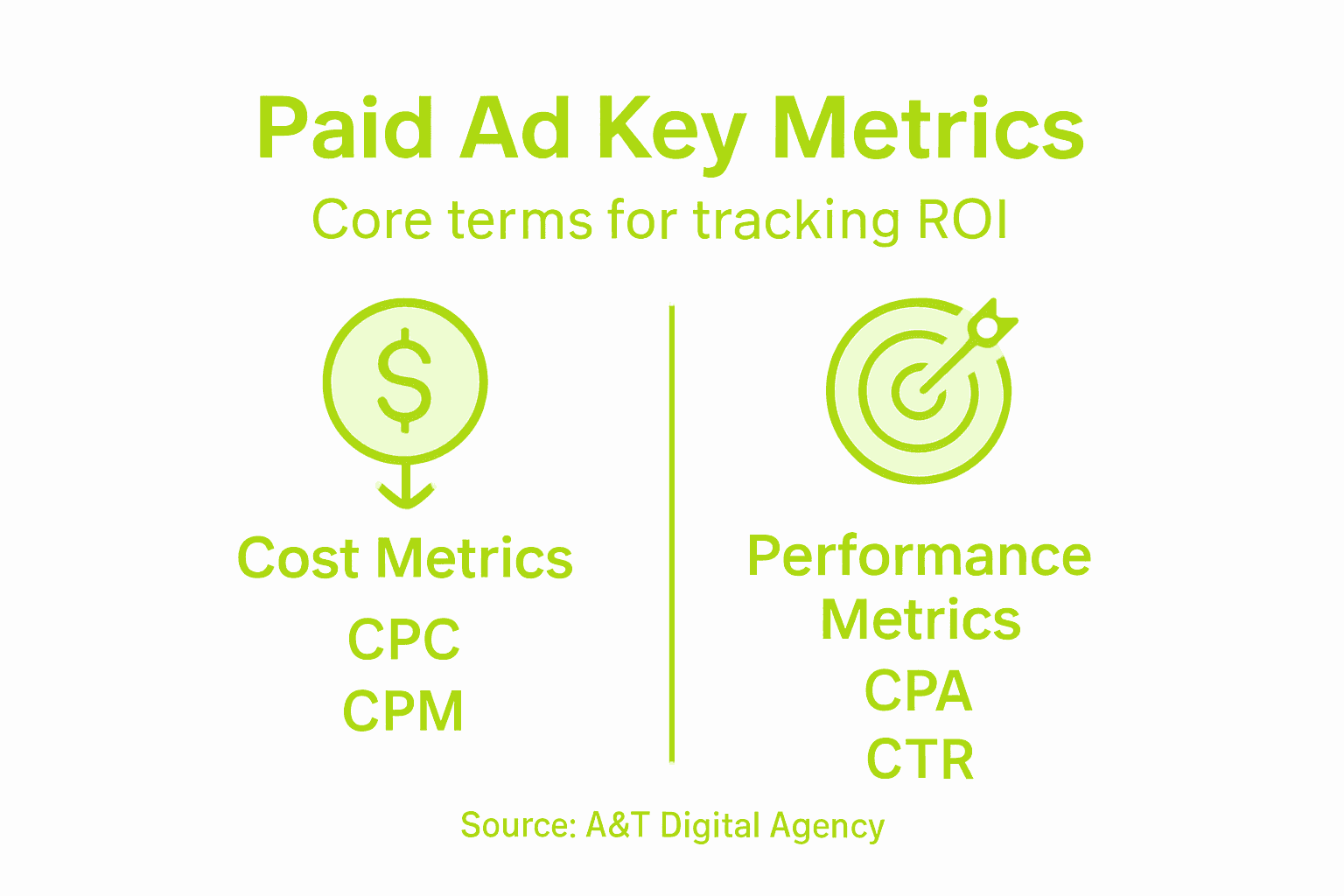
Maximizing ROI with the Right Jargon
Navigating the intricate landscape of paid advertising demands more than just intuition - it requires a strategic understanding of precise terminology and measurement techniques. Marketing ROI strategies provide a critical framework for transforming advertising spend into measurable business outcomes.
Key strategic approaches for maximizing advertising ROI include:
Precise Targeting: Using demographic and behavioral data to narrow audience focus
Reduces wasted ad spend
Increases potential conversion rates
Performance Tracking: Implementing comprehensive measurement systems
Monitors real-time campaign effectiveness
Enables rapid strategic adjustments
Incremental Value Assessment: Understanding the true impact of each advertising touchpoint
Identifies most productive marketing channels
Allocates budget more efficiently
Successful marketers leverage specific terminology to communicate and analyze advertising performance:
Attribution Modeling: Determining which marketing interactions contribute to conversions
Lifetime Value Calculation: Estimating long-term customer revenue potential
Marginal ROI Analysis: Evaluating the incremental return of additional advertising investments
Conversion Path Optimization: Strategically improving customer journey touchpoints
Professional marketing directors recognize that mastering advertising jargon is not about complex language, but about developing a precise, data-driven approach to understanding marketing investments. The right terminology becomes a powerful tool for translating advertising efforts into tangible business growth.
Pro tip: Create a standardized internal glossary of advertising metrics to ensure consistent understanding across your marketing team.
Unlock Higher ROI by Mastering Paid Advertising with a Marketing Agency
Navigating key paid advertising terms like CPC, CPA, and CPM can feel overwhelming, yet mastering them is essential to avoid budget drainage and maximize your campaign outcomes. If you find yourself wanting a clearer path from confusing metrics to real business growth, this is the moment to elevate your strategy. At A&T Digital Agency, we specialize in transforming your advertising jargon into actionable results through tailored Google Ads and Meta campaigns designed specifically for your business goals.
Stop wasting money on unclear metrics and start scaling your business with expert guidance on performance marketing. Whether you need strategic planning, creative execution, or data-driven optimization, our small team offers personalized service that cuts through confusion. Explore how we build and manage paid advertising systems focused on driving revenue growth and increased conversions across industries like telehealth and retail. Visit our site now and see the difference a trusted partner can make when you demand high ROI from your advertising spend.
Discover more about our performance marketing services and get ready to unlock the full potential of your paid advertising with confidence.
Frequently Asked Questions
What is the difference between CPC, CPM, and CPA in paid advertising?
Cost Per Click (CPC) is the amount advertisers pay for each user click on their ad, while Cost Per Thousand Impressions (CPM) is the cost for every thousand ad views. Cost Per Acquisition (CPA) measures the cost of acquiring a customer or lead after an ad interaction.
How can I improve my Click–Through Rate (CTR) in advertising campaigns?
Improving your CTR can be achieved by optimizing your ad copy, using compelling visuals, targeting the right audience, and ensuring relevancy to the search queries of potential customers.
What are the common pitfalls to avoid in paid advertising?
Common pitfalls include budget drainage from unmonitored campaigns, misaligned targeting, focusing on vanity metrics rather than conversions, and lacking consistent tracking mechanisms for performance measurement.
How do impressions affect the success of a paid advertising campaign?
Impressions indicate how many times your ad has been displayed to potential viewers. While high impressions can enhance brand visibility, they must be coupled with engagement strategies to ensure that actual clicks and conversions follow.
Recommended
Performance Marketing Agency | Multi-Channel Paid Ads || A&T Agency
Performance Marketing Agency | Multi-Channel Paid Ads || A&T Agency
Performance Marketing Agency | Multi-Channel Paid Ads || A&T Agency
Performance Marketing Agency | Multi-Channel Paid Ads || A&T Agency
SEO vs Paid Advertising: Understanding Their Differences | Ibrandmedia


