How to Track Ad Performance Metrics for ROI Growth
Posted on
Marketing
Posted at

Running ads without clear direction often feels like trying to reach a destination with no map. For health and wellness leaders focused on their bottom line, setting the right campaign goals and tracking progress is non-negotiable. By pinpointing a specific and measurable objective and choosing key performance indicators that truly matter, you move from guessing to growing your results with intention and clarity.
Table of Contents
Quick Summary
Key Insight | Explanation |
Define Clear Campaign Goals | Specific, measurable goals help gauge success. Avoid vague objectives like ‘more customers.’ |
Set Up Tracking Tools | Use Google Analytics and set conversion goals aligned with your campaign objectives. |
Monitor Data Daily | Daily checks allow for real-time optimization. Catch issues early to avoid wasted budget. |
Analyze Performance Trends | Compare results with goals and identify successful strategies for future campaigns. |
Optimize Based on Insights | Implement changes based on performance data to enhance results and improve efficiency. |
Define campaign goals and key metrics
Defining your campaign goals and key metrics is where every successful ad effort begins. Without clarity here, you’re essentially running blind—spending money without knowing what success actually looks like for your business.
Start by asking yourself what you want this campaign to accomplish. Are you trying to drive more leads for your health and wellness services? Generate direct sales? Build awareness for a new offering? Your goal should be specific and measurable, not vague aspirations like “get more customers.”
Once your primary goal is clear, identify the key performance indicators (KPIs) that will tell you whether you’re hitting it. KPIs are crucial because they reflect strategy effectiveness and let you track progress across different stages of the customer journey. For a health and wellness company, these might include:
Website traffic or appointment bookings
Cost per lead or cost per acquisition
Conversion rate from ad click to booking
Return on ad spend (ROAS)
Customer lifetime value
Think about your marketing funnel too. You’ll have metrics at different stages. Early-stage metrics like impressions and engagement show awareness. Mid-stage metrics track consideration, like click-through rates. Bottom-stage metrics measure actual conversions—the sales or leads you generate.
Here’s a quick comparison of key digital marketing metrics by funnel stage:
Funnel Stage | Primary Metric | Business Impact |
Awareness | Impressions, Reach | Expands brand visibility |
Consideration | Click-through Rate (CTR) | Gauges campaign engagement |
Conversion | Cost per Acquisition (CPA) | Measures efficiency, ROI |
Loyalty/Retention | Customer Lifetime Value (CLV) | Assesses long-term growth |
The Ad Council recommends establishing measurable objectives and employing a dashboard of indicators such as exposure, awareness, engagement, and impact. This structured approach helps you spot bottlenecks in your funnel and make real adjustments as your campaign runs.
Your goals must be specific enough to measure, realistic enough to achieve, and directly connected to your business revenue.
Don’t just pick metrics randomly. Choose ones that actually connect to your bottom line. If you’re running a telehealth practice, appointment completions matter more than impressions. If you’re selling wellness products, completed purchases and average order value are what count.
Write your goals down. Document which metrics you’ll track weekly and which monthly. Assign ownership—who’s responsible for monitoring each one? This clarity prevents confusion later and keeps your team aligned.
Pro tip: Set your baseline metrics before launching ads. Measure your current conversion rate, cost per lead, and other KPIs so you have a clear before-and-after picture to prove your campaign’s actual impact.
Set up performance tracking tools
Now that you know what to measure, it’s time to set up the actual tools that will collect and display your data. Without the right tracking infrastructure, your beautiful KPIs stay just numbers on paper instead of becoming actionable insights.
Start with Google Analytics, which tracks website traffic and user behavior. Set up conversion goals that match your campaign objectives. If you’re tracking appointment bookings, create a conversion goal for completed booking form submissions. If you’re measuring product sales, track purchase completions.

Connect your ad platforms to your analytics tool. Most health and wellness companies run ads through Google Ads and Meta. Both platforms can send data to Google Analytics and other systems, giving you a unified picture of performance.
Here’s what to configure in your tracking setup:
Create specific conversion goals for each important action (bookings, purchases, email signups)
Set up UTM parameters on all ad links so you can track which campaigns drive traffic
Enable cross-domain tracking if customers move between your website and a booking platform
Connect your CRM or appointment system to capture downstream customer data
The Balanced Scorecard Institute recommends a systematic approach to developing KPI systems that begins with clear objectives and continues with designing actionable dashboards. Build a simple dashboard showing your top metrics updated daily or weekly.
Your dashboard should answer one question instantly: “Am I on track to hit my goals this week?”
Don’t overcomplicate this. A simple dashboard with 5 to 7 key metrics is far better than 50 metrics nobody looks at. Your health and wellness team needs to see cost per acquisition, conversion rate, ROAS, and total spend at a glance.
Test your tracking before launching campaigns. Run a test ad, click through, and verify the conversion fires correctly in your analytics. Nothing ruins a campaign like discovering three weeks in that your data collection is broken.
Pro tip: Use UTM parameters consistently across all your ads so you can slice data by campaign, ad set, and even individual ad. This clarity reveals which specific ads and audiences actually convert, not just which campaigns work.
Monitor campaign data in real time
Real-time monitoring is where strategy meets action. You can’t optimize what you don’t see, and waiting until the end of the month to check performance means missing opportunities to fix problems while your ads are still running.
Set up your dashboard so you can check it daily. Open your Google Ads account, Meta Ads Manager, and your central analytics dashboard each morning. Look for unusual patterns: spikes in cost per acquisition, drops in conversion rate, or traffic drying up from a particular audience.
Watch for these warning signs that need immediate attention:
Cost per acquisition is climbing above your target
Click-through rate a dropping suddenly
Conversion rate falling below your baseline
Budget spending much faster or slower than expected
Traffic from specific ad sets is underperforming
Most digital marketing dashboards update data with a slight delay, but real-time data monitoring helps stakeholders track campaign activities as they unfold, giving you visibility into what’s happening right now. This matters for health and wellness campaigns where seasonal trends, competitor moves, or algorithm changes can shift performance within hours.
The best time to catch a problem is when it starts, not after you’ve wasted half your budget.
Set daily alerts for key metrics. Most ad platforms let you configure notifications when metrics go outside your target range. If your target cost per lead is $25 and it hits $35, you get notified immediately instead of discovering it days later.
Don’t just glance at numbers. Ask questions. If clicks are up but conversions are flat, your landing page might need attention. If one audience is converting well and another isn’t, shift a budget toward the winner.
Schedule 15 minutes each morning to review performance. This habit catches issues early and keeps your team proactive rather than reactive.
Pro tip: Create separate alerts for different ad accounts or campaigns so you’re not overwhelmed by notifications. Alert fatigue makes you ignore the signals that actually matter.
Analyze results and identify trends
Raw numbers tell a story, but only if you know how to read them. Analysis transforms daily metrics into actionable insights that guide your optimization decisions and prove your campaign’s actual impact.
Start by comparing your actual performance against your goals. Did you hit your target cost per acquisition? Is your conversion rate matching or beating your baseline? Are you spending your budget on schedule? These simple comparisons reveal whether your campaign is on track or needs adjustment.
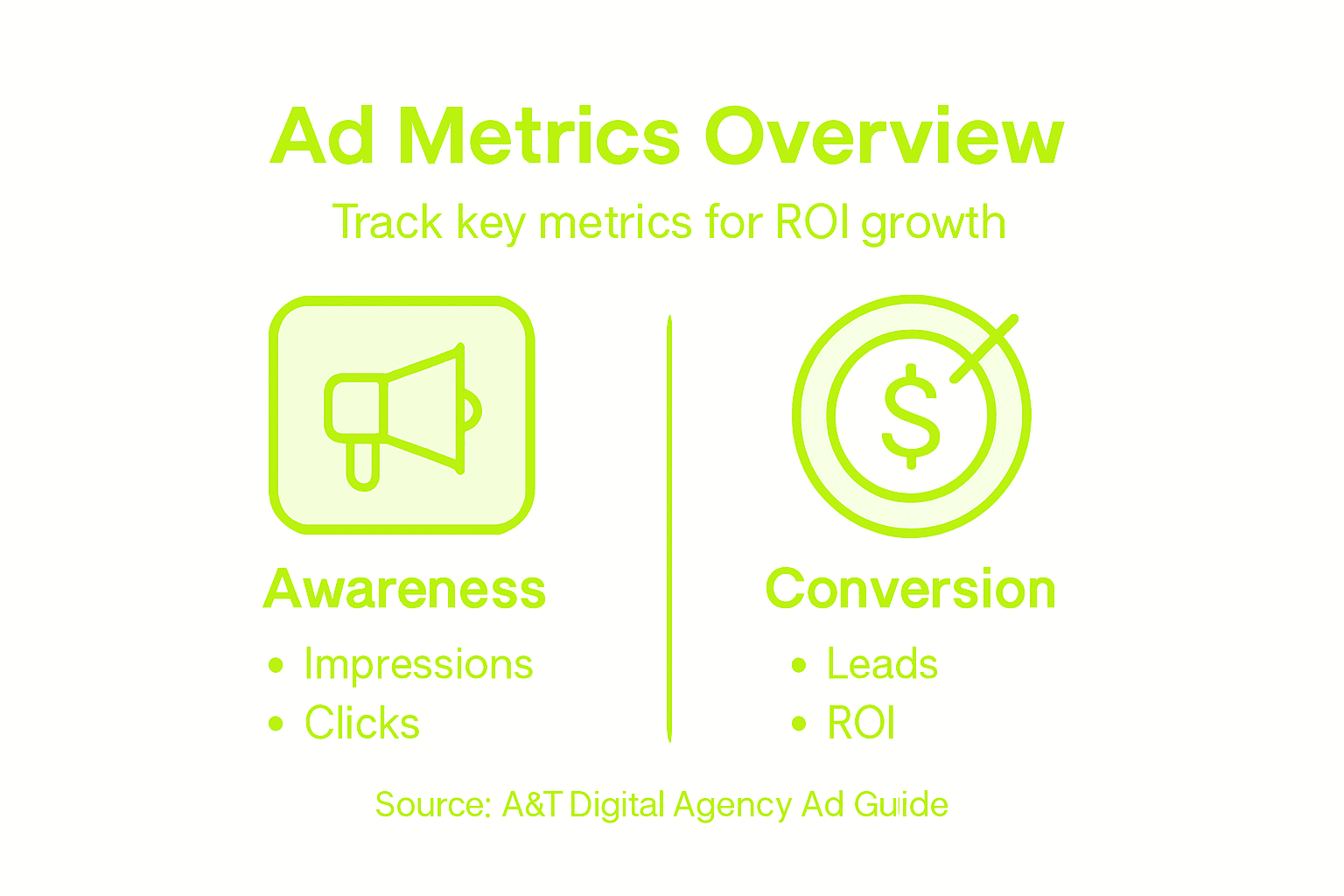
Look deeper into what’s driving your results. Marketing KPIs help analyze campaign performance at different customer journey stages, revealing trends like bottlenecks in conversion or engagement issues. For health and wellness companies, this means understanding which audience segments convert best, which ad creatives perform strongest, and which pages drop the most visitors.
Here’s how to break down your data systematically:
Compare week-over-week and month-over-month trends to spot patterns
Segment performance by audience, ad creative, and landing page
Calculate which combinations drive your lowest cost per acquisition
Identify which stages of the funnel are losing the most prospects
Distinguish between outputs and outcomes. Outputs are activities like impressions, clicks, and ad spend. Outcomes are actual results that matter to your business, like bookings, sales, and revenue. Effective campaign monitoring evaluates both quantitative metrics and qualitative impacts, enabling you to identify true effectiveness rather than chasing vanity metrics.
A campaign with 10,000 clicks and zero sales is output without outcome.
Create a simple analysis spreadsheet or document. Record your key metrics weekly. Note what changed, what stayed stable, and what surprised you. This record becomes your playbook for future campaigns.
Look for patterns in audience behavior. Do certain demographics convert faster? Do mobile users cost less than desktop users? Does Tuesday outperform Thursday? These insights guide budget allocation and creative strategy moving forward.
Pro tip: Focus on metrics that directly connect to revenue, not just engagement. A campaign that generates low-cost leads is more valuable than one that gets likes and shares but no bookings.
Optimize campaigns based on insights
Insights without action are just interesting observations. Real optimization means taking what you learned from your data and making concrete changes that improve your results. This is where your ad spend becomes truly efficient.
Start with your best performers. If one audience segment converts at half the cost of others, shift a budget toward that segment. If a particular ad creative consistently outperforms the rest, pause lower performers and create similar versions of the winner.
Use A/B testing, attribution, and marketing mix modeling to systematically test different strategies and apply findings to improve campaign results. This means testing one variable at a time so you know exactly what’s driving improvement.
Here are concrete optimization moves to implement:
Increase budget for audiences and creatives with the lowest cost per acquisition
Pause ads performing worse than your baseline metrics
Test new audience segments based on your top converter profile
Refine landing pages where conversion rates are dragging
Adjust bid strategies on high-performing placements
Expand campaigns that work to new geographic areas or demographics
Optimization is integral to a continuous cycle of planning, implementation, reflection, and adjustment. Monitoring outcomes enables identifying what works and modifying plans in real time, supporting strategic improvement by focusing on impactful activities rather than just volume.
Below is a summary of the most effective optimization levers and what they influence:
Optimization Lever | What It Influences | Expected Outcome |
Audience Targeting | Who sees the ads | Higher conversion rates |
Creative Testing | Ad message and visuals | Improved engagement |
Budget Allocation | Spend distribution | Greater ROI |
Landing Page Refinement | User action flow | Better conversion rates |
Bid Strategy | Ad placement cost | Lower cost per result |
Small improvements compounded weekly create massive ROI gains by month’s end.
Test changes gradually. Don’t completely revamp your campaign overnight. Make one or two optimization changes per week, measure the impact, and iterate. This approach prevents accidentally breaking what’s working while you chase improvements.
Document your changes and results. Note what you tested, when, and what happened. This creates institutional knowledge that guides future campaign decisions and prevents repeating failed experiments.
Remember that optimization is ongoing. Digital advertising platforms change constantly. Audience behavior shifts. Competitor activity impacts your performance. Review your campaigns weekly and stay ready to adjust.
Pro tip: Allocate 10 to 15 percent of your budget to testing new audiences and creatives, keeping the majority on proven winners. This balance scales what works while discovering what’s next.
Master Your Ad Campaigns for Real ROI Growth
Tracking ad performance metrics is the key challenge many health and wellness and telehealth businesses face when trying to grow profitably. Without clear goals like cost per acquisition and conversion rate, you risk spending valuable budget blindly. This article highlights essential strategies such as setting precise KPIs, real-time monitoring, and data-driven optimization — all critical for scaling paid ads efficiently and achieving measurable results.
At A&T Digital Agency, we understand the frustration of missing clear insights from your ad spend. Our boutique team specializes in building and optimizing performance marketing systems using Google Ads and Meta campaigns tailored for your unique business goals. We focus on delivering real outcomes like increased leads, revenue growth, and lower acquisition costs through strategic campaign planning, expert tracking setup, and ongoing data analysis.
Act now to move beyond guesswork and start harnessing your campaign data for impactful decisions.
Ready to see the difference expert ad management makes? Visit us at A&T Digital Agency to learn how our personalized approach transforms your paid campaigns into measurable growth engines. Explore performance marketing services designed to track every dollar, optimize every ad, and maximize your ROI today.
Frequently Asked Questions
How do I define campaign goals for tracking ad performance metrics?
To define campaign goals, ask yourself what specific outcomes you want from your ads, such as increasing leads or sales. Write down these goals and ensure they are measurable, like aiming for a 20% increase in website traffic within three months.
What key performance indicators (KPIs) should I use to track my ad performance?
Choose KPIs that connect directly to your business objectives, such as conversion rate, cost per acquisition, or return on ad spend. Focus on 5 to 7 key metrics that reflect your goals, allowing you to easily monitor progress and adjust strategies accordingly.
How can I set up performance tracking tools to monitor my ad metrics?
Begin by implementing tools like Google Analytics to track website traffic and user actions related to your ads. Set conversion goals that align with your campaign objectives, such as monitoring appointment bookings or product sales, to evaluate performance effectively.
What should I look for when monitoring campaign data in real time?
When monitoring campaign data, check for any sudden changes in cost per acquisition or conversion rates. Regularly reviewing your performance dashboard can help you identify trends and issues early, allowing you to make necessary adjustments promptly.
How do I analyze results to identify trends in my ad performance?
Analyze your ad performance by comparing actual results against your defined goals, looking for patterns in audience behavior and engagement. Document key metrics weekly to observe changes over time and make informed decisions based on the trends you identify.
What steps should I take to optimize my campaigns based on performance insights?
Start by reallocating budget towards your best-performing audience segments and ads, and pause those that underperform. Implement gradual changes, such as testing new creatives or refining landing pages, to enhance your results incrementally.


