Digital marketing compliance explained: Essential rules for SMBs
Posted on
Marketing
Posted at

SMBs spend about $4,200 annually on compliance, with GDPR fines exceeding €7.1 billion since 2018.
Building privacy-compliant campaigns involves mapping data flows, vetting vendors, and handling DSARs promptly.
Strict compliance enhances customer trust, boosts conversion rates, and provides a competitive marketing advantage.
The average SMB spends roughly $4,200 per year on compliance, and GDPR fines alone have surpassed €7.1 billion since 2018. For e-commerce and healthcare businesses, the stakes are especially high. One misstep with data collection or ad claims can trigger fines, erode customer trust, and kill campaign performance overnight. This guide cuts through the confusion. We break down the key regulations you need to know, show you how to build campaigns that stay within legal boundaries, and explain why treating compliance as a strategy rather than a burden is one of the smartest moves you can make in 2026.
Table of Contents
Key Takeaways
Point | Details |
|---|---|
Know the main laws | GDPR, CCPA, CAN-SPAM, and HIPAA all create unique obligations for SMBs' digital marketing. |
Build a privacy-first campaign | Mapping data flows, clear consent banners, and regular audits are crucial for compliance. |
Substantiate all ad claims | Every health claim and endorsement must be backed by evidence and disclosed according to FTC rules. |
Adopt strict standards | Using the toughest rules across all jurisdictions simplifies your process and reduces risk. |
Turn compliance into advantage | SMBs that treat compliance as a branding asset can see higher trust and conversion rates. |
Understanding key digital marketing regulations
Not all compliance rules are created equal. Digital marketing compliance for SMBs spans data privacy laws, advertising standards, and sector-specific rules like HIPAA. Understanding which laws apply to your business is the first step toward protecting it.
Here is a quick comparison of the four regulations that matter most:
Regulation | Who it applies to | Key requirement | Penalty |
|---|---|---|---|
GDPR | Businesses targeting EU residents | Explicit opt-in consent before data collection | Up to 4% of global annual revenue |
CCPA/CPRA | CA businesses with 100k+ consumers | Opt-out for data sales, privacy policy required | Up to $7,500 per intentional violation |
CAN-SPAM | US email marketers | Opt-out mechanism, no deceptive headers | Up to $53,088 per violation |
HIPAA | Healthcare marketers | No PHI in tracking without a BAA | Up to $1.9M per violation category |
GDPR is the strictest standard. It requires affirmative, freely given consent before you collect any personal data. No pre-ticked boxes. No buried opt-ins. If you run GDPR consent rules incorrectly on your Meta campaigns, you risk both ad account suspension and regulatory action.
CCPA/CPRA is California-specific but affects any business serving California residents at scale. It gives consumers the right to know what data you collect, delete it on request, and opt out of its sale. Businesses must respond to data requests within 45 days.
CAN-SPAM is more permissive than GDPR. It does not require prior consent for commercial email, but every message must include a clear opt-out mechanism and your physical mailing address. Violations carry fines up to $53,088 per email.
HIPAA is the most specialized. Healthcare marketers cannot use protected health information (PHI) in ad targeting or tracking pixels without a Business Associate Agreement (BAA). This affects telehealth platforms, wellness apps, and any health-focused e-commerce brand. Proper HIPAA marketing compliance requires separate consent flows and careful vendor selection.
One data point worth noting: EU cookie opt-in rates sit at just 46% for marketing and 61% for analytics. That means nearly half your EU audience may never be tracked at all if you rely on cookie-based targeting. Planning for this reality is not optional. It is essential.
GDPR covers any business with EU-based customers, regardless of where your company is located
CCPA applies to for-profit businesses meeting specific thresholds, not just California-based companies
CAN-SPAM applies to all commercial email sent from or to US recipients
HIPAA applies to covered entities and their business associates, including marketing vendors
Building privacy compliant marketing campaigns
Knowing the rules is one thing. Building campaigns that follow them is another. The good news: a structured approach makes it manageable, even for small teams.
Here are the core steps for building a privacy-compliant campaign setup:
Map your data flows. Identify every tool that collects, stores, or transfers user data. This includes your CRM, ad pixels, email platform, and analytics tools.
Post a clear privacy policy. Your policy must explain what data you collect, why, and how users can request deletion. Update it whenever your tech stack changes.
Use HTTPS across your entire site. Unencrypted pages signal risk to both users and regulators.
Vet every vendor. Before adding a third-party pixel or plugin, confirm it is compliant with the regulations that apply to your audience.
Handle DSARs on time. Data Subject Access Requests must be fulfilled within 30 days under GDPR and 45 days under CCPA. Missing these deadlines is a violation in itself.
For e-commerce SMBs, the most common pitfall is installing tracking pixels without auditing what data they send back. Meta Pixel, Google Tag, and third-party affiliate trackers can all capture more data than you realize.

Compliance task | Frequency | Responsible party |
|---|---|---|
Pixel and tracker audit | Quarterly | Marketing or IT lead |
Privacy policy review | Bi-annually | Legal or compliance lead |
DSAR response check | Ongoing | Customer support or ops |
Vendor compliance review | Annually | Marketing lead |
When auditing pixels and ad trackers, use tools like Google Tag Manager's preview mode or a browser extension like Blacklight to see exactly what fires on each page. Remove anything you cannot justify.
For compliance basics for SMBs that are just getting started, the single most important rule is this: never use pre-ticked consent boxes. Consent must be active, not assumed.
Review GDPR and CCPA compliance tips to understand how to layer consent requirements without disrupting your user experience.
Pro Tip: Apply GDPR-level consent standards across all your campaigns, even where it is not legally required. It simplifies your compliance process and signals trustworthiness to every audience segment.
Truthful advertising: FTC regulations and influencer rules
Privacy compliance is only one piece of the puzzle. The FTC also governs what you say in your ads, and the rules are stricter than many SMBs expect.
The FTC's truth-in-advertising standards require that all advertising claims be truthful, not misleading, and backed by evidence. For health and wellness brands, that means randomized controlled trials (RCTs), not just customer testimonials.
Here is what the FTC requires for compliant advertising:
Health claims need scientific backing. Saying your product "boosts immunity" or "reduces inflammation" requires credible clinical evidence, not just anecdotal reviews.
Endorsements must be disclosed. Any paid or gifted relationship between a brand and an influencer must be clearly labeled. #ad or #sponsored placed prominently in the post is the standard.
No fake reviews. Fabricated testimonials, incentivized reviews without disclosure, or suppressed negative feedback all violate FTC rules.
Influencer rules apply everywhere. Whether it is Instagram, TikTok, YouTube, or a podcast, the same disclosure requirements apply.
"Marketers must ensure that endorsers' statements are truthful and not misleading, and that any material connection between the endorser and the brand is clearly and conspicuously disclosed." — FTC Endorsement Guidelines
For healthcare and wellness brands running FTC advertising guidelines, the risk is especially real. The FTC has issued warning letters and taken enforcement action against supplement brands, telehealth services, and fitness companies for unsubstantiated claims.
When endorsing ads responsibly, keep a compliance file for every campaign. Document the evidence behind every health claim, every influencer agreement, and every disclosure placement.
Pro Tip: Before launching any health-related campaign, run your ad copy through a simple test: "Can I prove this claim with a peer-reviewed study?" If the answer is no, rewrite the copy before it goes live.
The FTC endorsement guidelines update from 2023 expanded disclosure requirements significantly. Brands are now liable for influencer disclosures even when the influencer fails to add them. That shifts more responsibility onto your marketing team.
Advanced compliance strategies for multi jurisdiction SMBs
If your business serves customers across multiple states or countries, compliance gets more complex. But the solution is simpler than you might think.
Here is a proven framework for managing multi-jurisdiction compliance:
Adopt the strictest standard as your baseline. GDPR is the most demanding regulation globally. If your campaigns meet GDPR requirements, they will almost certainly meet CCPA, CAN-SPAM, and most state-level rules as well.
Run quarterly audits of all tracking technologies. Every pixel, tag, and script on your site should be reviewed four times a year. Remove anything that is not actively contributing to campaign performance.
Implement granular consent banners. Rather than a single accept-all button, give users control over specific categories: analytics, marketing, personalization. This approach satisfies both GDPR and CCPA simultaneously.
Shift toward first-party data. As third-party cookies continue to phase out, your email list, CRM data, and on-site behavior data become your most valuable assets. First-party data advantages include better accuracy, lower cost, and full compliance by default.
Explore server-side tracking. Unlike browser-based pixels, server-side tracking sends data directly from your server to ad platforms. It recovers up to 85% of data that ad blockers and browser restrictions would otherwise block, all while keeping you compliant.
For teams managing audit tracking technologies, server-side setups require more technical lift upfront but pay off significantly in data quality and legal protection.
Review GDPR enforcement data to understand where regulators are focusing their attention. Consent failures and unauthorized data transfers are the two most common enforcement triggers.
Pro Tip: Document every compliance decision your team makes. Create a log that records when audits were conducted, what was found, and what was changed. This paper trail is your best defense if a regulator ever comes knocking.
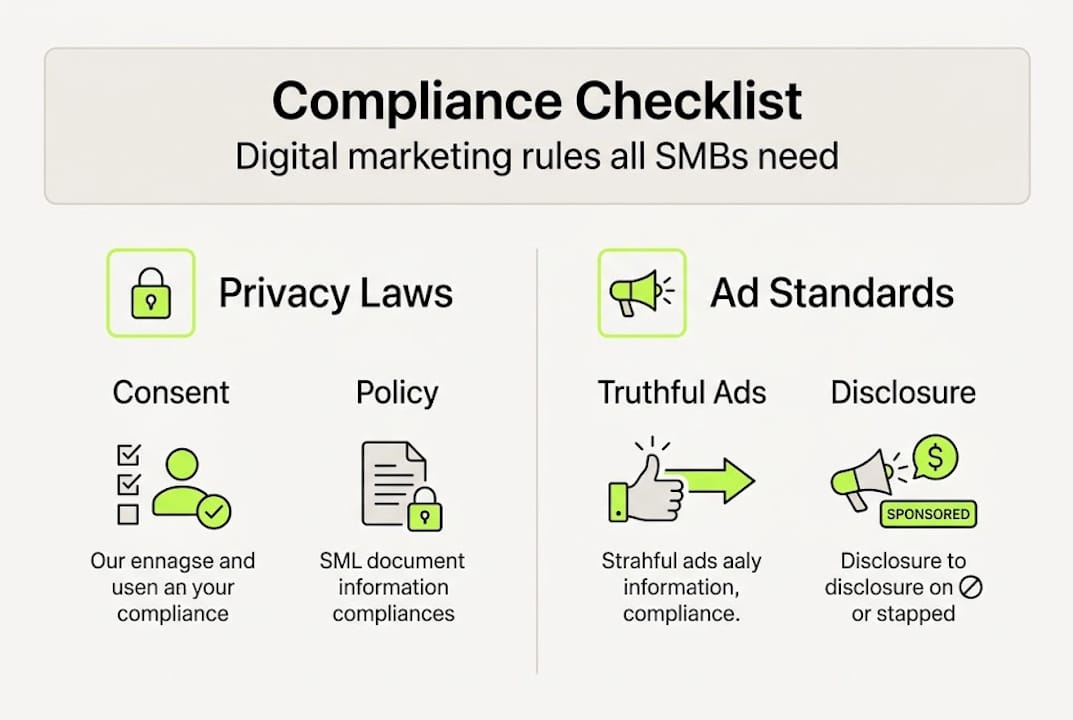
A smarter approach: Why strict compliance unlocks better marketing outcomes
Here is a perspective most compliance guides skip: following the rules is not just about avoiding fines. It is a competitive advantage.
We have seen it directly with clients in telehealth and e-commerce. When brands invest in transparent consent flows, clear privacy policies, and honest ad copy, something unexpected happens. Customers trust them more. And trust converts.
Privacy compliancehas been shown to boost conversion rates by 7 to 12% when users actively consent to marketing. That is not a small number. It means your compliant audience is more engaged, more likely to buy, and more likely to return.
The brands that treat compliance as a checkbox will always be playing defense. The brands that treat it as a brand signal, showing customers they respect their data, will build audiences that are harder to compete against. Check the latest digital advertising trends and you will see privacy-first marketing is not a niche strategy anymore. It is where the industry is heading. Getting ahead of it now means less disruption later and better campaign performance today.
How our team can help you stay compliant and grow
Compliance does not have to slow your campaigns down. At A&T Digital Agency, we build paid ad systems that are designed to perform within the rules from day one. Our team handles the full setup: privacy-aligned tracking, consent-compliant campaign structures, and ad creative that meets FTC and platform standards.
For e-commerce brands, we manage Google Ads campaigns with conversion tracking that respects user consent. For healthcare and wellness clients, our Meta ads management accounts for HIPAA restrictions and platform policies. If you want campaigns that grow revenue without legal exposure, explore our digital marketing solutions and let's build something that lasts.
Frequently asked questions
What is the biggest compliance risk for SMBs in digital marketing?
Failing to obtain proper consent before collecting user data is the leading risk. GDPR fines totaling €7.1B since 2018 show that consent failures are the most common enforcement trigger.
How does HIPAA affect healthcare marketing campaigns?
HIPAA prohibits using protected health information in ad targeting or tracking without a signed Business Associate Agreement. No PHI in tracking is a hard rule, not a guideline.
What must e commerce businesses do to comply with CCPA?
They must publish a clear privacy policy, offer an opt-out for data sales, and respond to data requests within 45 days of receipt.
Do influencer campaigns need special disclosures?
Yes. All paid or gifted content must be clearly labeled with #ad or equivalent language, placed where viewers will see it before engaging with the content.